Sport Profile

Discover Backpacking

A backcountry working sport where dogs carry fitted packs over measured distances and terrain — sometimes under titling rules that document miles, loads, and overnight trips as working achievements.

Jump to a section

01 · What is it

Backpacking with dogs combines human backpacking with a defined working role for the dog: the dog carries a properly fitted pack with a percentage of its bodyweight over a measured distance, on natural trail, sometimes with an overnight component. There is no central event calendar. Teams log qualifying hikes with GPS, photos, and witness or vet verification, and breed clubs and independent programs record those hikes as legs toward pack or outdoor titles. Terrain is mixed trail — dirt, rock, elevation gain — with environmental variables (heat, cold, wildlife) that put route planning, leave-no-trace practice, and local dog-access regulations into the skill set. The dog's job is sustained load-bearing, pacing, and safe movement as part of a small team — not independent problem-solving.

Dogs that do well are structurally sound, medium-to-large, and capable of sustained aerobic effort — working and sporting types, active mixed breeds, and smaller athletic dogs at proportionally smaller loads. Brachycephalic, chondrodystrophic, or very small dogs can participate at lower loads and shorter distances, but they carry more thermal and orthopedic risk. Handlers who thrive are organized, safety-conscious, comfortable with navigation and backcountry logistics, and more drawn to planning and environmental management than to tight ring-sport precision. Reactivity matters because trails are shared spaces — dog-dog reactivity can be managed with off-peak hours, remote routes, and careful leash work, but severe human reactivity is disqualifying for crowded public land. Age, joint health, and conditioning are central: dogs should be fully grown before carrying substantial loads, with veterinary oversight for large and giant breeds predisposed to orthopedic disease.

Origins
Working roots
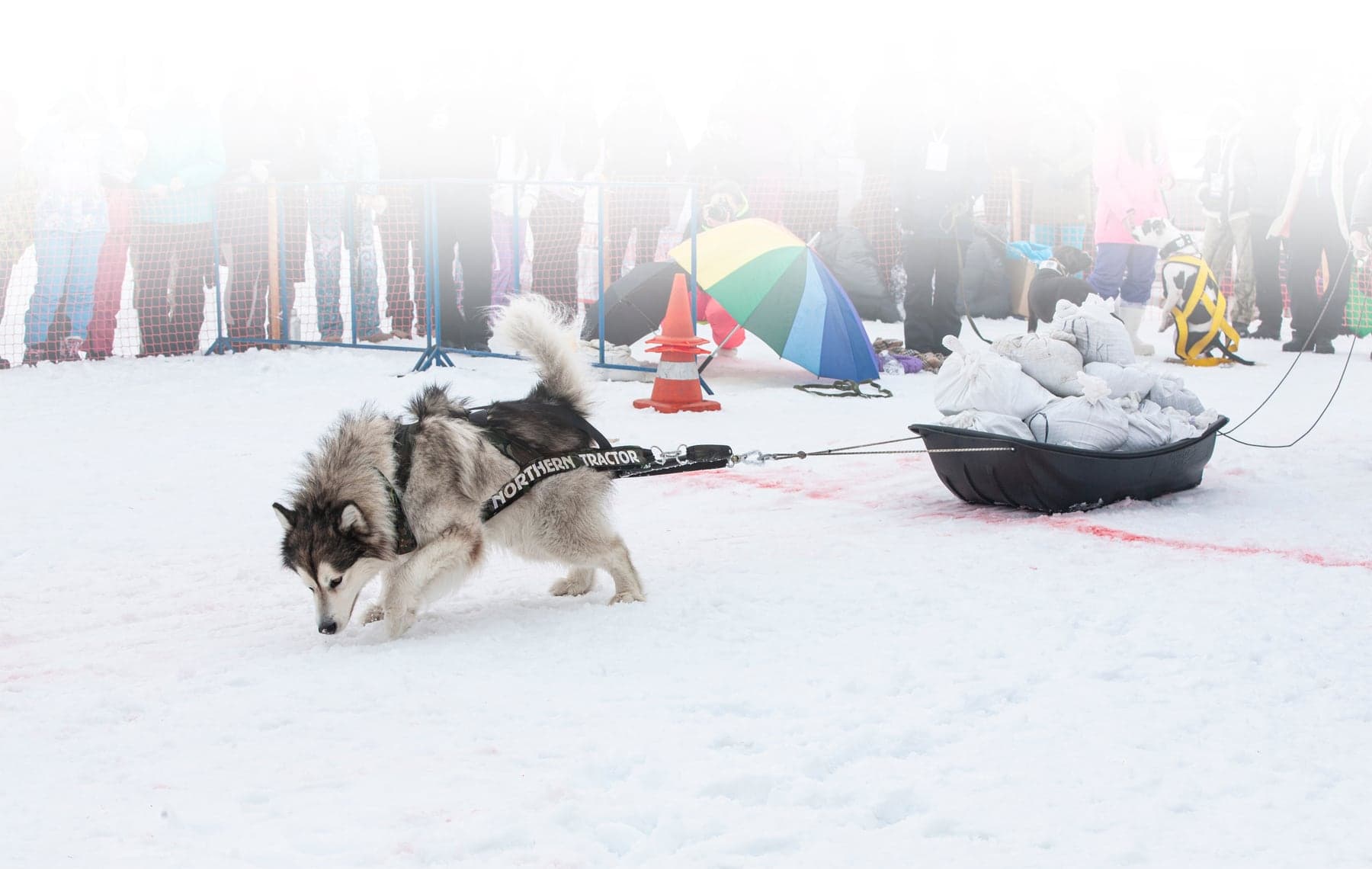
Human-canine load-carrying work predates modern sports. Northern and draft breeds hauled freight by sled and pack; shepherds used dogs to carry supplies in mountainous terrain.
Recreational emergence
Recreational backpacking with dogs grew alongside the mid-20th century boom in hiking and camping, but formalized 'pack dog' recognition emerged out of working-breed clubs that wanted to preserve functional ability without relying solely on sledding or carting conditions.
ANKC codification
The Australian National Kennel Council's Working Pack Dog program is the clearest codified example — it sits under sled sports and requires dogs to carry 15–30% of bodyweight over four 16 km hikes to earn Working Novice Pack Dog or Working Pack Dog titles.
US breed-club programs
In North America, breed clubs like the Alaskan Malamute Club of America and the Greater Swiss Mountain Dog Club of America began using organized pack hikes to test endurance and working aptitude in real terrain rather than only in rings or pulling events.
Hiking-culture growth
Growth has paralleled the broader boom in hiking and van-life culture. AKC's FIT DOG program — launched as a health-focused initiative — explicitly allows activity points for walks, hikes, and parent-club performance titles, which has indirectly supported backpacking-type activities by recognizing them inside a wellness framework.
Outdoor Dog
Outdoor Dog, an independent titling entity founded in the mid-2020s, treats backpacking and related outdoor activities as a separate category of adventure titles, encouraging structured goal-setting outside traditional kennel-club channels.
Today
Backpacking with dogs is a hybrid: a lifestyle activity with semi-formal titling tracks rather than a ring- or field-based sport with national championships. Recent shifts focus on safety — lower default load percentages than the older 30% norms, careful heat management, and more structured guidance from sports-medicine veterinarians on multi-day conditioning.

02 · Inside the pack

A backpacking qualifying hike has no obstacles in the ring-sport sense. The core elements are route design, load management, environmental conditions, and overnight logistics where applicable. Success is finishing the required mileage with a sound dog, an appropriate pack fit, and documentation a program will accept.

Element 01
Distance leg
A single qualifying hike has to meet or exceed a program's minimum distance — 10 miles in GSMDCA's standard day-hike option, two 8-mile back-to-back days as an alternative, or four 16 km hikes in ANKC's Working Pack Dog program. Success means finishing the route with the dog moving soundly and within any specified time window, verified by logs, witnesses, or GPS.
Element 02
Load requirement
Programs specify a minimum pack load as a percentage of the dog's bodyweight — 15% at novice tiers and up to 30% at the most advanced. The 30% number is increasingly debated as too heavy for many dogs, and handler communities now push much lower for non-titling outings. A title-qualifying hike requires maintaining the stated load for the full distance (water excluded) and documenting weight before the outing.
Element 03
Terrain and elevation
Trails include hills, uneven footing, and environmental obstacles — streams, rocks, roots — that add to the work's difficulty. Some breed-club rules cap the percentage of route that may run on paved surfaces to reduce concussion forces on joints.
Element 04
Overnight component
Certain titles require primitive overnight camping — a 5-mile-in / 5-mile-out backpack with camp gear in the dog's pack is the GSMDCA pattern. Success means safely managing the dog's welfare at camp (temperature, rest, food) and completing both the approach and the exit under load.
Welfare at camp
Element 05
Documentation and verification
Programs collect hike logs, GPS tracks, photos, witness signatures, and weigh-in forms to verify that distance and load requirements were met. Administrative accuracy matters as much as the hike itself — incomplete documentation does not earn the leg.

03 · Outdoor Dog

Outdoor Dog is the US-based independent titling program that makes backpacking-style work accessible to any dog — purebred, mixed, registered, unregistered — through a logged-points model rather than organized events. For most US handlers who want titles for the hiking they already do, Outdoor Dog is the practical entry point.

01
Adventure Puppy
Entry tier designed for young dogs to log low-impact outings — short walks, exposure trips, age-appropriate activity — and accumulate recognition without the structural loading of a true backpacking title. Supports building a habit before the dog is mature enough for substantial pack work.
02
Classic Titles
The program's core. Teams log outings across a mix of activities — hiking, backpacking among them — and earn titles when accumulated points or activity counts cross specific thresholds. Backpacking outings count toward Classic totals but are not always called out as standalone pack-dog titles.
03
Specialty Titles
Target specific activity types in more depth. Backpacking-heavy teams can pursue specialty recognition for outings that meet specified distance and condition criteria.
04
Registration + eligibility
Through Outdoor Dog directly — no kennel registry required. All breeds and mixed breeds. Documentation is self-reported via logs, GPS records, and photo verification.
Key facts
Founded
Mid-2020s
Title model
Points / activity logs
Tiers
Adventure Puppy → Classic → Specialty
Eligibility
Any breed, any mix; no registry needed
Documentation
Self-reported logs + GPS + photos
Cross-org transfer
None — not stamped onto kennel pedigrees
What Outdoor Dog is + isn't
Outdoor Dog titles do not carry the institutional weight of an AKC parent-club pack title — they are not stamped onto a kennel-club pedigree. What they do offer is a structured way to set goals, track progress, and earn recognition without breed restrictions, registration paperwork, or a centralized event calendar. Handlers who want titling motivation without the AKC framework treat Outdoor Dog as the default option.

04 · GSMDCA

The Greater Swiss Mountain Dog Club of America's Pack Hike program is the most concretely codified US breed-club pack titling system — specific distances, specific load percentages, specific route conditions, and a structure other AKC parent-club programs broadly follow. It runs as a single-breed program for Swissies, but its rule structure illustrates how every AKC parent-club pack title works in practice.

01
The 10-mile day hike
The most common single-leg pattern. The dog carries the required load for ten miles on approved natural-terrain trail in a single day. Teams completing the hike under conditions earn one pack leg toward their title.
02
The 8-mile back-to-back
Two 8-mile loaded days, consecutive, with the dog sound on both days. The format mirrors a real multi-day trip and counts as a single leg under GSMDCA rules. (Whether back-to-back counts as one leg or two varies in public summaries — confirm with current GSMDCA Pack Hike regulations.)
03
The primitive overnight
A 5-mile-in / 5-mile-out backpack with camp gear in the dog's pack and an overnight stay at a primitive site. This format tests welfare management at camp, not just hiking — the dog's rest, hydration, temperature regulation, and overnight handling all factor into the leg.
04
Title structure
Exact title abbreviations, the number of legs required per title tier, and minimum-age rules need confirmation from current GSMDCA Pack Hike regulations. Public summaries describe the hike formats clearly but do not consistently spell out the full title ladder.
Key facts
Structure
Club-organized hikes; legs toward titles
Eligibility
Greater Swiss Mountain Dogs
Title model
Leg accumulation from qualifying hikes
Day hike
10 miles loaded
Back-to-back
Two 8-mile consecutive days
Overnight
5-mile-in / 5-mile-out + primitive camp
The parent-club reference template
Most AKC parent-club pack programs — AMCA, Bernese Mountain Dog Club of America, others — use a structurally similar pattern: club-organized hikes, specified loads, leg accumulation. The breeds, exact load percentages, and route requirements vary by club, but the GSMDCA model is the closest thing to a reference template.

05 · Side by side

Backpacking with dogs sits inside a fragmented organizational landscape. Two programs covered above are the practical entry points; three more carry weight in specific contexts. None transfer titles to the others.

Outdoor Dog
Primary US all-breed titling option. Points and activity logs across Adventure Puppy → Classic → Specialty tiers. No kennel registry required. Accessible to any dog.
outdoor-dog.org →
GSMDCA Pack Hike
Representative US breed-club program. Leg accumulation from qualifying hikes — 10-mile day, 8-mile back-to-back, or 5-mile primitive overnight. Greater Swiss Mountain Dogs only. The parent-club reference template.
gsmdca.org →
ANKC Working Pack Dog
International benchmark (Australia). WNPD requires four 16 km hikes at 15% bodyweight; WPD requires four 16 km hikes at 30% bodyweight. ANKC-registered, sled-sport eligible only. Distant from US handlers but referenced as the codification benchmark.
dogsaustralia.org.au →
AKC FIT DOG
Wellness recognition layer. Awards FIT DOG titles for accumulated activity points, including miles walked or hiked and points earned through AKC parent-club performance titles. Not standalone pack titling — functions as cross-activity health recognition.
akc.org/fit-dog →
AMCA Pack Title
Alaskan Malamute Club of America. Single-breed AKC parent-club program preserving the working pack-dog role for Malamutes. Structure follows the broader AKC parent-club pattern: specified distances, specified loads, leg accumulation.
alaskanmalamute.org →
Outdoor DogGSMDCAANKC WPDAKC FIT DOGAMCA
Role in US scenePrimary US all-breed titling optionRepresentative US breed-club programInternational benchmark (Australia)Wellness recognition layerBreed-club working program
Title modelPoints / activity logsLeg accumulation from qualifying hikesLeg accumulation from 16 km hikesPoints for activity and titlesLeg accumulation per club rules
EligibilityAny dogGreater Swiss Mountain DogsANKC-registered, sled-sport eligibleAKC-registrable dogs, including Canine PartnersAlaskan Malamutes with AKC registration
Cross-org transferNone — not stamped onto kennel pedigreesNone — parent-club title onlyNone — Australian-onlyRecognizes miles from other programs informallyNone — parent-club title only
Known forAccessible, log-based, no kennel restrictionCodified hike formats; parent-club reference templateClear numeric standards; formal sled-sport frameworkCross-activity health recognition that captures pack workHeritage working program for a traditional pack breed

Titles do not transfer. An ANKC WPD does not convert to an AKC parent-club title. An Outdoor Dog Classic Title is not stamped onto an AKC pedigree. AKC FIT DOG can recognize miles logged on hikes that count toward other programs, which is the closest thing to cross-recognition in the landscape — but the underlying titles still belong to whichever program awarded them. Some breed-club programs accept documented non-club hikes toward titles when distance and load conditions are met, but this is club-specific.

Which one fits you?
Hiking already · Outdoor Dog
Want titles for the hiking you already do. Outdoor Dog is the home program — register the team, log every backpacking outing, and titles award as activity accumulates. No registry needed, no central event calendar.
AKC working breed · parent-club title
Have an AKC-registered working breed with a parent-club program. The parent-club pack title is the institutionally weighted path — GSMDCA, AMCA, Bernese MDCA, others. Confirm the current rulebook with the club's working coordinator before targeting a title.
Codification benchmark · ANKC standards
Want a codification benchmark for self-training. ANKC's Working Pack Dog rules (16 km, 15% / 30% BW, four legs) are the cleanest published standard to train against, even if you cannot earn the title without an Australian registration.
Health framing · AKC FIT DOG
Want health and activity recognition rather than pack-specific titling. AKC FIT DOG sits at the intersection of pack work and wellness recognition. A dog earning miles toward FIT DOG is doing pack-type work, just framed as activity rather than as working aptitude.
The gap
Want institutional credibility and a multi-breed program. This is the gap in the current landscape. AKC has no all-breed pack title that crosses breed-club lines.

06 · Getting started

Most handlers come to backpacking from day hiking — they have a fit dog, basic trail manners, and a curiosity about whether the activity can be structured into something more. The entry ramp is short on classes and long on conditioning. Equipment is specific but not extensive. The pacing of titling progress depends almost entirely on trail access, climate, and how much time the team can put on trail each week.

The kit
Pack, leash, basics
A well-fitted pulling-free hiking pack sized to the dog — no rubbing, even weight distribution, full shoulder range. A sturdy 6-foot leash or 15-foot long line for trail work in regulated areas. A canine-specific first-aid kit, water and portable bowl, paw protection for hot or rough surfaces, and high-value food rewards. AKC registration or Canine Partners (~$35 one-time) only relevant for parent-club pack programs.
Foundation · months 1–3
Conditioning + progressive load
Most foundational training is self-directed using day hikes, not class enrollment. A 6–8 week canine conditioning or trail-dog program is the standard structured option when locally available. Progressive load introduction — empty pack, then small water bottles, building toward the dog's target percentage over several weeks. A pre-participation vet exam, ideally with a sports-medicine or rehab focus, before substantial pack work.
First title · months 6–12
Logging into a title
Build to 10-mile loaded days or the 16 km ANKC distance over months 3–9. Consistent training and logging to reach the first formal pack or outdoor title for most teams in months 6–12. Climate-specific shifts apply — desert, mountain, and northern teams report different baselines.
Before you enroll
Age: most working-dog and sports-medicine guidance puts substantial load carriage after growth-plate closure, around 12–18 months and later for giant breeds. Body type: brachycephalic, chondrodystrophic, and very small dogs face real physical limits — many sports-medicine vets either advise scaled-back loads or avoiding heavy pack work entirely. Reactivity: dog-dog reactivity can be accommodated on remote routes and off-peak hours, but human reactivity is disqualifying for shared public land. Registration: most AKC parent-club programs require AKC registration; mixed breeds and unregistered dogs route through Outdoor Dog.

07 · Qualifying hike

Backpacking does not have a trial day in the ring-sport sense. The closest equivalent is a club-organized pack hike or a self-organized qualifying outing logged through Outdoor Dog. Both feel more like a group hike or a structured trip than an event — quiet, logistics-heavy, more about planning than about performance under judgment.

The flow
How the day runs
Check-in or staging at the trailhead, with handlers confirming registration, presenting required documentation, and weighing packs against load rules where applicable. Pre-hike briefing covers route, expected pace, regroup points, safety procedures, and program-specific titling requirements. The group moves as one unit on club hikes — faster and slower sub-groups form naturally. Self-organized outings substitute GPS tracks, witness signatures, and photo evidence for an event coordinator.
The kit
What to bring
Crate or safe rest setup in the vehicle for before and after the hike. Ample water, portable bowls, electrolyte solution where heat is a factor, and food sized for the full day. Weather-appropriate dog gear — cooling vest, coat, booties — and a backup of every wear item that can fail. Pack scale, load weights logged before the hike, and the documentation forms the program requires. Handler kit equivalent to a standard backpacking trip — layers, rain gear, sun protection, navigation, dog-safe first-aid supplies.
The mistakes
What goes wrong
Overloading the dog on early hikes — community consensus has moved well below the historic 30% number for non-titling outings. Underestimating the impact of heat and elevation, and pushing through gait changes that should end the hike. Neglecting pack fit — rubs, restricted shoulder motion, uneven weight distribution are the most common preventable injuries. Underestimating handler fitness — loaded group hikes move slower than personal day-hike pace. Misreading land-use rules — assuming off-leash is allowed on all backcountry routes when many national parks restrict dogs significantly.
The reality
What videos don't show
The long stretches of steady walking, frequent breaks, and cumulative fatigue of multi-hour or multi-day trips. Trailhead noise and visual stimulus — cars, people, other dogs — that affects green dogs more than the trail itself. Sleep disruption, weather shifts, and the mental load of managing gear and food across an overnight. The actual pace of a loaded group: 2–3 mph is the community-reported norm, which means a 10-mile day is 4–6 hours of moving time plus breaks.

08 · What it costs

Backpacking with dogs sits at the lower end of dog-sport entry cost and the middle range of ongoing cost. Equipment is specific but not unusually expensive; ongoing cost depends on travel to suitable trails, multi-day trip logistics, and how aggressively the team pursues titles.

Pack + basics
$100$300
Quality dog backpack $70–$200; booties $20–$60/set; basic dog and handler camping gear adds several hundred more if not already owned
Class / conditioning
$25$175
Group sessions $25–$50 per session; private sport-conditioning $80–$150/hr; trail-dog seminars $100–$250 per team per day
Per-event entry
$20$60
Club-organized pack hikes $20–$60 per event; Outdoor Dog charges per-title submission instead of per-hike
Active annual
$500$5k+
Casual under $500/yr; active competitor low to mid four figures with travel; multi-program campaigner several thousand+/yr
The honest truth
Backpacking with dogs does not require facility access, special property, or expensive specialty equipment. Public trails, a fitted pack, and a logging program get a team to a first title. Cost grows with travel, gear quality, and conditioning support — not with sport infrastructure. In higher-cost US metros (Bay Area, Seattle, Boston), private sessions advertise around $125–$175/hr and high-end packs run $150–$200. Mid-cost markets (Denver, Asheville) drop those to $30–$45/session and $80–$140 packs.
Related sports

If Backpacking with Dogs interests you, look at these too.