Sport Profile

Discover Disc Dog

A field sport where a dog and handler earn points by catching flying discs at speed and distance — and where freestyle routines turn the same skill into choreographed athletics scored on flow, difficulty, and team interaction.

Jump to a section

01 · What is it

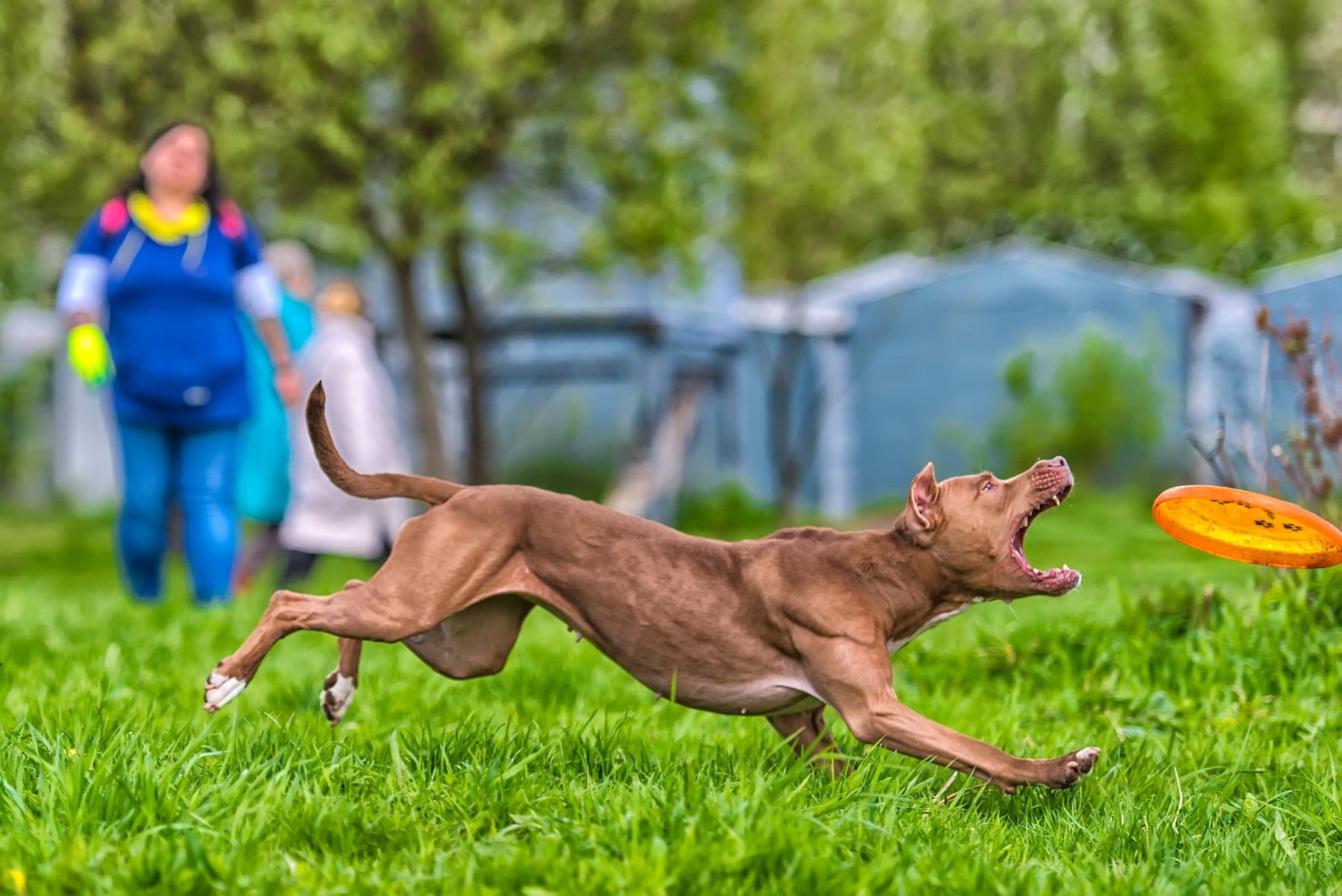
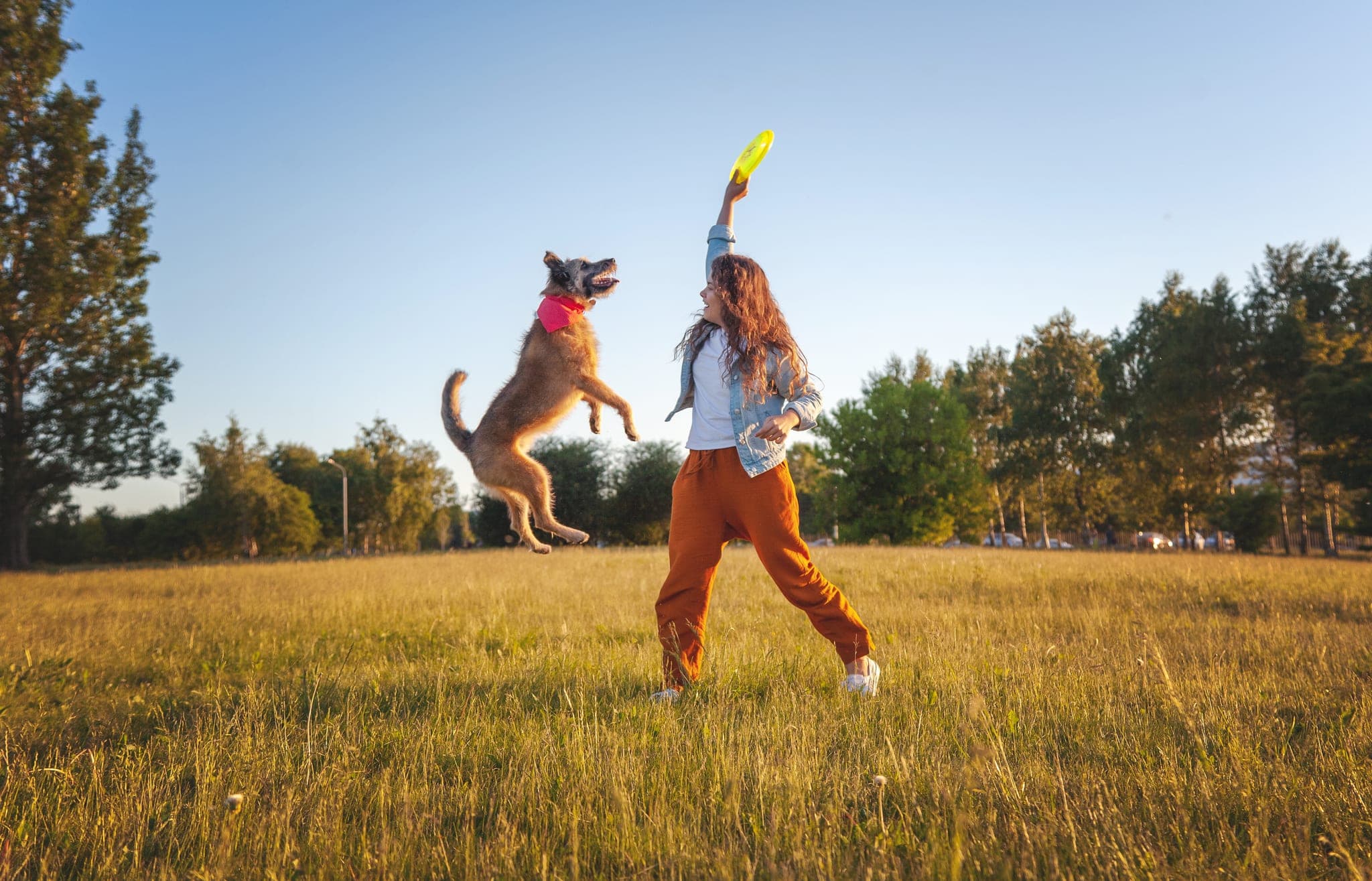
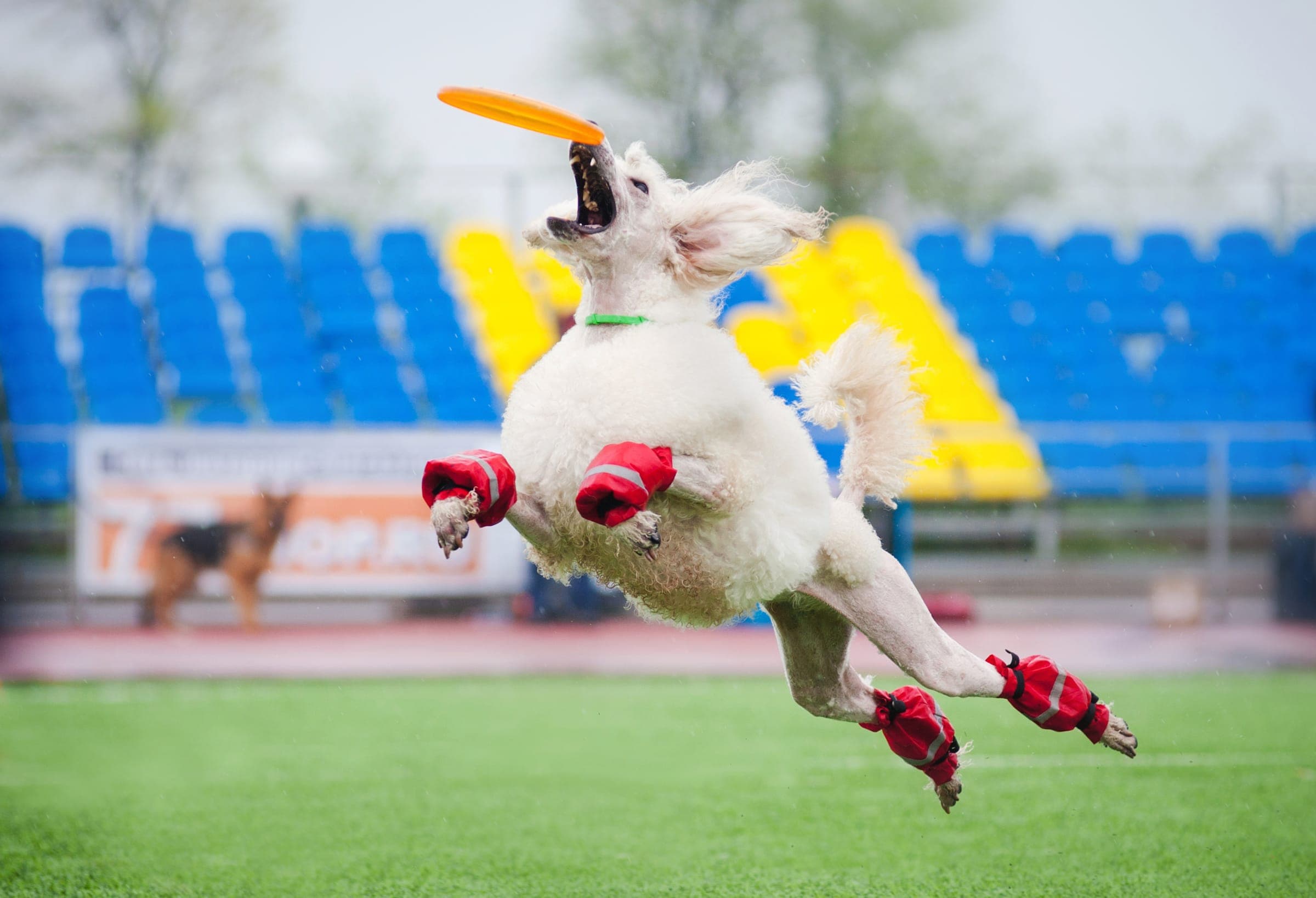
Disc dog is a field sport played off-leash on a marked course, with the dog catching plastic discs thrown by the handler inside a strict time window. Two game families do most of the work. Toss-and-fetch — also called distance and accuracy — runs about 60 seconds and scores catches by zone, with longer throws worth more. Freestyle runs up to 90 seconds in Skyhoundz and judges a choreographed routine on flow, difficulty, variety, and team interaction. The picture is simple from the sideline: handler throws, dog catches, repeat. The craft is in the throw mechanics, the dog's read, and the seconds spent between throws.

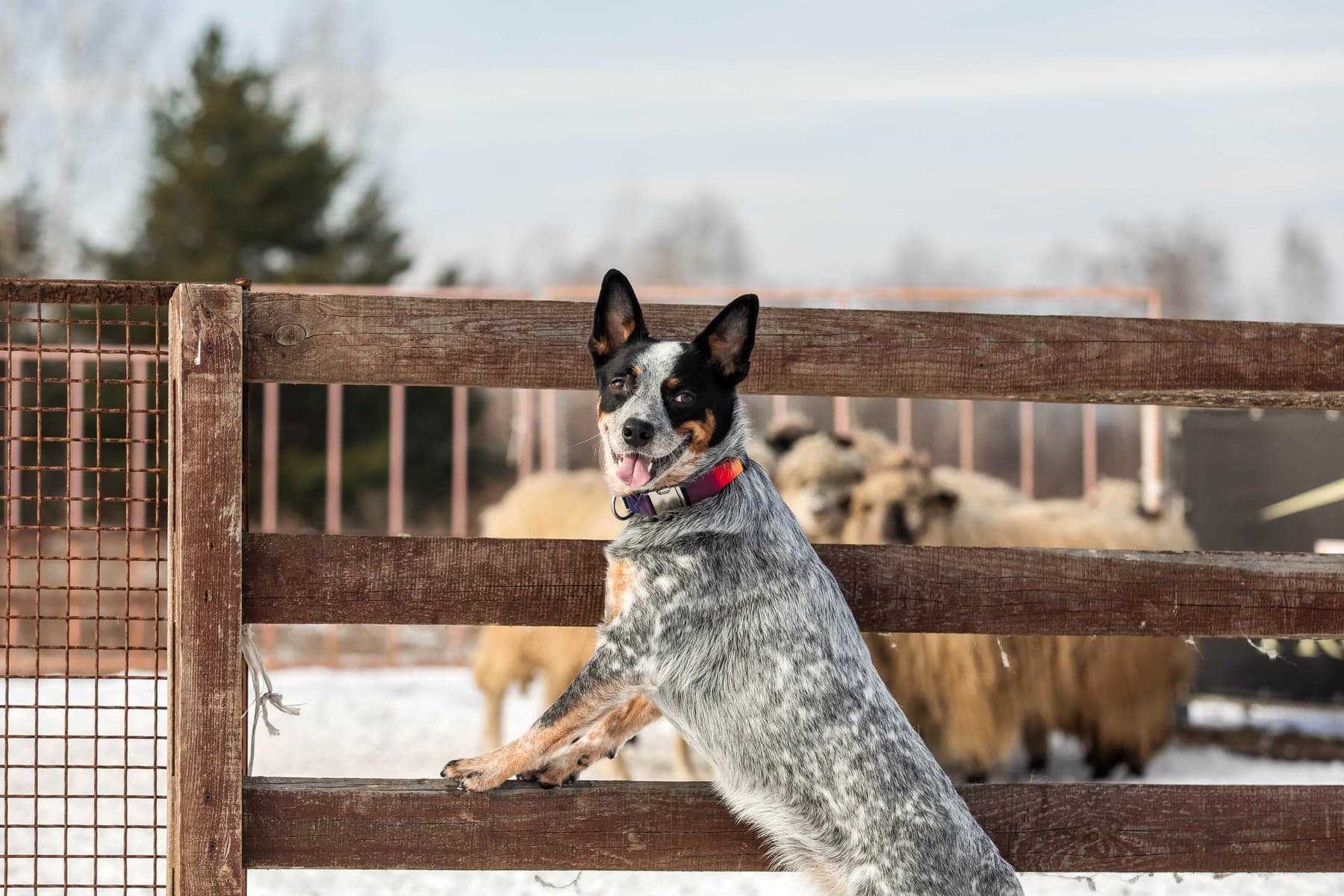
The sport rewards a specific dog: athletic, toy-driven, comfortable jumping and turning, willing to track a moving object at full sprint. Border Collies, Australian Shepherds, mixes built like them, and a long roster of MicroDog small dogs under 17 inches all compete at high levels. Reactive dogs can do the sport — UpDog clubs explicitly run reactive-friendly practices and competitions — but the staging environment at a busy multi-ring event is loud and visually busy. The physical demands are real: sprinting, jumping, turning, and decelerating on grass put load on shoulders, spine, and joints. Veterinary sports-medicine literature flags medial shoulder instability and biceps tendinopathy as common overuse injuries in jumping field sports. Dachshunds and other long-backed or chondrodystrophic breeds need particular caution before any repeated high-jump or flip work. Most experienced freestyle handlers now de-emphasize backflips and inverted vaults in favor of flatwork, controlled jump arcs, and conditioning programs.

Origins
Early 1970s
Modern disc dog traces to informal Frisbee fetch in backyards and parks. Plastic flying discs become an everyday item.
August 4, 1974
Alex Stein runs an unsanctioned halftime show at a Major League Baseball game (Dodgers vs Reds) with his Whippet, Ashley. The stunt is televised, ends with Stein hauled off by security, and effectively puts canine disc on the national stage as a spectator sport rather than a backyard game.
Late 1970s
Ashley Whippet Invitational (AWI) forms — one of the original named disc dog championship series, tied directly to the Stein/Ashley origin moment. Sets the template of regional qualifiers feeding a championship final.
1980s–1990s
Organizers codify rules for toss-and-fetch zones, time limits, and freestyle judging. FDDO, Skyhoundz, UFO, and later USDDN emerge as standardizing series. Hyperflite's Skyhoundz Championship Series grows into a tightly governed international rule set with division structure, disc specs, and a MicroDog measurement card.
2014
UpDog Challenge launches with a modular game system designed for accessibility, lower-impact entry points like rollers, and a per-game level structure with cumulative achievements (Bronze → Silver → Gold → Platinum → Unobtanium).
2019
AKC begins recognizing UpDog achievements as AKC Disc Dog titles. AKC does not run its own disc dog competitions; the recognition program pulls UpDog UPs onto AKC pedigrees. The recognition pathway is unchanged through 2026.

02 · How a run works

Disc dog isn't one game. A weekend of competition is a sequence of named games, each with its own clock, scoring rules, and reasons to choose it. Six game types cover most of what a newcomer will see at a US event.

Game 01
Toss & Fetch · Distance & Accuracy
The classic short-to-medium-throw game. The handler throws into marked scoring zones; longer throws are worth more points. Skyhoundz Distance/Accuracy uses 1–5 point zones from 10 to 50 yards, with a half-point bonus for a clean airborne catch that lands in-bounds. Time limit is 60 seconds in most series. Success looks like clean catches, fast turnarounds between throws, and zone choices matched to the dog's range that day.
Game 02
Freestyle
A choreographed routine of up to 90 seconds in Skyhoundz, scored on execution, difficulty, variety, and team interaction. Handlers may use up to eight dog-safe discs across the routine. The good freestyle runs read as flowing sequences — throws, catches, vaults, spins, and team transitions — not as a series of disconnected stunts. Judges reward control and safety alongside difficulty.
Game 03
UpDog game-based challenges
UpDog Challenge runs a catalog of named games, each with its own scoring rules. Throw-N-Go scores by distance zones over 60 seconds. 4WayPlay starts the handler in a 'Sweet Spot' and rewards quad coverage across four field quadrants. Frizgility combines 3–5 PVC agility obstacles with disc throws. Spaced Out and Far Out emphasize accurate long throws — Far Out scores 1 yard per point, simple to track in real time. Each game runs its own level structure with bonuses for handler positioning and field coverage.
The UpDog catalog
Game 04
Xtreme Distance
A pure long-throw event from Skyhoundz. Teams get 90 seconds to complete as many long throws as possible, with separate classes for disc weight and a 1-yard-per-point scoring metric in some series. Success is about straight, stable long flights and a dog that tracks and catches at full sprint without slowing.
Game 05
MicroDog divisions
Skyhoundz runs MicroDog classes for dogs measured under 17 inches at the withers, with their own disc specifications and division-specific expectations. The course and field are the same; the disc selection and realistic distance band shift to match small-dog biomechanics. UpDog also accommodates small dogs through host-defined divisions and through games (rollers, Frizgility) that suit shorter range.
Game 06
Multi-game weekends
Many US events stack formats across two days: a single weekend can include UpDog games, Skyhoundz Distance/Accuracy and freestyle, AWI classes, and UFO classes side by side. The Dog Bowl is the canonical example — a multi-org event flyer that lists Skyhoundz, AWI, and UFO classes on the same calendar. Cross-competition is normal, and many experienced handlers run their dogs in two or three series in a single weekend.

03 · UpDog Challenge

UpDog Challenge is the most accessible entry door into US disc dog. Its structure is a catalog of distinct games, each with its own scoring and level system, plus a cumulative achievements layer ('UPs' earned at Bronze, Silver, Gold, Platinum, and Unobtanium tiers). The AKC tie-in is the structural lever: since 2019, AKC recognizes UpDog UPs as AKC Disc Dog titles, which means an AKC-numbered dog earning UpDog achievements can have those titles recorded on an AKC pedigree alongside titles from other AKC sports.

01
Game-level progression
UpDog tracks performance at the game level. Throw-N-Go, 4WayPlay, Frizgility, Spaced Out, Far Out, and additional named games each have their own rules, level brackets, and point thresholds. Earning enough points within a single game lifts the team to the next medal UP for that game.
02
UP medal ladder
Within each game: Bronze → Silver → Gold → Platinum → Unobtanium UPs. Handlers earn UPs separately in every game they pursue — the achievements stack horizontally (more games) and vertically (higher medals in a single game).
03
DDB / DDBE · Disc Dog Bronze
AKC Disc Dog Bronze (DDB) — Bronze UP in three different UpDog games. AKC Disc Dog Bronze Elite (DDBE) — Bronze UP in six different games. The three-vs-six pattern is the AKC Elite tier mechanic.
04
DDS / DDG / DDP / DDU
The Bronze pattern repeats up the ladder. Silver (DDS / DDSE), Gold (DDG / DDGE), Platinum (DDP / DDPE), and Unobtanium (DDU / DDUE). Each medal tier earned across three different games gets the base AKC title; across six gets the Elite tier.
05
Eligibility for AKC titles
Mixed-breed dogs need an AKC Canine Partners number; unregistered purebreds can title via PAL or FSS. UpDog itself charges host clubs a $3.50 per-run administrative fee, which clubs roll into entry costs. AKC charges a separate processing fee per recognized title.
Key facts
Founded
2014
AKC pedigree tie
Yes — UPs map to DDB → DDU
Per-run admin fee
$3.50 (rolled into entry)
Eligibility
All breeds + mixes
Reactive-friendly
Common host-club norm
Min age
12mo (Frizgility); games vary
The accessibility lever
UpDog is the most explicitly reactive-friendly disc organization at the community level — many UpDog hosts run practices and competitions arranged with extra spacing, careful crating, and a tolerant culture, though this is a host-club norm rather than an official org status. UpDog hosts also welcome low-impact configurations — rollers (ground-skim throws) count in many games, which makes the platform workable for puppies, returning-from-injury dogs, and senior dogs.

04 · Skyhoundz

The Hyperflite Skyhoundz Championship Series is the long-running traditional US disc circuit. Where UpDog reads as a games platform with cumulative stats, Skyhoundz reads as a series of championship events — Classic World Championship for freestyle and distance/accuracy, DiscDogathon for combined-skills competition, Xtreme Distance for long-throw specialists, and a formal MicroDog division for dogs under 17 inches at the withers. Hyperflite-spec discs are part of the rule set.

01
Classic World Championship
Freestyle and Distance/Accuracy. Teams qualify through regional events for the World Championship in their discipline. Distance/Accuracy uses 1–5 point zones from 10 to 50 yards over a 60-second round; freestyle runs up to 90 seconds scored on execution, difficulty, variety, and team interaction.
02
DiscDogathon
Combined-skills championship event. Multi-event format that rewards versatility across the Skyhoundz catalog rather than peak performance in a single discipline.
03
Xtreme Distance
The long-throw championship. Teams get 90 seconds to complete as many long throws as possible, with separate classes for disc weight. The series most aligned with handlers building specifically for distance and stable long-flight discs.
04
MicroDog
For dogs measured under 17 inches at the withers. Requires a Skyhoundz MicroDog Measurement Card. The formal small-dog division for the series — disc specs and realistic distance band shift to match small-dog biomechanics.
05
Class structure
The series runs Open, Sport, Youth, MicroDog, and Xtreme Distance classes across its events. Division placement depends on age, experience, and size. No central title ladder comparable to UpDog's UP medals — the visible accomplishments are championship qualifications and placements, recorded by the series rather than transferred to AKC.
Key facts
Disc spec
Hyperflite (series-supplied)
Distance/Accuracy
10–50 yd zones, 60s round
Freestyle
Up to 90s, up to 8 discs
MicroDog
Under 17" — Measurement Card required
AKC pedigree tie
None
Marquee
Classic World Championship
Worlds is the finish
Skyhoundz Worlds is an established marquee finish in the sport, drawing international entries. There is no central title ladder comparable to UpDog's UP medals or AKC's Disc Dog titles — the visible accomplishments are championship qualifications and placements. For handlers oriented around event prestige rather than accumulating titles, Skyhoundz is the structural fit.

05 · Side by side

UpDog Challenge and Skyhoundz are the two largest US series by event density and US-handler footprint — the two most newcomers will encounter first. Three additional organizations — USDDN, AWI, and UFO — run parallel programs with their own qualifiers and championships, and most active handlers cross-compete. The three additional orgs each get a short overview here and a column in the comparison table; for the deep-dive level structures, UpDog and Skyhoundz are the ones with full hubs above.

UpDog Challenge
Game-based platform with AKC pedigree tie-in. Many short games, level brackets, UP medal achievements (Bronze → Unobtanium). UpDog UPs map to AKC Disc Dog titles (DDB through DDU + Elite tier) via the AKC recognition program since 2019.
updogchallenge.com →
Skyhoundz
Long-running Hyperflite series with multiple championship events. Classic World Championship, DiscDogathon, Xtreme Distance. MicroDog division for dogs under 17 inches at the withers. No AKC tie — visible accomplishments are championship placements.
skyhoundz.com →
USDDN
US Disc Dog Nationals. Internationally governed series with a steering committee of affiliated clubs worldwide. Mission language explicitly welcomes teams 'regardless of club membership or political affiliation' — a deliberate stance toward standardization across borders.
usddn.com →
AWI
Ashley Whippet Invitational. One of the original named disc dog championship series, tied to the sport's origin story around Alex Stein and Ashley Whippet in the 1970s. Regional qualifiers feed a World Championship. Offered alongside Skyhoundz and UFO at multi-org events like the Dog Bowl.
UFO World Cup
Global, points-based tour. Local divisions run at affiliated events worldwide, and cumulative standings feed a finals bracket. The disc dog series most likely to reward handlers who travel for points.
UpDog ChallengeSkyhoundzUSDDNAWIUFO
Role in USGame-based platform with AKC pedigree tie-inLong-running Hyperflite series with multiple championship eventsInternational, club-governed seriesOriginal-era championship seriesGlobal points-based tour
Primary focusMany short games, level brackets, achievementsClassic freestyle, Distance/Accuracy, DiscDogathon, Xtreme DistanceStandardized rules across affiliated clubsFreestyle and toss-and-fetch championshipsCumulative World Cup points
Levels / titlesGame levels (1–2+); UP medals (Bronze → Unobtanium); AKC Disc Dog titles via recognitionChampionship qualifications and placements; MicroDog Measurement Card; division-class structureQualifiers feeding World Finals; placements as status markersRegional qualifiers feeding World Championship; placements as status markersWorld Cup standings; finals bracket
AKC pedigree recognitionYes — UpDog UPs map to AKC Disc Dog titles (DDB → DDU, plus Elite tier)NoNoNoNo
Known forAccessibility, achievements/stats, AKC pathwayHyperflite discs, MicroDog structure, multiple WorldsCooperative international governanceOrigin-story prestigeInternational circuit feel and ranking

Titles do not transfer across disc organizations. An UpDog UP — or its corresponding AKC Disc Dog title — does not create a Skyhoundz, USDDN, AWI, or UFO title, and vice versa. What does transfer is the dog. Cross-competition is normal: a team can run UpDog games on Saturday and a Skyhoundz Distance/Accuracy round and an AWI freestyle on Sunday. The skills carry over fully — discs are discs. What changes between series is the rule set, the scoring math, and which credential matters to that particular handler.

Which one fits you?
UpDog Challenge fit
Want stat tracking, an achievements layer, and titles on an AKC pedigree. Its game catalog, UP medal structure, and AKC recognition pathway are the clearest progression ladder in the sport.
Skyhoundz fit
Want a tightly governed championship structure and the classic Skyhoundz World Championship as the finish line. MicroDog-eligible small dogs in particular get a formal home here.
USDDN fit
Want a club-governed series with international qualifiers and standardized rules across borders. Strongest fit for handlers planning to travel internationally or compete with affiliated clubs abroad.
AWI fit
Drawn to the sport's origin story and a championship series with that lineage. A natural second series for handlers who are already running Skyhoundz at multi-org weekends.
UFO fit
Like the idea of accumulating points on a global tour. The series most rewarding to handlers who travel for points and like cumulative ranking. Most active US handlers eventually run UpDog plus one championship series.

06 · Getting started

Disc dog has one of the lowest equipment-cost entries in dog sports. The gear is cheap; the field is grass. Most handlers begin through a local club running UpDog games or a fun match, or by working one-on-one with a trainer who has disc experience and can teach safe throwing and catch mechanics before any jumping starts. A surprising number of teams start by self-training with online resources and then enter a low-stakes UpDog event to test what they've built.

Equipment
Discs, leash, rewards
A small stack of dog-safe discs — most handlers recommend three to five identical discs so throws stay consistent. Skyhoundz events specify Hyperflite discs and separate disc specs for MicroDog classes. A flat collar or fitted harness, plus a leash for staging. High-value rewards: tug toys or food (most disc-driven dogs reward primarily with the next throw, but food matters in early training). A crate, shade canopy, and water for outdoor event days.
Foundation · weeks 1–8
Disc value, flatwork
Toy and disc value, targeting, flatwork, basic fetch and drop. Most foundation classes run 4 to 8 weekly sessions and avoid competition-height jumping. Toy-driven pet dogs progress from first structured training to a low-stakes UpDog game — rollers and short throws — within a few months of consistent work. Hesitant or low-drive dogs may need a longer foundation.
First event · months 1–6
UpDog or fun match
First titles. Reaching the point where a team can comfortably play multiple UpDog games or a competitive Skyhoundz Distance/Accuracy round takes one to two seasons. Higher AKC tiers (Gold, Platinum, Unobtanium) and Skyhoundz Worlds qualifications are multi-season efforts requiring consistent training, careful event selection, and sustained conditioning.
Before you enroll
Age: UpDog Frizgility specifies a 12-month minimum with reduced jump heights for dogs 12–18 months and for veterans; competition-height jumping for most teams waits until 12–18 months across breeds, longer for large and giant breeds. Reliable recall and off-leash control matter more than throwing distance. Crate tolerance and the ability to settle near other dogs in stimulating environments matter — events are full-day outdoor commitments. A vet sports-medicine consult before maximal-effort jumping is sensible for large breeds, long-backed or chondrodystrophic dogs (Dachshunds, Corgis), older dogs, and any dog with a prior shoulder, spinal, or cruciate concern.

07 · Event day

Disc dog events are outdoor, social, and built around short, intense runs separated by long stretches of waiting in shade. The atmosphere is closer to a Fast CAT or Barn Hunt event than to an obedience or IGP trial — casual, beginner-tolerant, sometimes festival-style — but with the added load of unpredictable weather and the mental work of throw timing under pressure. First-time handlers find the day mentally taxing more than physically; many dogs handle the field environment better than their humans do.

The flow
How the day runs
Check-in and waivers at the secretary's table — confirm entries, sign waivers, present any required Skyhoundz MicroDog Measurement Card, pick up a running order. UpDog events charge a $3.50 per-run admin fee passed through from UpDog to the host. Players' meeting walks through running order, field layout, and host-specific rules. Game-by-game runs: each individual run is short — 60 seconds for distance/accuracy, up to 90 seconds for freestyle — separated by long resets.
The kit
What to bring
Crate, pop-up shade canopy, water, cooling gear for warm-weather events. Three to five dog-safe discs of the same model, plus a backup model in a different color for visibility issues. A leash, flat collar or harness, and high-value rewards for between runs. A folding chair, sun protection, snacks, and a printed copy of the premium and any required organization paperwork.
The mistakes
What goes wrong
Over-amped runs — first-time handlers underestimate their own nerves and overestimate their dog's need for high arousal. Over-amped dogs run shorter, catch worse, and miss reads. Booking too many games — a dog that runs four UpDog games and a Skyhoundz round in one day is a tired dog by mid-afternoon. Skipping rest and cool-down — short, intense runs with no structured warm-up or cool-down is the fast path to overuse injury.
The reality
What videos don't show
The waiting — highlight reels show the 60–90 seconds on the field; the day is mostly between-run logistics. The setup — loading and unloading gear, finding shade, claiming a crating spot near a power source for fans, walking the field before play. The mid-day mental shift — multi-game weekends require switching scoring rules and game mechanics between rings; the cognitive load is real, especially for first-time multi-org competitors.

08 · What it costs

Disc dog has one of the lowest equipment costs in dog sports — discs and grass — and one of the lower per-event entry fees. The annual budget swings on travel and event volume. A handler who runs local UpDog days and one regional championship a year spends materially less than one who chases Skyhoundz Worlds qualifiers across multiple states.

One-time setup
$150$400
Three to five dog-safe discs of one model, crate, pop-up canopy, leash and harness, basic cooling gear
Per-game entry
$10$20
$10/round community trial example; $20/game UpDog 2026 fairground example; Skyhoundz Xtreme Distance ~$10 per disc class
UpDog per-run admin
$3.50$3.50
Pass-through from UpDog to host club, rolled into entry costs
Active annual
$1.5k$10k+
Casual $300–$700; active competitor $1.5k–$4k; championship $5k–$10k+ — travel dominates
The honest truth
The recurring expense newcomers underestimate is travel. Disc dog's per-event entry fees are modest; what stretches the budget is the regional or national driving required to chase qualifiers and championship invitations. The budget tells you what kind of campaign the team is realistically running — local UpDog ribbons, a regional championship plan, or a Worlds-qualifying season.
Related sports

If Disc Dog interests you, look at these too.