Discover Flyball
A team relay race — four dogs sprint over four hurdles, hit a spring-loaded box to release a ball, and tear back to their handlers. Head-to-head, lane against lane, with passes timed in inches.
01 · What is it
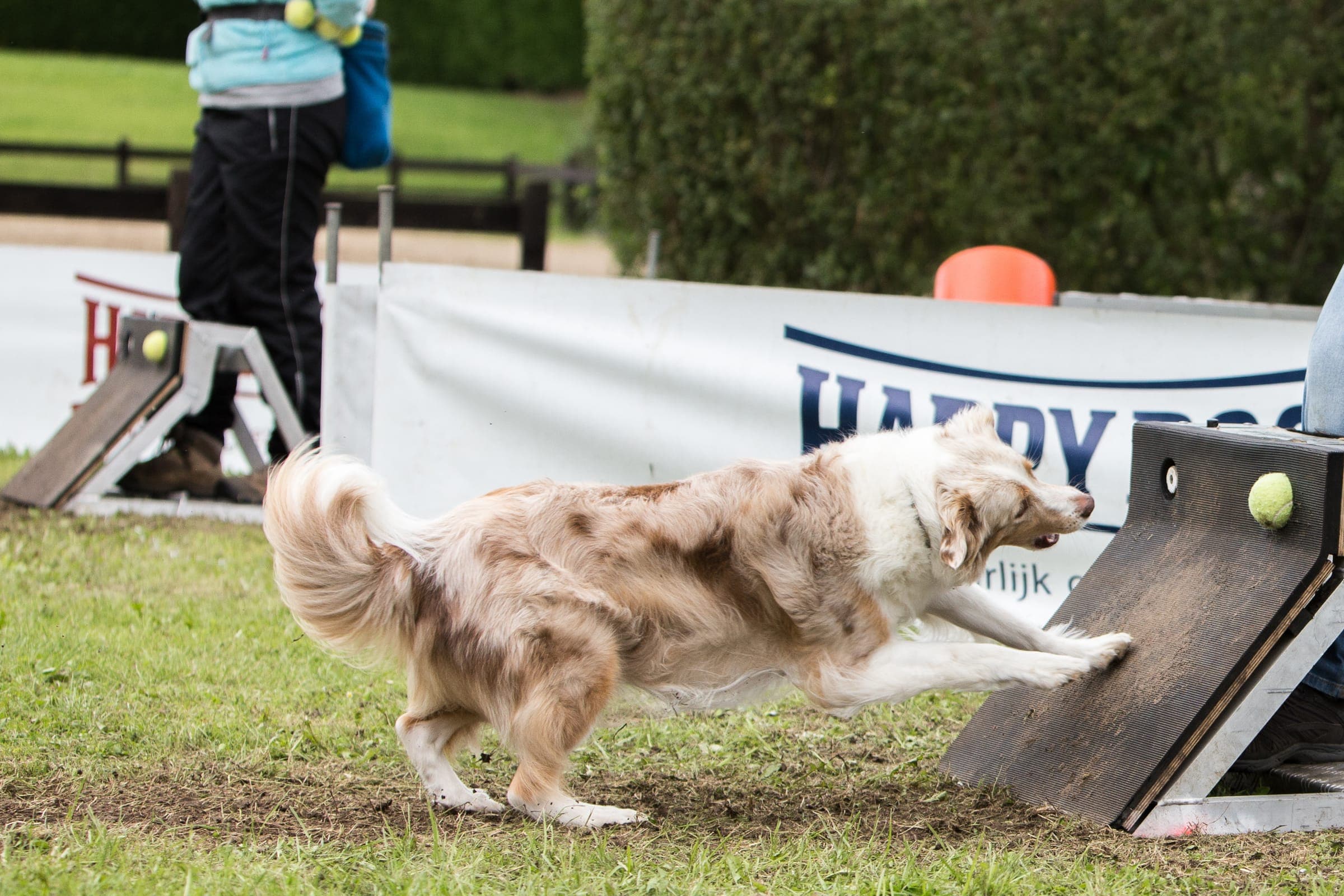
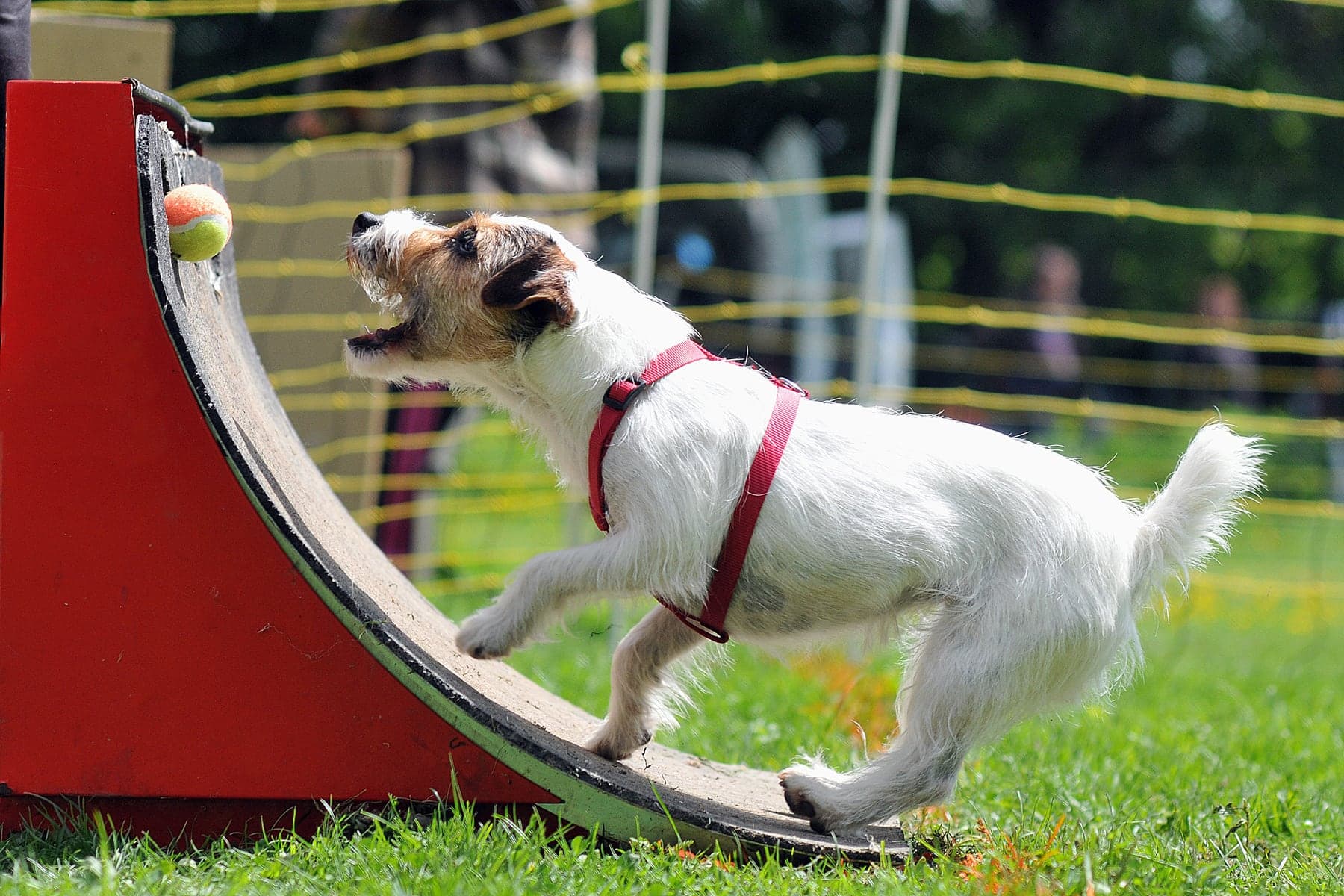
Flyball is a head-to-head relay race between two teams of four dogs running parallel lanes. Each lane has a start line, four hurdles spaced ten feet apart, and a spring-loaded box at the far end. The first dog releases off-leash, sprints over all four jumps, hits a pedal that ejects a tennis ball, catches the ball, and races back over the same jumps. The instant that dog crosses the start line, the next one is released. First team to put four clean runs through the lane wins the heat.
Hurdle height is set by the smallest dog on the team — the 'height dog' — at six inches below their withers, inside a 7-to-14-inch range. A team built around an 11-inch Jack Russell runs five-inch jumps; a team whose smallest dog is an 18-inch Border Collie runs twelve-inch jumps. This single rule reshapes how teams recruit: a fast small dog is the most strategically valuable teammate in the sport. The sport rewards high retrieve drive, the ability to ignore another dog running directly toward you in the adjacent lane, and the soundness to take repeated impact through shoulders and carpi. Aggression toward other dogs is disqualifying — dogs run off-leash within a few feet of dogs from the opposing team, and the rules are unforgiving on this point.
02 · The course
A flyball run is a sequence of four mechanical events repeated four times per heat — once per dog. The differences between a fast team and a slow one show up in the same four places.
03 · NAFA
The North American Flyball Association is the older, larger, and more US-default league. Founded in 1984, NAFA wrote the rulebook most flyball still runs under, hosts the marquee CanAm Classic each year, and maintains the deepest title ladder in the sport — from a first 20-point title through six-digit lifetime awards. Most US clubs run NAFA first and add U-FLI second. NAFA is also the only league whose titles AKC recognizes for pedigree records.
04 · U-FLI
United Flyball League International formed in the mid-2000s as an alternative to NAFA, with a distinct rulebook, a distinct point system, and a flagship Tournament of Champions held annually. U-FLI's competitive identity centers on flexible class structure — Standard, Variety, Singles, Pairs, Pre-Flight — plus detailed online statistics and an Affinity Award Program that combines points across leagues. Many US clubs run both NAFA and U-FLI in a season; some run U-FLI only.
05 · Side by side
NAFA and U-FLI cover the same fundamental sport — four dogs, four hurdles, a spring-loaded box, head-to-head racing — through different rulebooks, different point systems, and different class structures. AKC doesn't run flyball at all; it records selected NAFA titles onto pedigrees. For most US handlers, the choice is 'NAFA, with U-FLI added for class variety and Pickup-team flexibility,' not 'NAFA or U-FLI.'
| NAFA | U-FLI | AKC | |
|---|---|---|---|
| Role in US | Largest US league; default tournament calendar in most regions. | Alternative league; broader class formats. Often added to a NAFA schedule rather than replacing it. | Title-recognition partner only — does not run flyball trials. |
| Classes | Regular · Multibreed · Open · Veterans · Non-regular | Standard · Variety · Singles · Pairs · Pre-Flight · Pickup teams | None — no AKC flyball program. |
| Points system | 1 / 5 / 25 points per dog per clean heat at <32 / <28 / <24 seconds. No win bonus. | Per-heat points plus a 5-point bonus to dogs on winning teams. | Imports NAFA point totals via Title Recognition. |
| Title ladder | FD → FDX → FDCh → FM → FMX → FMCh → ONYX → FGDCh (30K, 40K, 50K…) → Hobbes (100K). | Top Flight → Top Flight Executive → Top Flight Premier → Top Flight X-Treme (with suffix levels). | Records FDCh, FM, ONYX, FGDCh from NAFA — about $25 per title submission. |
| Cross-org points | Native NAFA titles only. | Affinity Award Program — combines points from any flyball sanctioning body. | Recognition only; no point aggregation. |
| Marquee event | CanAm Classic. | Tournament of Champions. | None. |
| Known for | Deep lifetime title ladder, point-driven culture, CanAm prestige. | Flexible class formats, Pickup teams, online stats, Affinity Awards. | AKC pedigree record visibility for NAFA titles. |
Titles do not transfer between NAFA and U-FLI. A dog with an ONYX runs U-FLI from zero in the Top Flight series, and a dog with Top Flight Premier runs NAFA from zero in the FD ladder. What does transfer is the dog and the training — the box turn, the pass timing, the start-line release, and the four-jump rotation are identical across leagues. The credential is what doesn't move.
06 · Getting started
Flyball is a club sport. Unlike Nose Work or obedience, it's rare to enter through a generic group class at a regional training facility — the equipment is too specialized (regulation boxes, jump sets, electronic timing) and the skills (box turns, pass timing) are too club-specific. Most handlers start by visiting a local club's practice, talking with members about their dog, and joining a foundation program that meets weekly.
07 · Tournament day
Flyball tournaments are loud, fast, and crowded. Two lanes run simultaneously, four dogs sprint head-to-head per heat, and the noise — barking, squeaking toys, electronic timing tones, multiple rings in some venues — runs nonstop from morning through evening. The actual racing time per dog is small relative to total time at the venue: a heat is 15–20 seconds, and a busy team runs 20–30 heats across a weekend.
08 · What it costs
Flyball costs spread across a wide range, driven mostly by tournament travel rather than equipment. Equipment costs are largely amortized through clubs — boxes and electronic timing are club-owned, not handler-owned — so the cost ladder rises with travel, entry fees, and tournament density rather than gear.
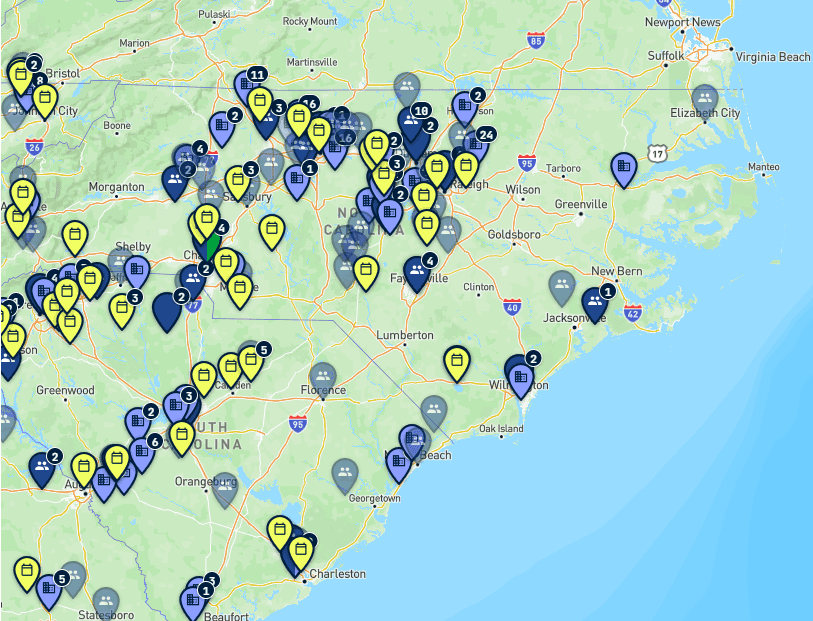
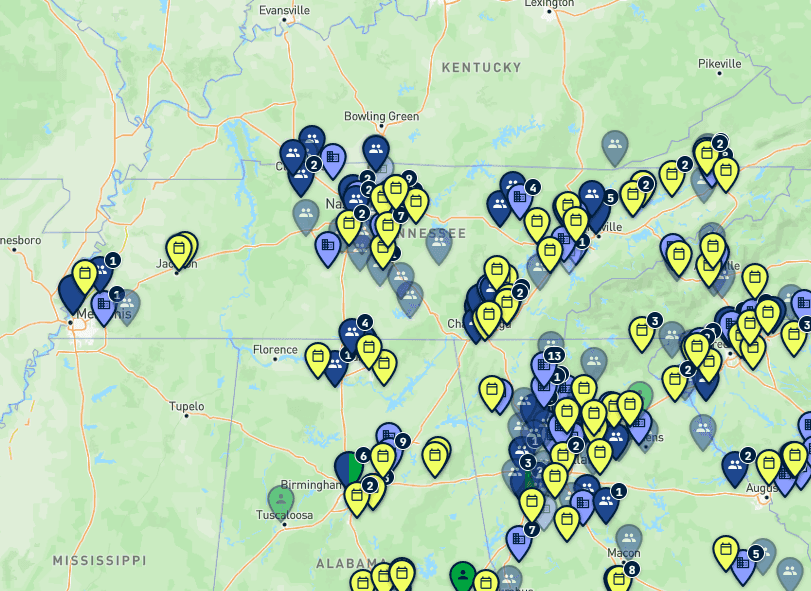
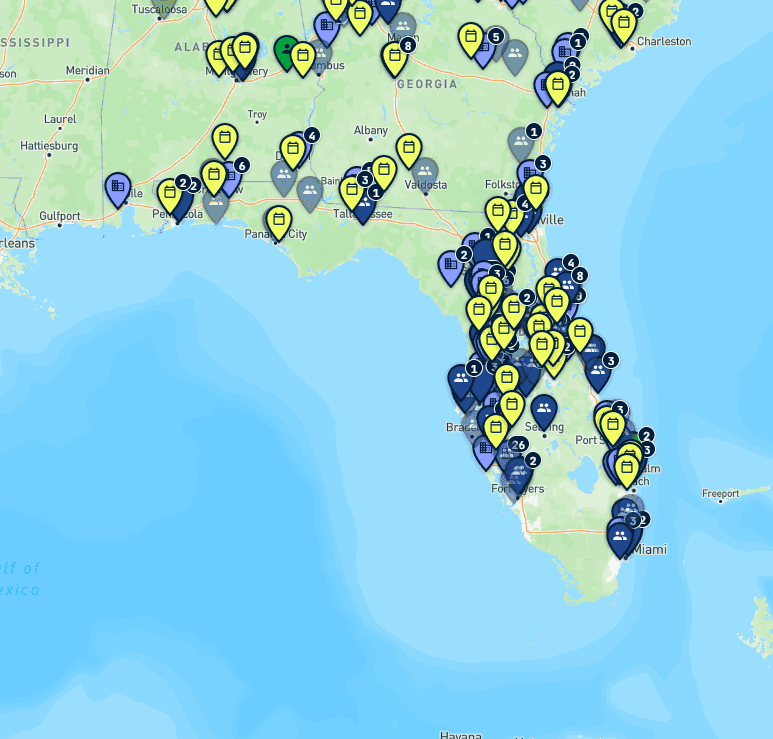
Find flyball near you.
Made for flyball.
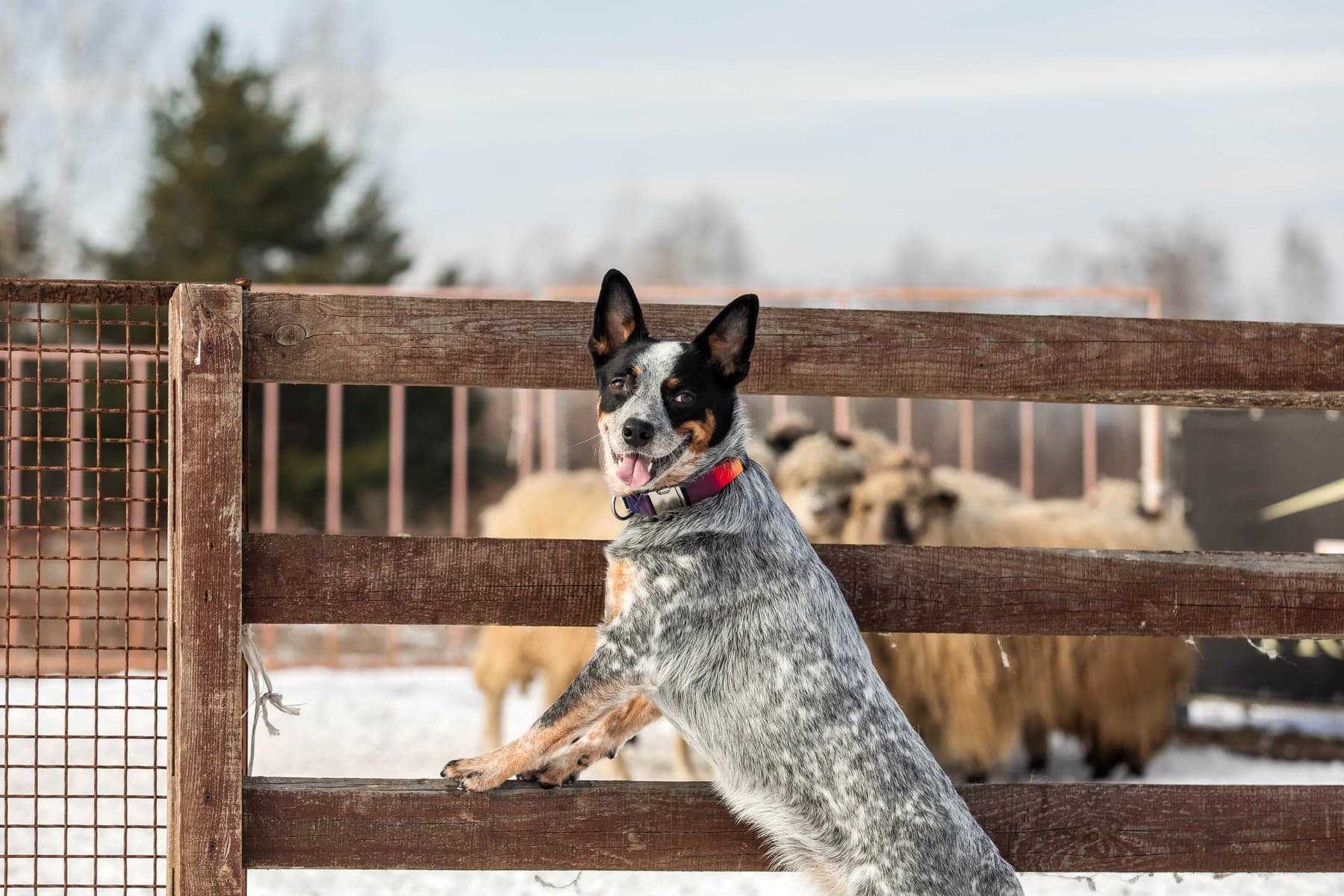
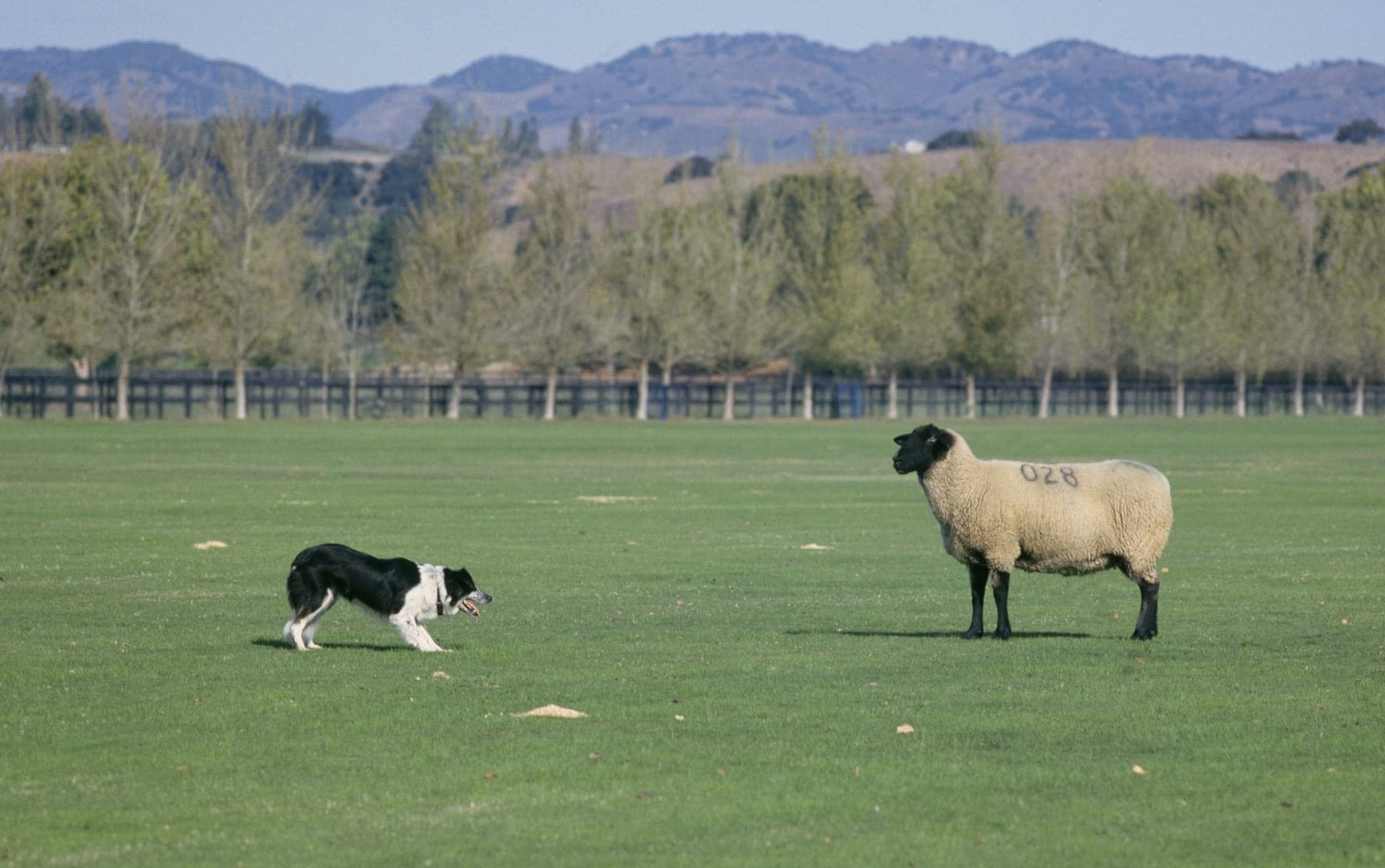
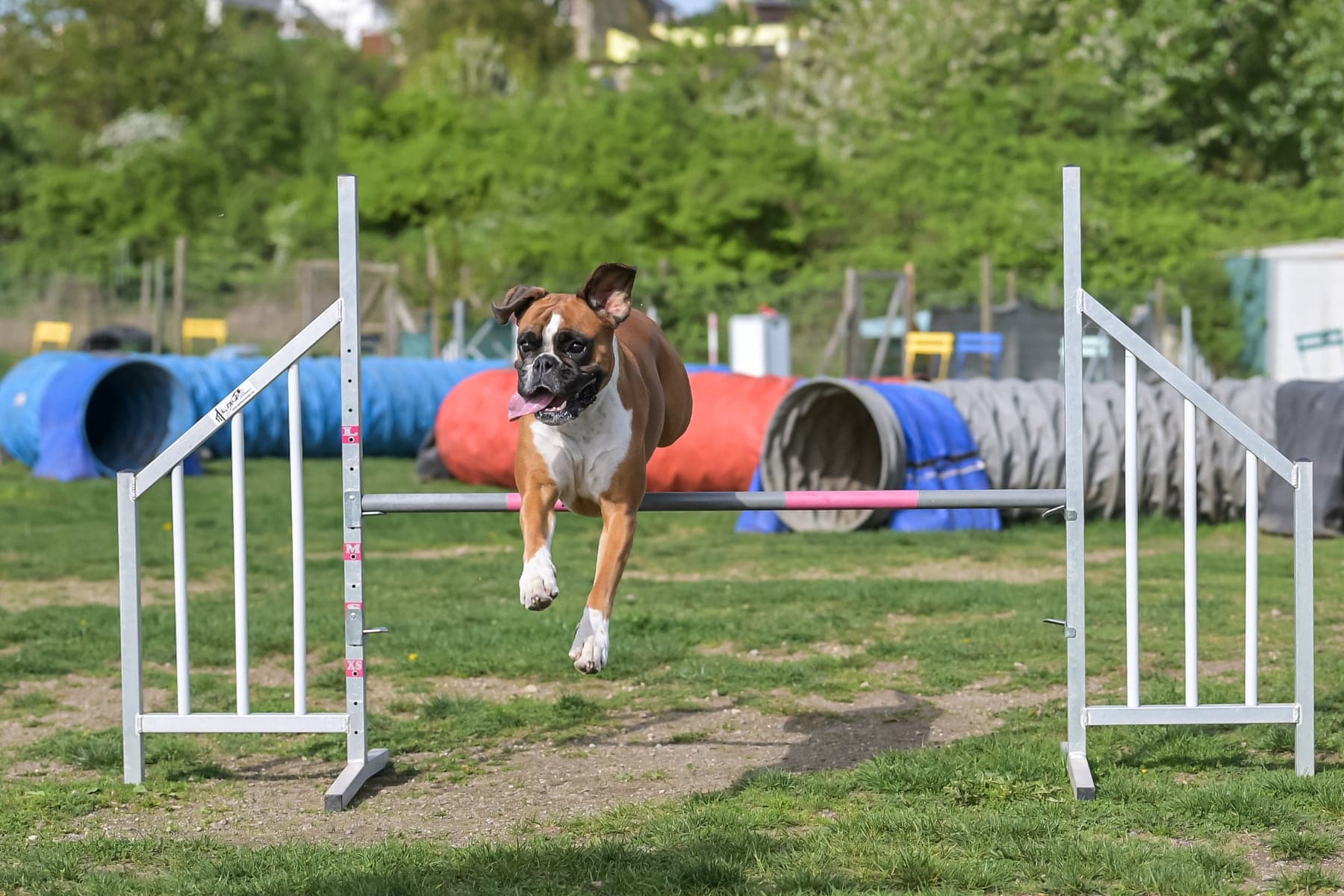
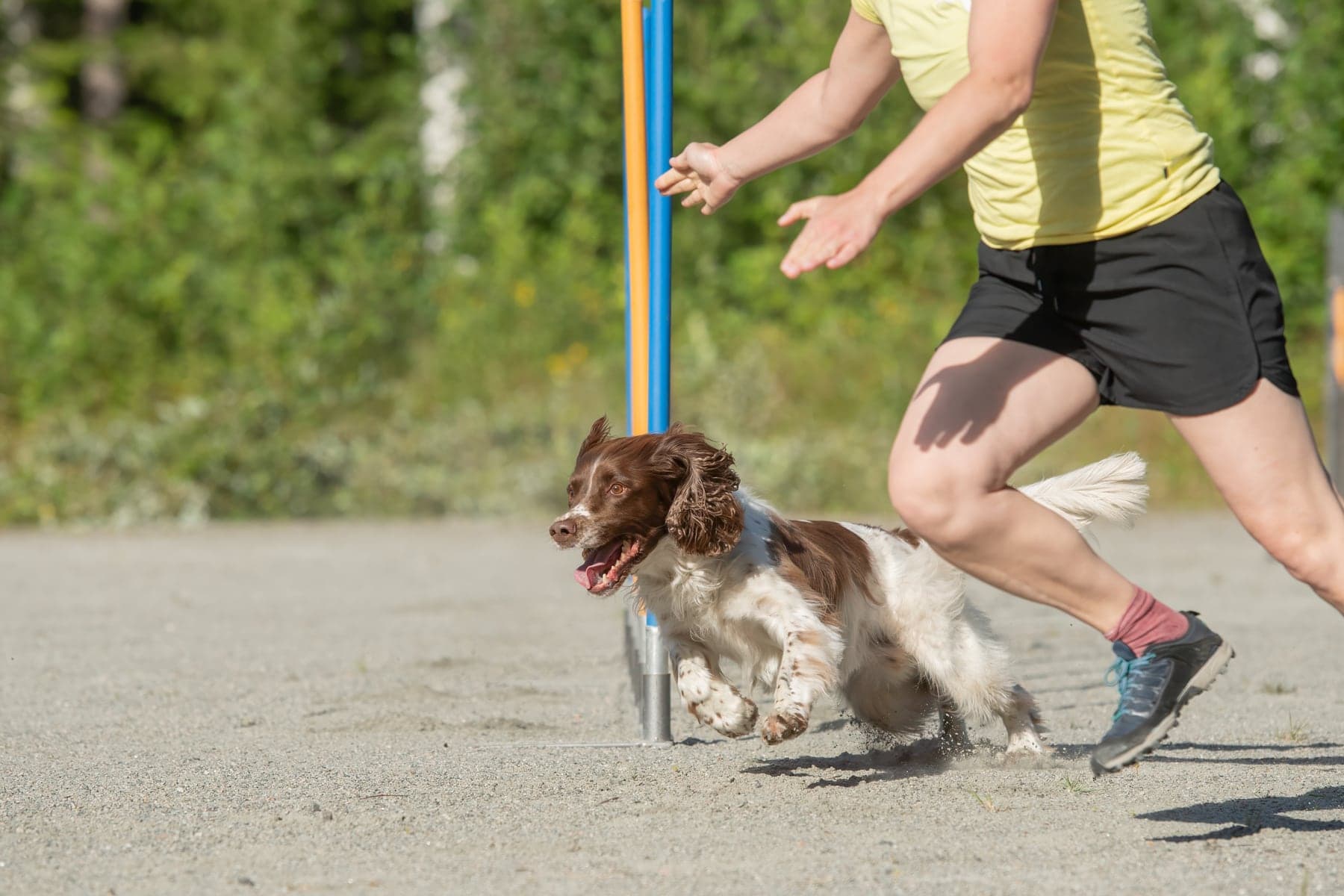
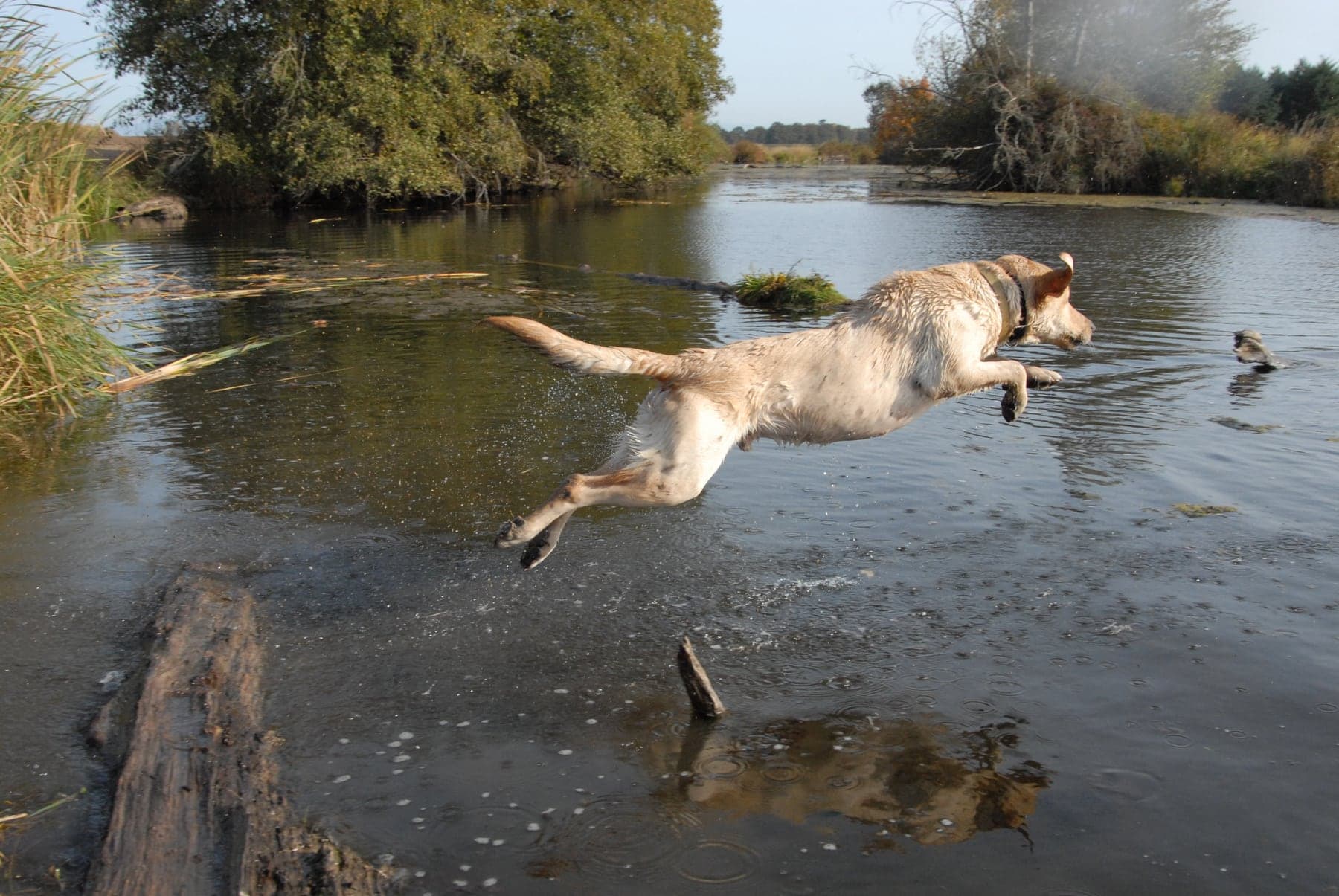
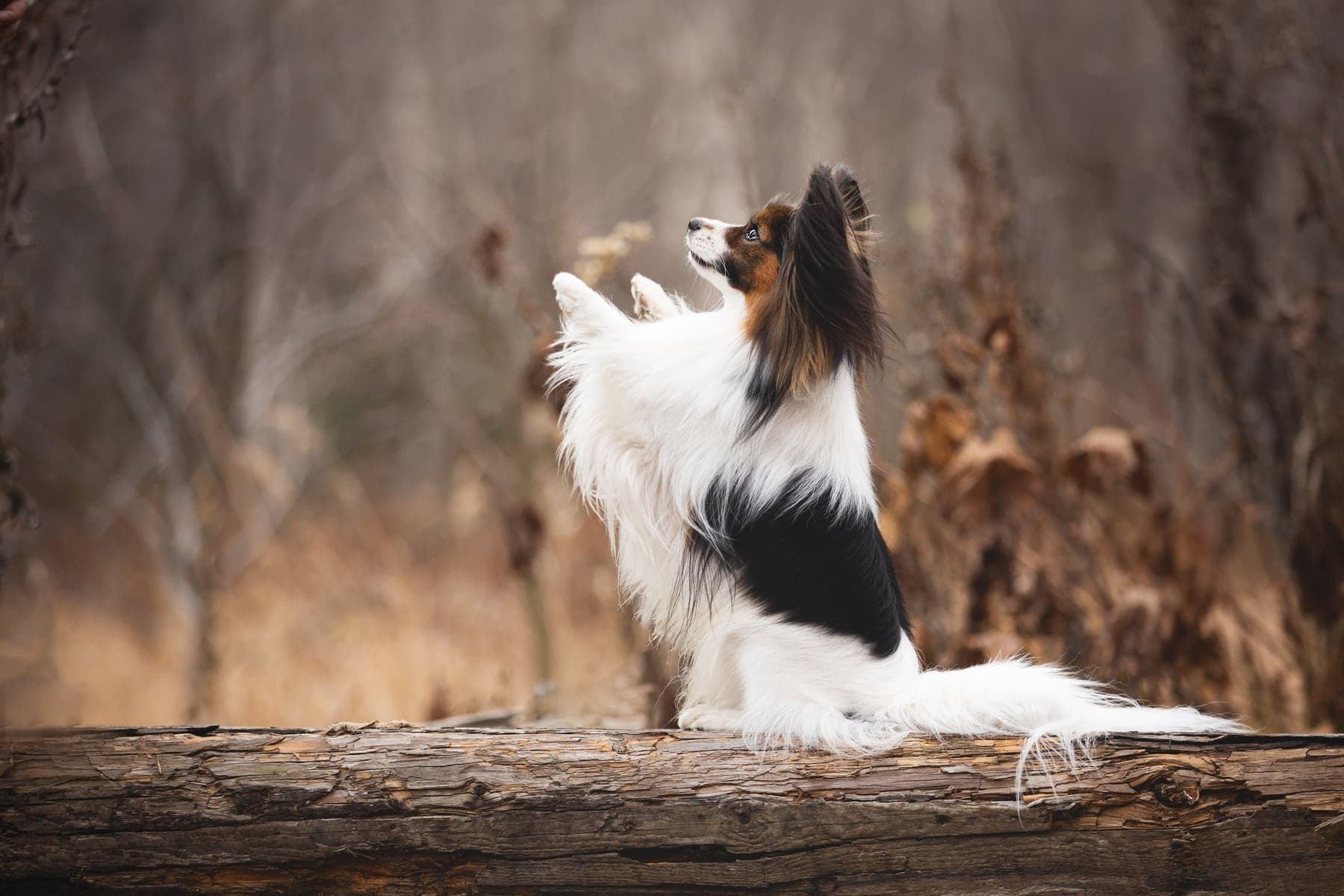
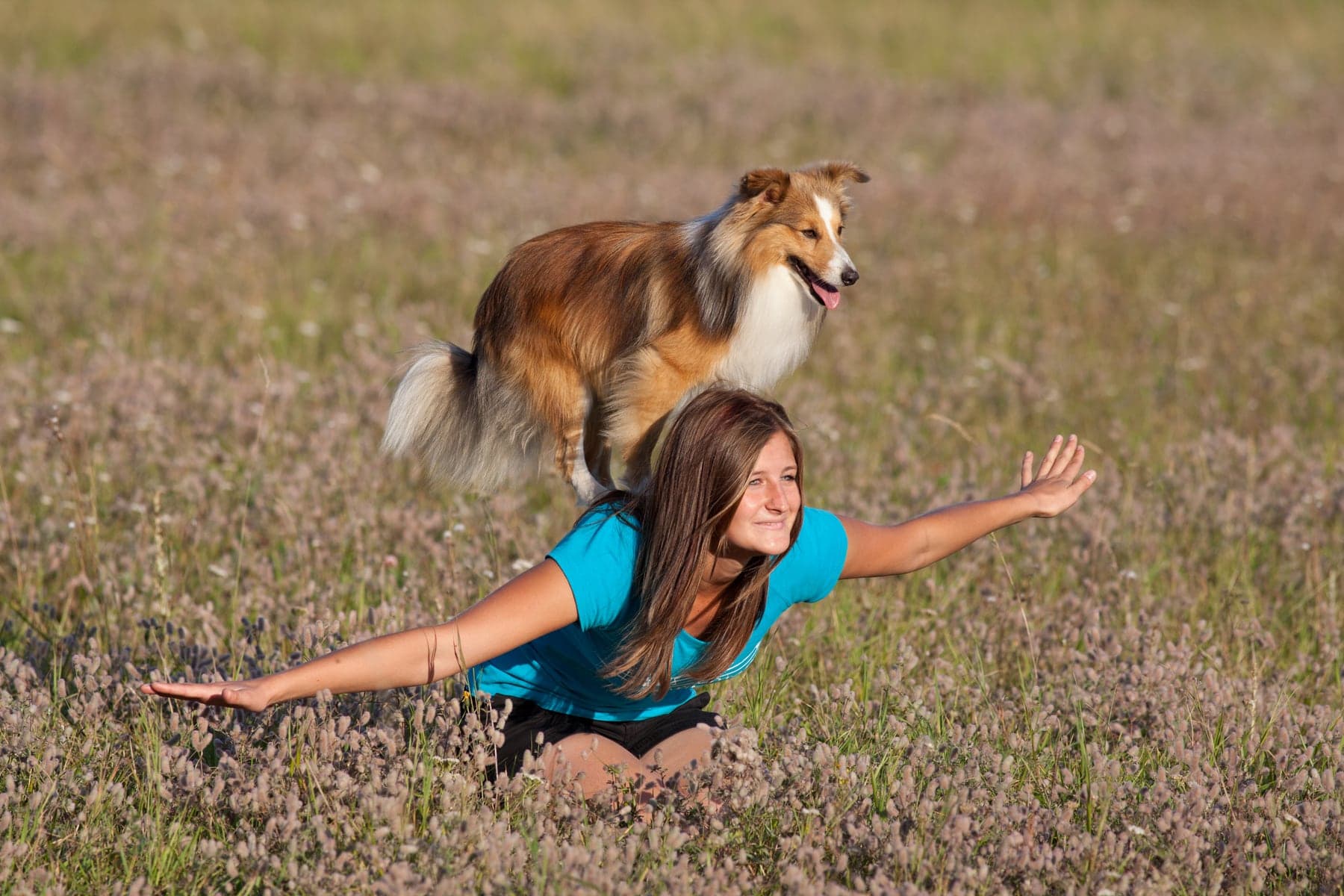
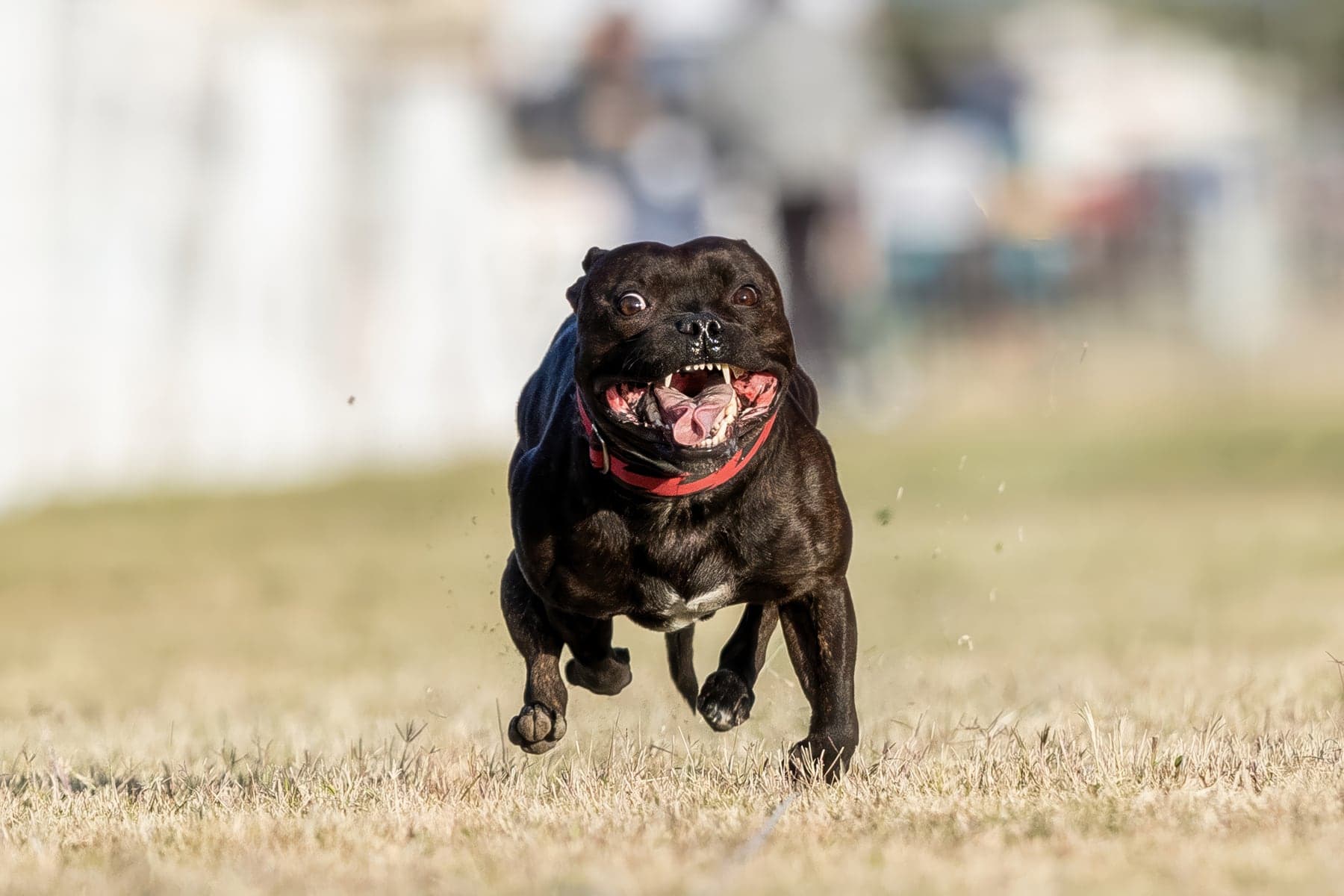
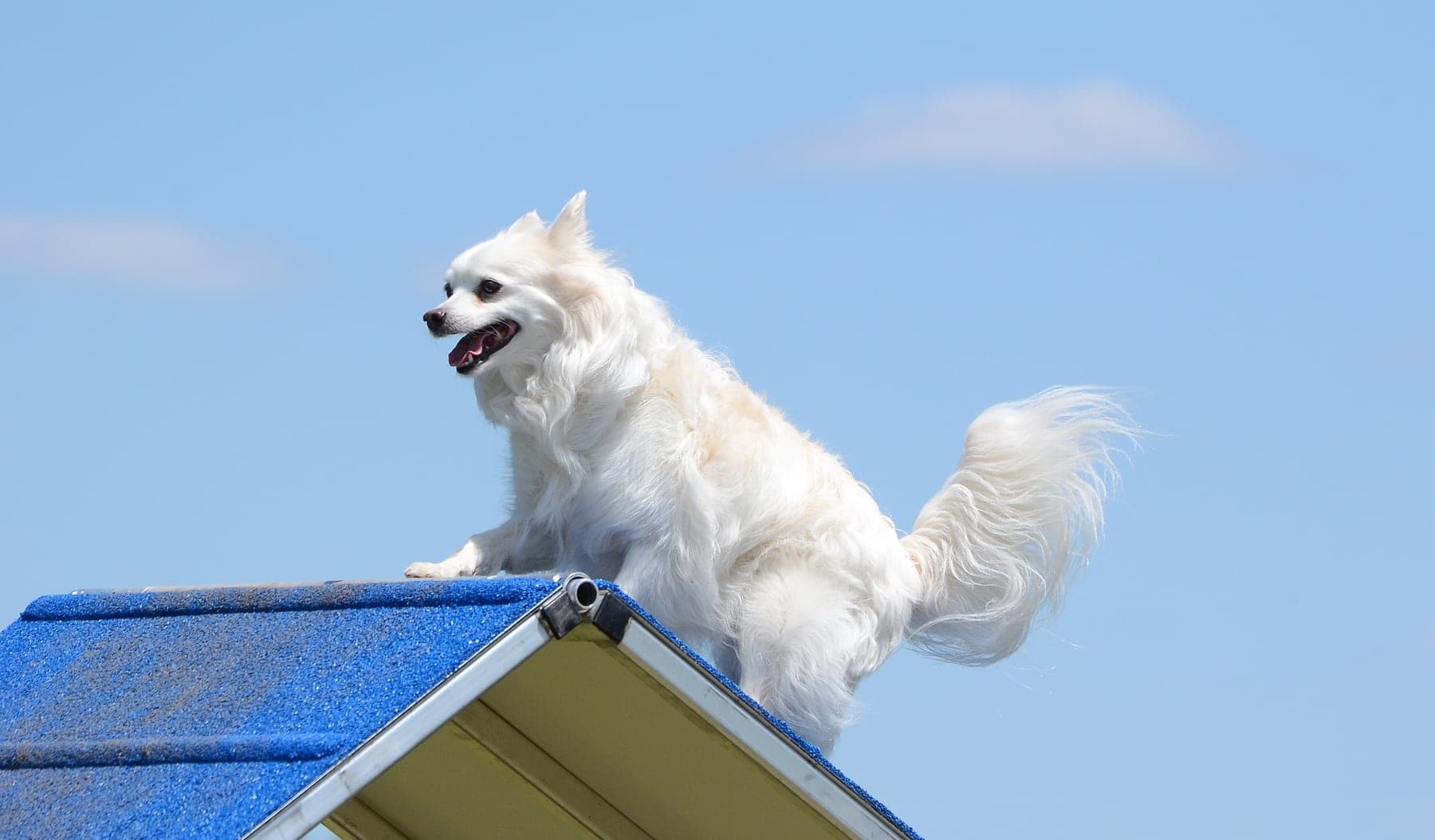
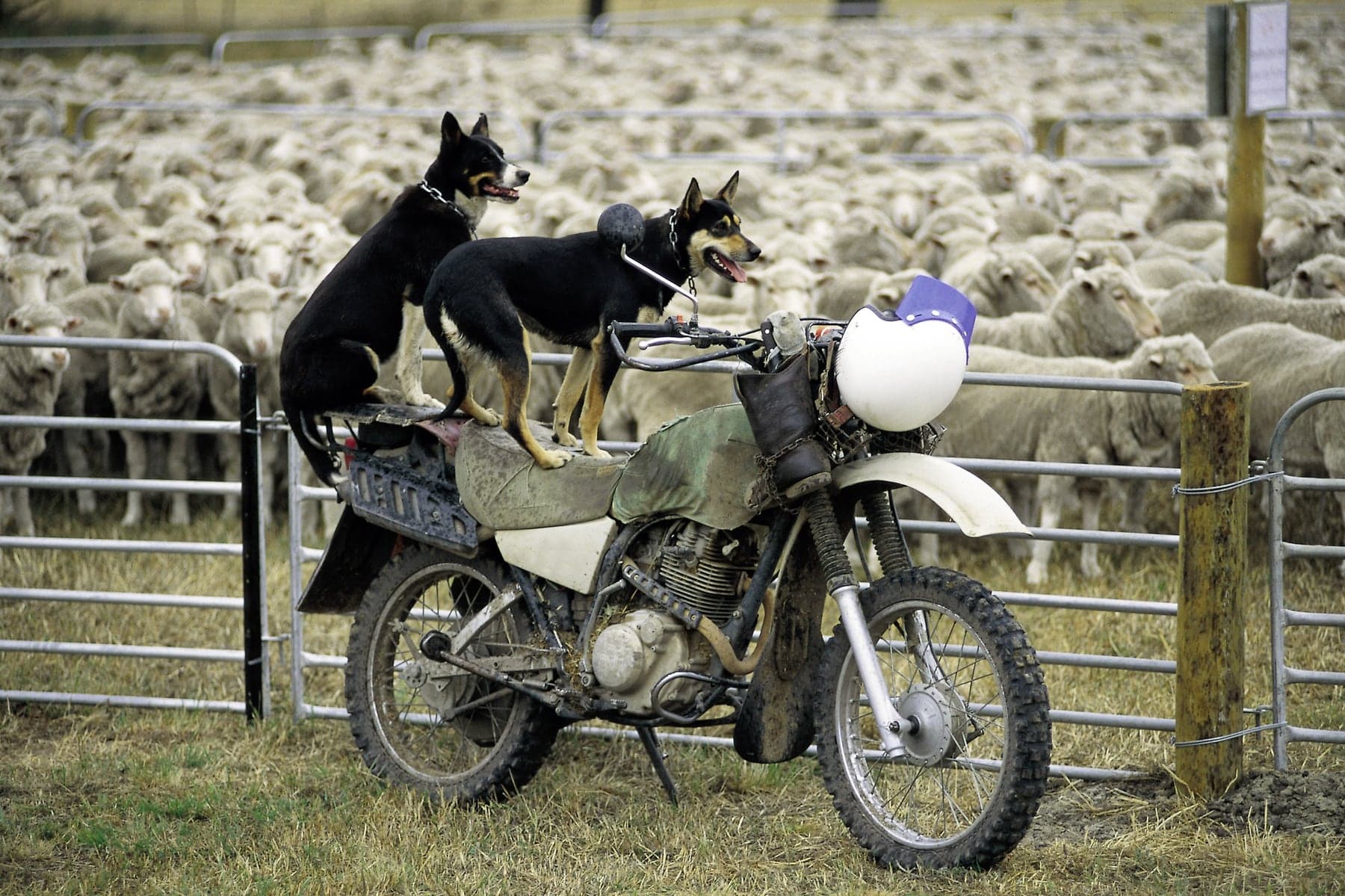
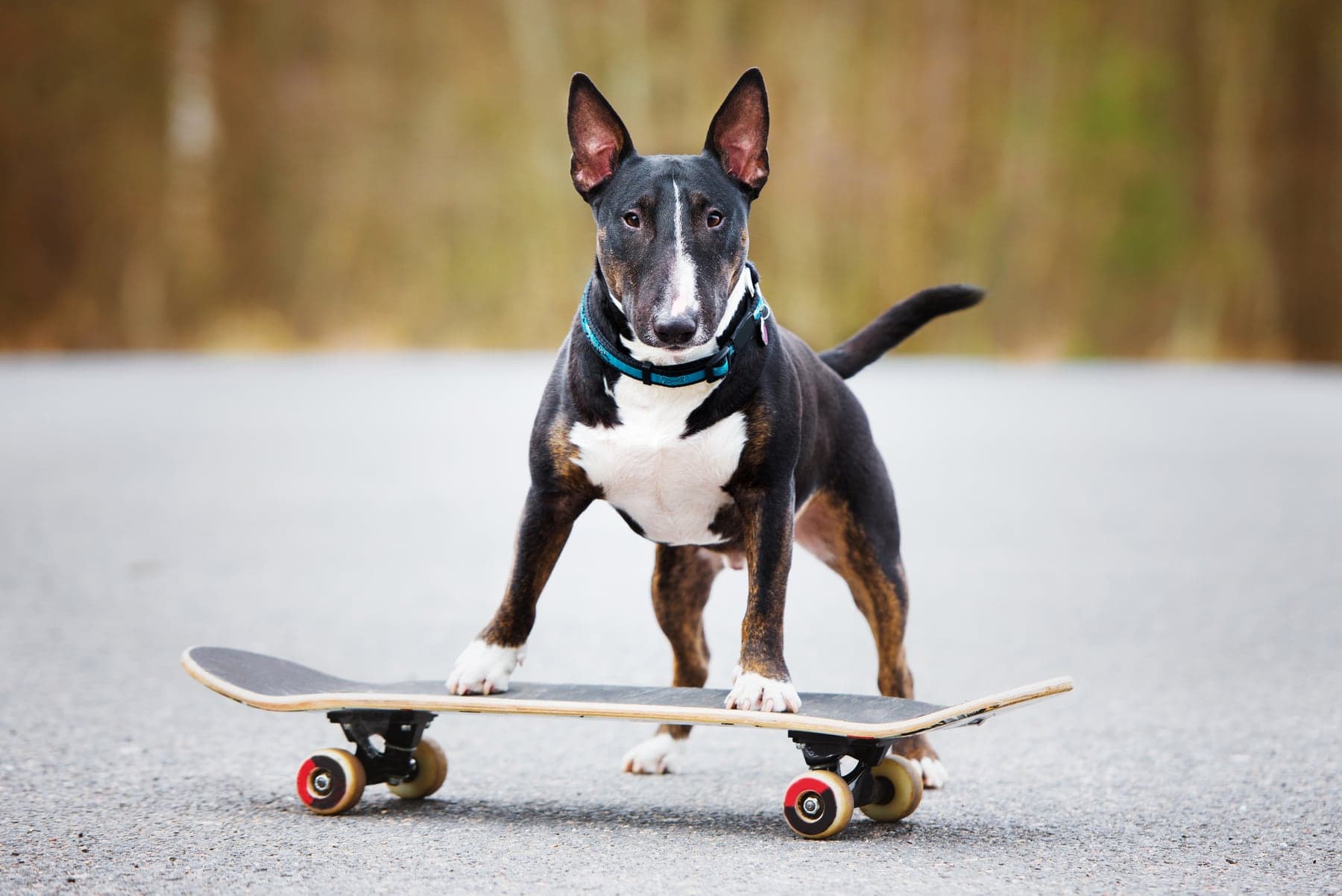
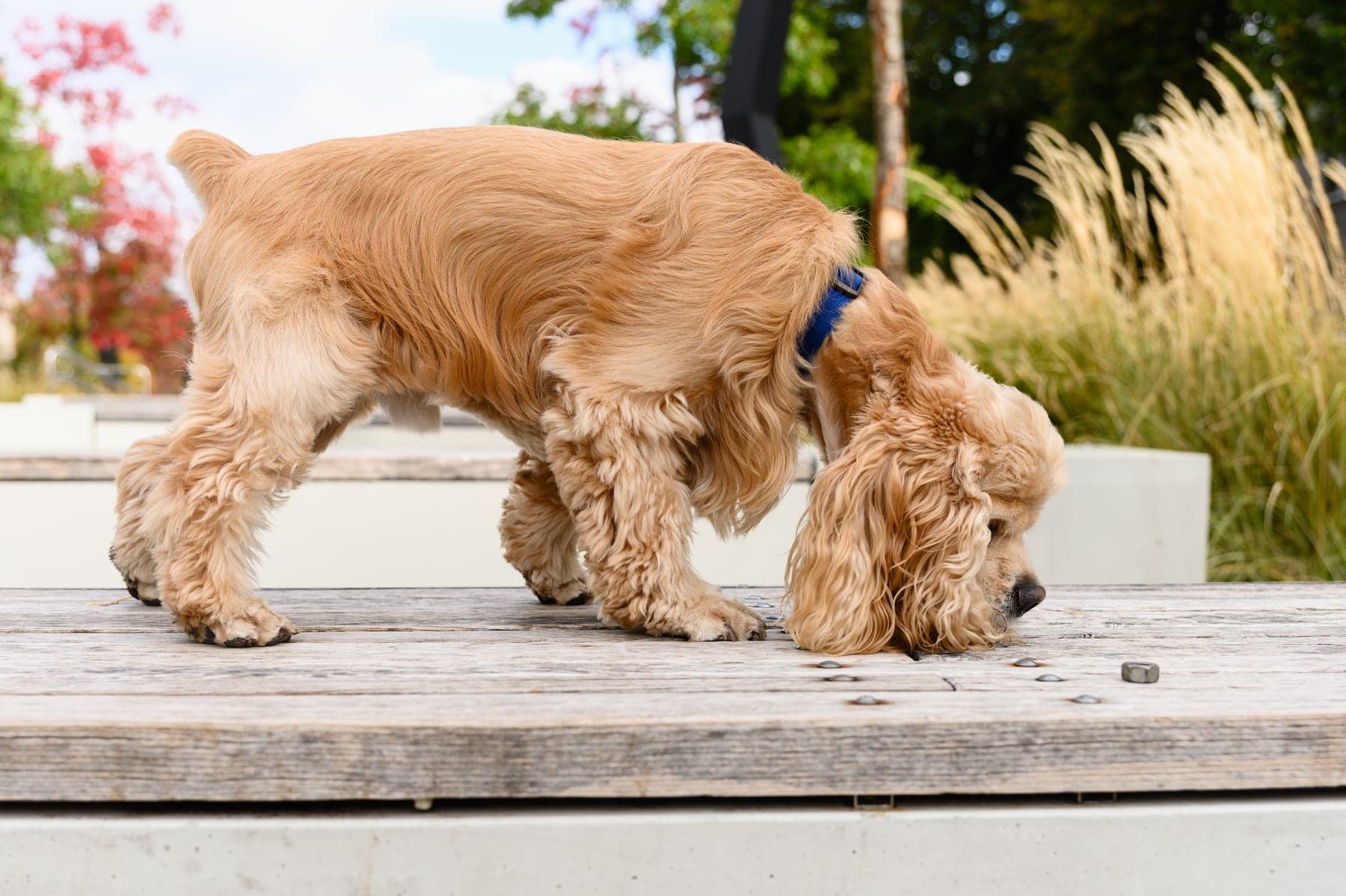
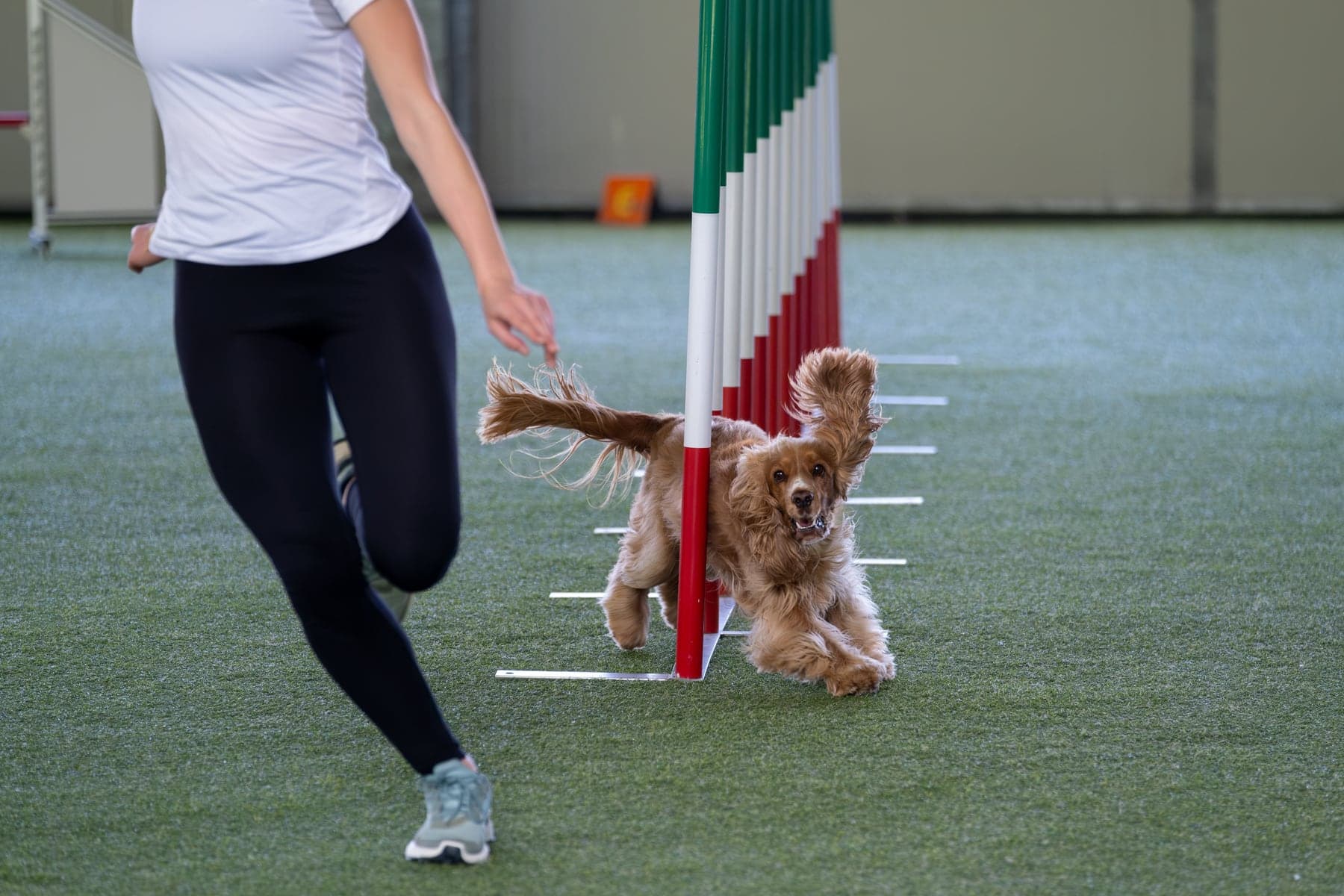
Breeds in our field guide that take naturally to flyball — not every breed that competes, just the ones we’ve written up so far.

Sources & verificationLast reviewed May 2026
Our Flyball guide is an independent, plain-English orientation — not an official rulebook. Rules, titles, eligibility, and fees vary by organization and change over time, so always confirm the specifics with the current rulebook or event premium before you enter.
Checked against
Spot something out of date? Tell us and we’ll fix it.