Sport Profile

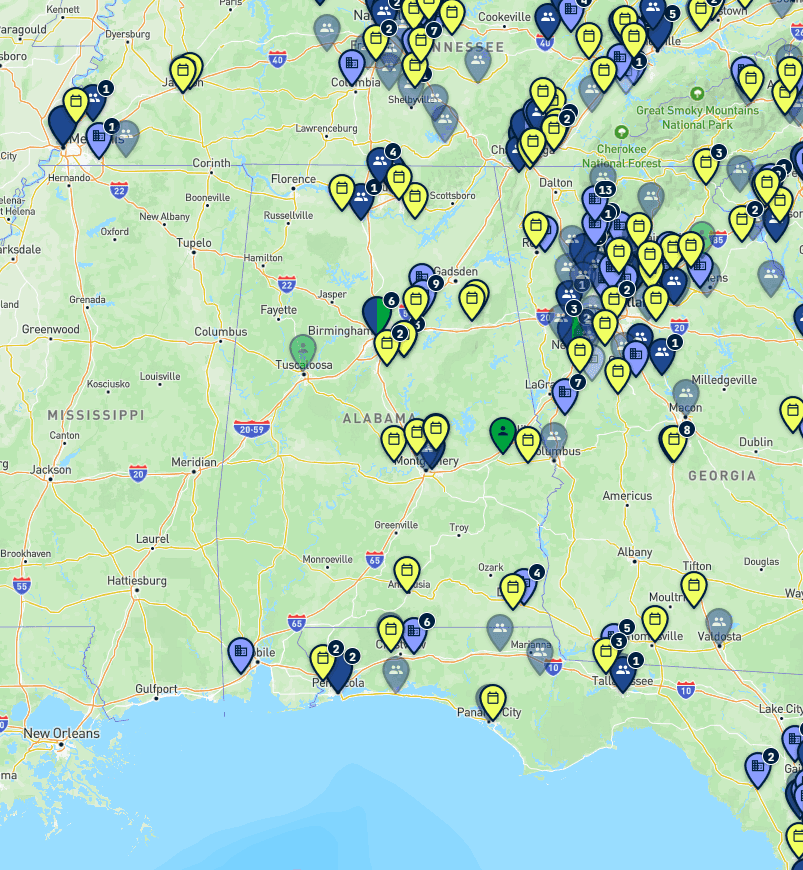
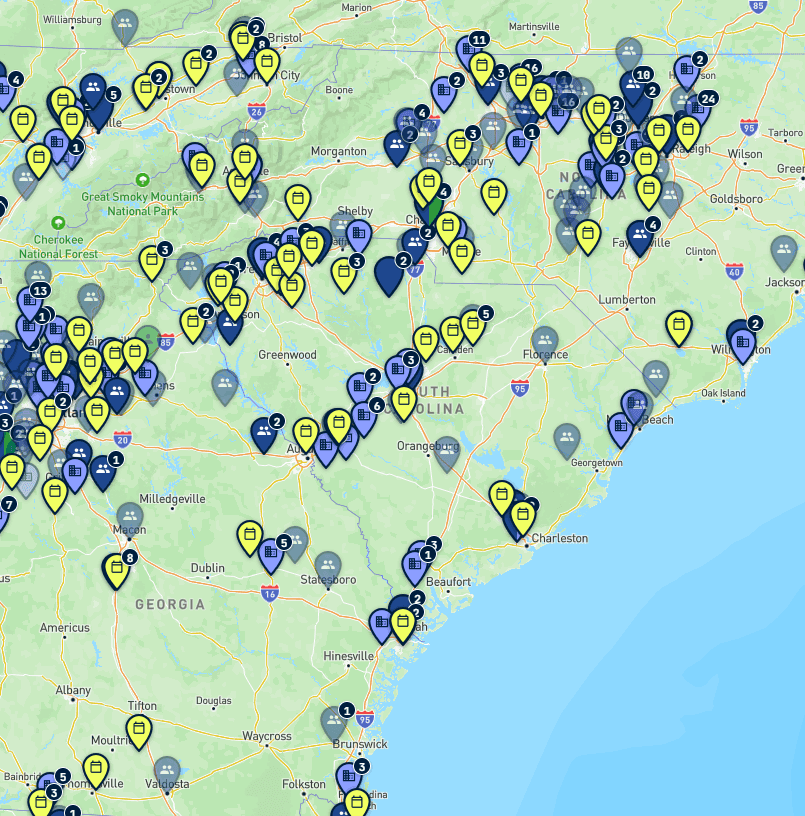
Discover IGP / Schutzhund

A three-phase working-dog sport testing tracking, obedience, and protection — where dogs and handlers build deep partnerships through precision and trust.

Jump to a section

01 · What is it

IGP, short for Internationale Gebrauchshund Prüfung, is a three-phase working-dog sport that tests a dog's tracking, obedience, and protection skills in a highly structured way. In a single trial, the same dog follows a human scent track in a field, performs precise obedience routines with distractions, and works with a trained helper (decoy) in controlled protection exercises.

People love IGP because it builds a deep working partnership between dog and handler and gives high-drive dogs a serious job to do. It's part problem-solving, part precision training, and part adrenaline rush, all wrapped in a sport where scores and titles are earned under a clear international rule set.

Origins
Early 1900s
Schutzhund develops in Germany as a breed-suitability test for the German Shepherd Dog — designed to evaluate temperament, intelligence, and working ability for police, herding, and protection work, not as sport.
Late 20th century
Schutzhund evolves from an internal German system into a standardized international working-dog program. Rules begin aligning with the FCI (Fédération Cynologique Internationale), and the sport is renamed IPO (Internationale Prüfungs-Ordnung) for the international version.
Modern era
As rules continue to harmonize globally, the program is renamed IGP (Internationale Gebrauchshund Prüfung) — bringing Schutzhund, IPO, and IGP under one modern framework. FCI regulations serve as the common rulebook for national organizations and breed clubs.
Today in the U.S.
IGP is practiced through organizations like USCA (United Schutzhund Clubs of America) and LV DVG America, which operate clubs, trials, and championships under FCI IGP rules while also supporting breed-specific and national working-dog events.

02 · The three phases

Each phase is scored independently out of 100 points, and a dog must demonstrate competence across all three to earn a title. A full IGP trial happens in a single day.

Phase 01
Tracking
The dog follows a human scent trail laid across a field and indicates small articles dropped along the track. Tracks get longer and more complex as you advance — IGP1 uses a handler-laid track of around 300 paces; higher levels use stranger-laid tracks with more legs and aging time. Judges look for a calm, deep nose, accurate line-following, and clear article indication.
Phase 02
Obedience
Performed on a field with another dog present. Includes heeling on and off leash, positions under motion, recalls, dumbbell retrieves on the flat and over a 1-meter hurdle and a 6-foot scaling wall, and a send-out with a down. The dog must work with enthusiasm yet remain precise and under control — even with gunshots and distractions on the field.
Phase 03
Protection
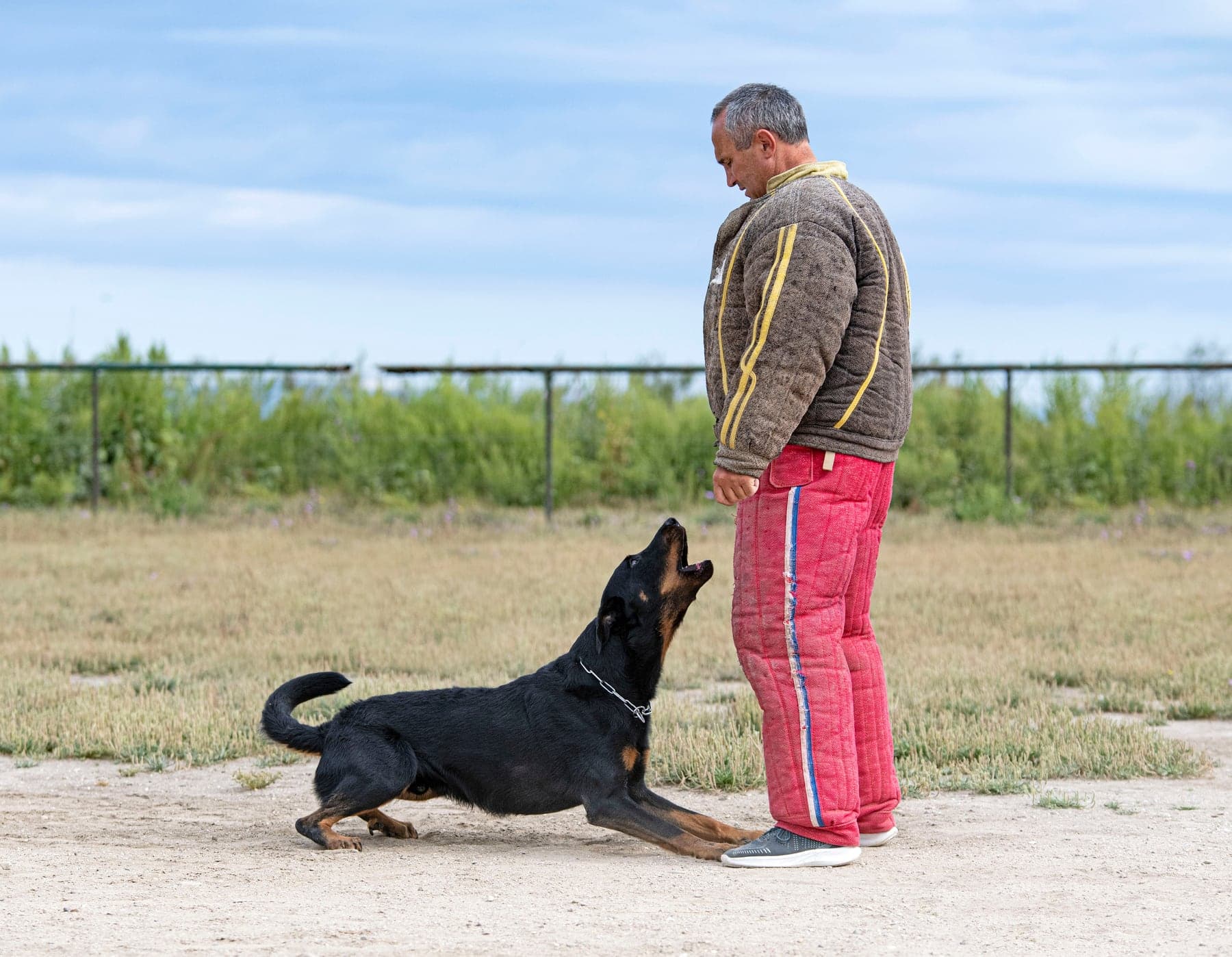
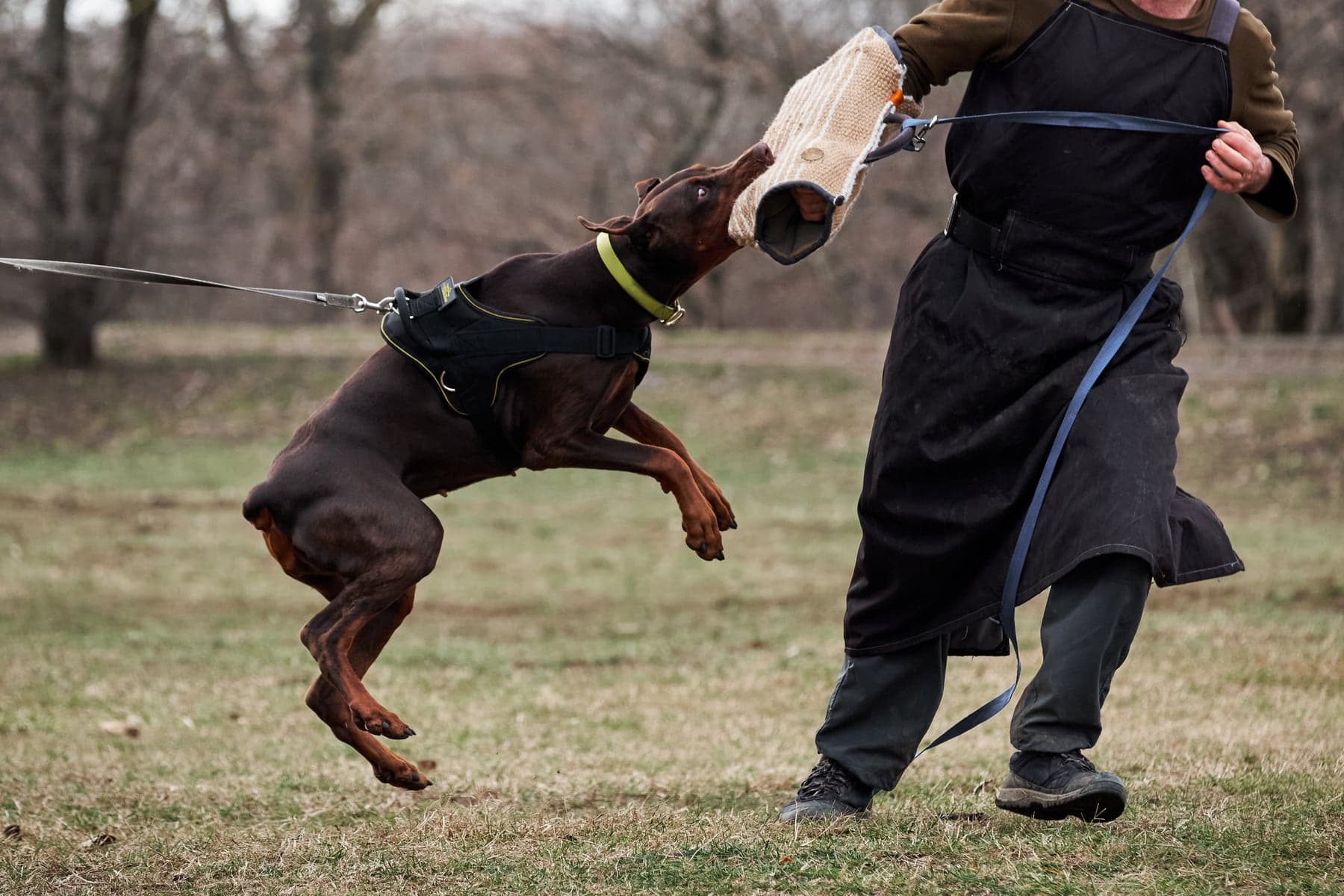
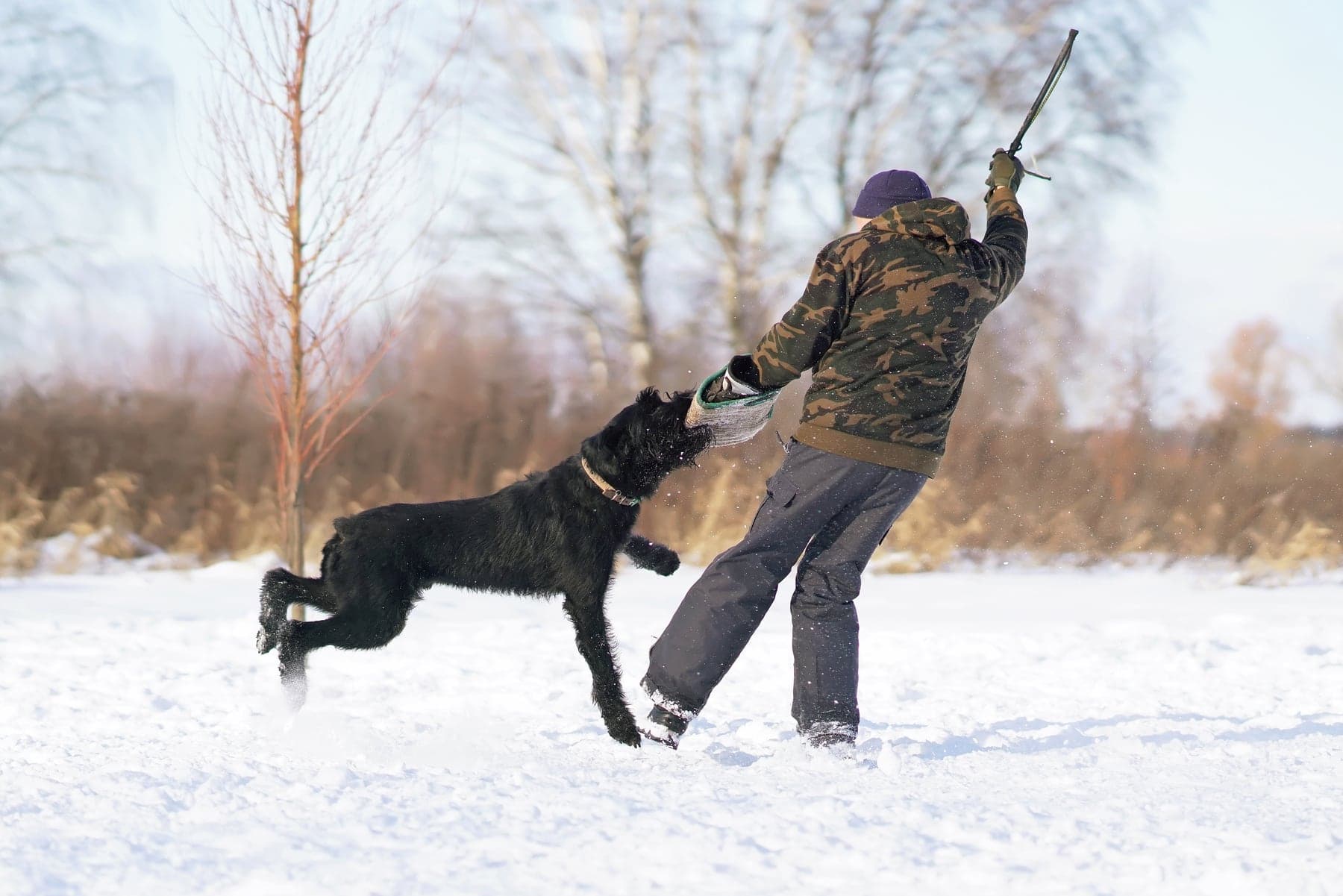
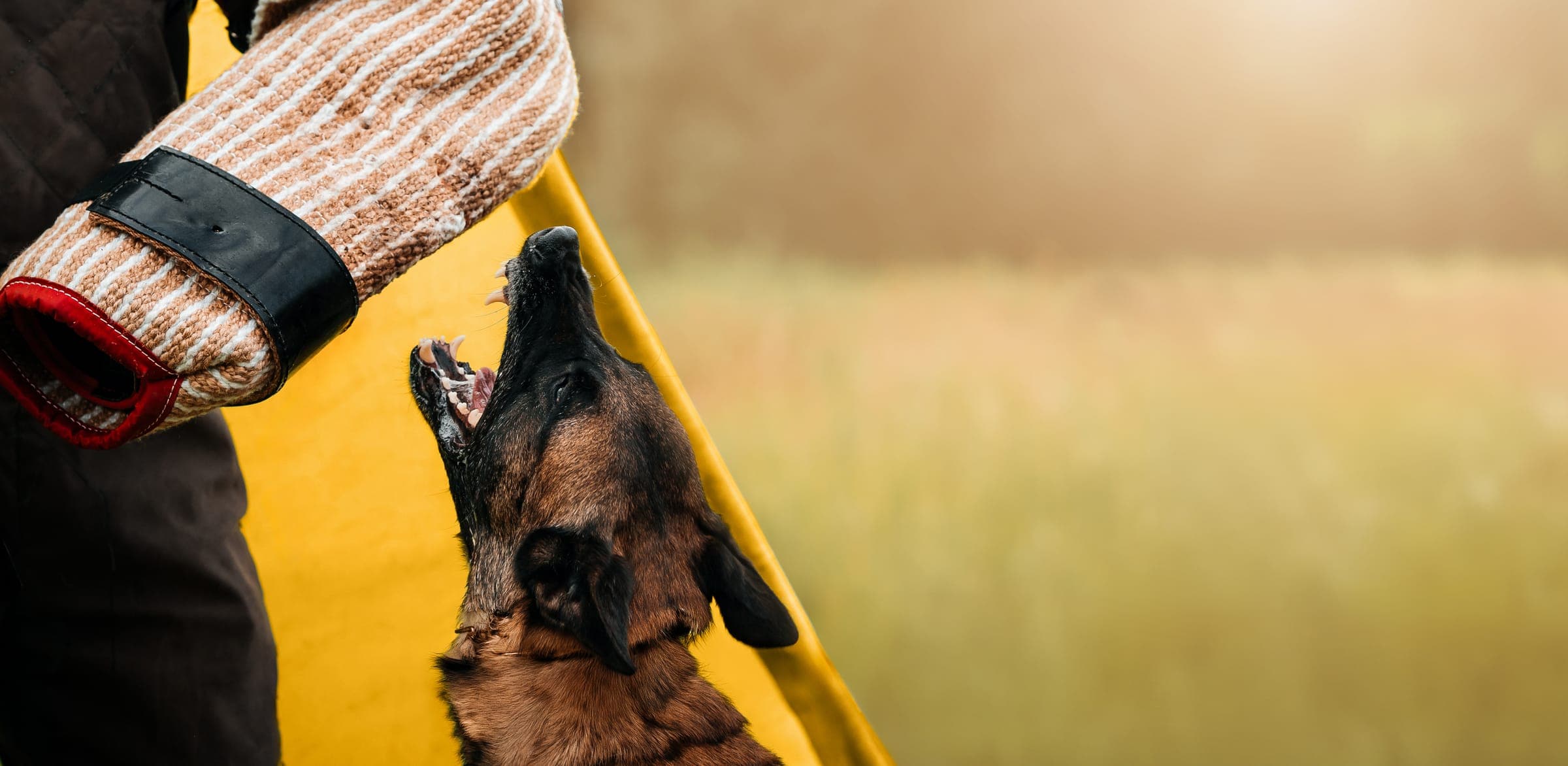
The dog searches a field of blinds for a hidden helper, performs a hold-and-bark, prevents escapes, and responds to attacks and pressure in a controlled way. Courage and power matter, but so does responsiveness — outing and guarding on cue. Judges want clear heads, full grips, strong guarding, and reliable obedience throughout.
USCA evaluation
TSB rating
Beyond the 100-point protection score, USCA judges assign a TSB rating (Triebveranlagung, Selbstsicherheit, Belastbarkeit — drive, self-confidence, stress tolerance) describing the dog's temperament under pressure during protection work. Three ratings: "a" (pronounced, ausgeprägt) for strong, confident, instinct-driven work; "vh" (sufficient, vorhanden) for adequate but less intense work; "ng" (insufficient, nicht genügend) for faulty temperament. The TSB is recorded in the scorebook alongside the points and matters for breeding evaluations and championship eligibility. TSB is currently a USCA-specific evaluation — FCI does not recognize TSB ratings as of 2025.
USCA-only

03 · USCA progression

USCA (United Schutzhund Clubs of America) is a large German-Shepherd-focused working-dog organization that runs IGP trials, championships, and breed surveys in the U.S. under FCI utility regulations. It maintains a network of local clubs, a judges' program, helper certifications, and its own working-dog rulebook that aligns with current FCI updates.

01
BH/VT
Companion Dog Test — basic obedience plus a temperament/traffic portion. Minimum age 15 months. Pass/fail (no TSB rating); prerequisite for IGP 1. First-time handlers must also pass a written knowledge test covering safety, rules, and basic training principles. The entry level where teams begin learning trial structure.
02
IGP1
All three phases. Handler-laid track ~300 paces, basic obedience routines, short protection routine with blind search. Minimum 70/100 in each phase to title. Minimum age 18 months; BH/VT required.
03
IGP2
Stranger-laid track ~400 paces, advanced obedience, more blinds and pressure in protection. Same 70/100 per-phase minimum. Minimum age 19 months; IGP1 required.
04
IGP3
Highest regular level. Stranger-laid track 600–800 paces, full obedience and protection patterns. Required for championship selection. Minimum age 20 months; IGP2 required.
Specialty
FH-1/2/3 · TR · OB · USP
Advanced tracking-only titles (FH-1 → FH-2 → FH-3) with long, aged, cross-tracked routes for handlers specializing in scent work. TR 1–3 mirror IGP tracking difficulty as standalone titles. OB 1–3 are obedience-only titles for handlers focusing on precision without protection. USP 1–3 — a USCA-only variant of IGP 1–3 with stick contact at all levels — tests the dog's nerve under helper pressure with the padded stick. USP titles are not recognized internationally by FCI/WUSV but may be earned alongside or in place of IGP titles within USCA.
Key facts
Governing org
USCA / FCI rules
Title path
BH/VT → IGP1–3
Min per phase
70/100 points
Min overall
210/300 points
Breed focus
GSD-heavy
Scoring & ratings
Each IGP phase is worth 100 points (300 total). A dog must earn at least 70 points in each phase to title — the total minimum is 210/300, achieved by passing all three phases at the minimum bar. Ratings follow the FCI scale: V (excellent), SG (very good), G (good), B (satisfactory).

04 · DVG progression

LV DVG America is the U.S. regional group of DVG, one of the oldest all-breed working-dog organizations in Germany. DVG America supports IGP plus obedience-only and tracking-only titles, emphasizing club-based training and titling opportunities for many breeds — not just German Shepherds. Operates within the FCI IGP framework with its own club structure, training director program, and national events. Official site: dvg-america.com.

01
BH/VT
Foundation obedience and temperament/traffic test. Required before competing in IGP1. Proves basic control and stability. Minimum age per current FCI/DVG rules.
02
IGP1
All three phases — handler-laid track ~300 paces, basic obedience routines, short protection with blind search. Minimum 70/100 in each phase. BH/VT completed.
03
IGP2
Stranger-laid track ~400 paces, advanced obedience, more blinds and pressure. Longer routines, more distractions. IGP1 completed.
04
IGP3
Stranger-laid track 600–800 paces, full obedience and protection patterns at maximum difficulty. Required for championship selection. IGP2 completed.
Specialty
IFH-1/2/3 · IBgH
IFH-1/2/3 are advanced tracking-only titles under the FCI IFH framework — very long, aged tracks with cross-tracks for pure scent-work specialists. IBgH offers obedience-only competition for handlers who want titles without protection work. FPr introductory tracking titles serve as a stepping stone.
Key facts
Governing org
DVG America / FCI rules
Title path
BH/VT → IGP1–3
Specialty
IFH-1–3 · IBgH
Breed focus
All-breed working
Origin
1900s Germany
Same rules, different culture
DVG's level structure mirrors USCA on paper since both follow FCI regulations, but club culture, community feel, and which titles are most commonly pursued can differ. Visit both to see which fits your style.

05 · USCA vs DVG

Both follow FCI IGP regulations, so the on-paper title structure is the same. The real differences are in club culture, breed focus, and which national events teams aim for. AWDF (American Working Dog Federation) and GSDCA-WDA also operate within the IGP ecosystem as umbrella bodies that connect breed-specific clubs to the FCI framework.

USCA
Focus
BH/VT → IGP1–3 · TR 1–3 · OB 1–3 · USP 1–3 · FH-1/2/3
Phases
Full IGP plus tracking-only and obedience-only options
Levels
BH/VT → IGP1 → IGP2 → IGP3 → FH-1 → FH-2 → FH-3
Known for
Strong German Shepherd focus, breed surveys, national championships, robust helper/judges program
DVG
Focus
BH/VT → IGP1–3 · FPr/IFH tracking · IBgH obedience
Phases
Full IGP plus tracking-only and obedience-only programs
Levels
BH/VT → IGP1 → IGP2 → IGP3 → IFH-1 → IFH-2 → IFH-3
Known for
All-breed working orientation, long German history, strong club-based training culture

06 · Getting started

IGP is not a drop-in class sport. Your first step is almost always finding a club and community to learn with — visit a local club, watch a training day, talk with members about your dog and goals. From there, you build foundational obedience and engagement, then slowly add tracking and protection under experienced trainers and helpers.

What you'll need
The kit
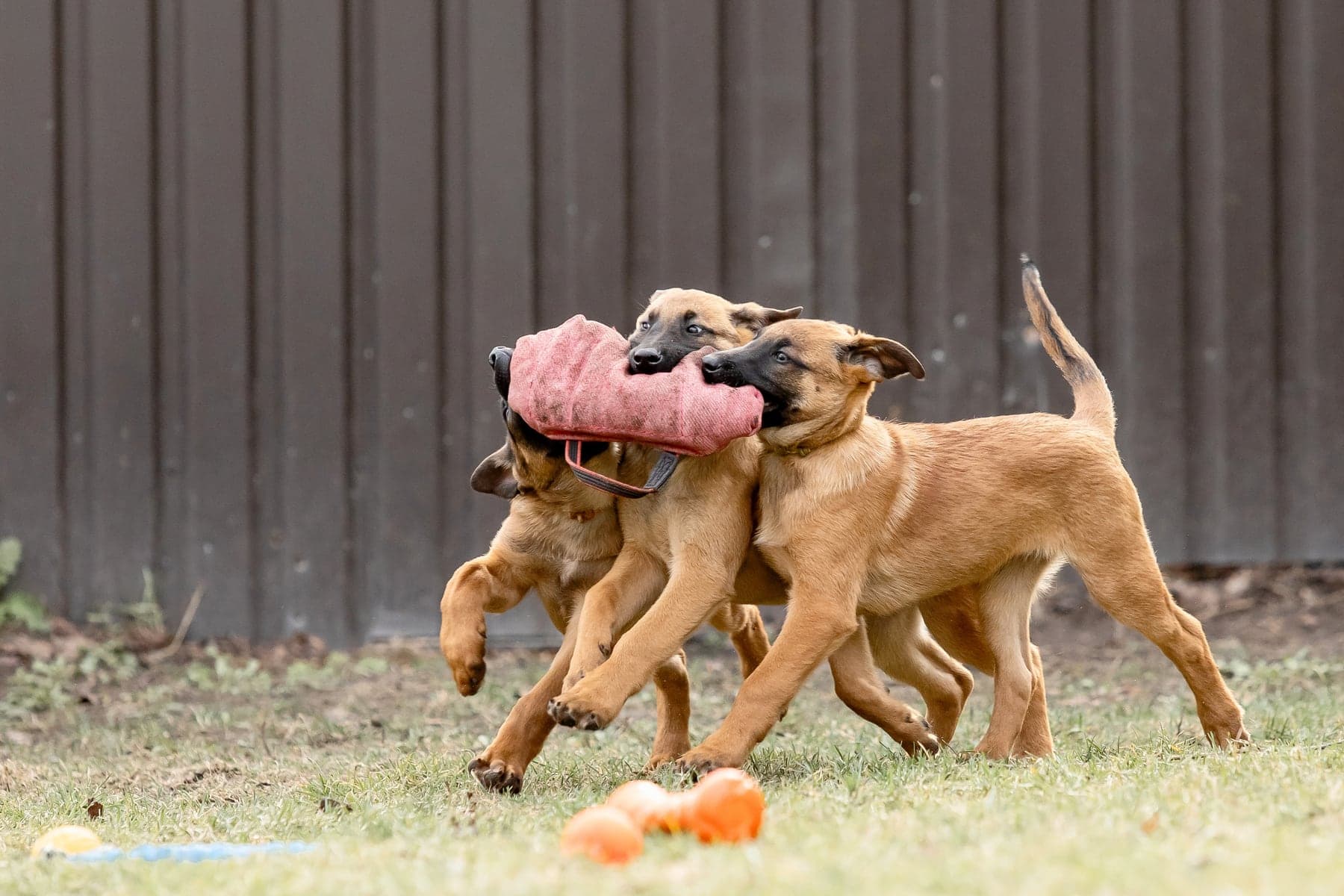
Flat collar, long line, and harness for safe tracking and field work. Tugs, balls, or bite pillows as high-value rewards for obedience and protection foundations. Tracking articles (leather, wood, fabric) and field flags for building scent-work skills.
Typical timeline
How fast it moves
Months 0–6: join a club, work on engagement, basic obedience, early tracking. Months 6–18: build toward BH/VT, focusing on reliable obedience and stable temperament. Year 2+: prepare for IGP1 and higher. For most handlers, reaching IGP1 realistically takes 1–3+ years of consistent training.
Before you enroll
Eligibility
High-drive working breeds thrive — German Shepherds, Belgian Malinois, Dutch Shepherds, Rottweilers, similar working lines. Physical soundness matters: jumping, sustained running, and protection work require good joints and overall health. Expect a multi-year commitment — IGP rewards patience and consistency, not weekend dabbling.
Common myths
"Any high-drive dog can do IGP." Drive isn't enough — IGP demands nerve strength: resilience under helper pressure, sound-sensitivity tolerance, conflict-clear engagement. Many high-drive dogs fail under the stress of protection work despite strong prey motivation. "You can train IGP at home." Protection requires certified helpers in proper equipment, tracking requires field access and experienced track-laying, and obedience precision needs coaching. Clubs are the gate — find a club first, then get a dog. "IGP makes dogs aggressive." It teaches controlled aggression on command; properly trained IGP dogs are calm and obedient in daily life, and many handlers report IGP reduces unwanted reactivity by channeling drive appropriately. "Mixed breeds can't compete." All breeds and mixed breeds are eligible at USCA and DVG club trials — only GSD-specific national championships restrict entry to registered German Shepherds.

07 · Your first trial

Your first IGP trial will feel more structured and intense than a typical pet-dog event, but it's also a supportive environment where most handlers remember their own first time. Plan for a full day or weekend with your club, alternating between waiting, working, and helping others.

The day flow
How it runs
Check-in and ID verification (scorebook, microchip or tattoo). Tracking happens early morning at separate fields. Obedience runs on the trial field, often in pairs alternating active routines and long downs. Protection comes later in the day and draws a crowd — loud, intense, carefully controlled.
What to bring
The kit list
Crate or safe resting setup so your dog can decompress between phases. Water, shade, and snacks — trials run for hours and often involve travel between fields. Scorebook, membership cards, dog registration, health docs organized and ready. Long line, leash, collar, and your dog's favorite reward.
Common mistakes
What handlers get wrong
Underestimating nerves — handlers often get more anxious than expected, which affects timing and communication. Rushing progression — trying to trial before foundations are solid. Neglecting downtime — forgetting that rest, hydration, and mental breaks between phases are part of a successful trial day.
The vocabulary
What handlers actually say
Calling the helper (or barking the blind) is the dog's job after finding the helper hidden in a blind — barking insistently to alert the handler, without breaking position. Outing is the act of releasing the bite on command. Stick shy is the dog who avoids or flinches from the padded stick during protection work — a sign of weak nerve. Pronounced (or "a") is shorthand for the top TSB rating. Handler help is over-cuing through body language, footwork, or extra commands; judges score it down hard. Clean corners are the precise turns at corners on a tracking line — the dog stays in scent without overshooting or casting wide. A long bite is the courage test where the helper flees and the dog charges to engage from 30–40 paces away.
What's different from videos
Highlight reels show action; trials are mostly waiting. Real fields are imperfect — weather, footing, and conditions vary. The pressure of a live helper, judge, and crew feels nothing like watching on a screen.

08 · What it costs

IGP's cost structure is wildly variable — not because of equipment, but because of the training path you take. Four spending profiles describe most handlers honestly, and you can move between them as your goals evolve.

Club-only hobby
$1k$3k/yr
Volunteer-run club, occasional training days, a few privates per year, one local trial · club dues $300–$500/yr
Active competitor
$4k$10k/yr
Serious club membership ($500–$800/yr) plus national org fees, weekly training, 3–6 trials per year with travel, occasional seminars
Program + privates
$8k$15k+/yr
Structured program $400–$800/mo, regular privates ($75–$150/hr), specialty helper sessions, multi-trial weekends · most IGP3-serious handlers live here
Championship campaign
$15k$25k+/yr
Elite seminars ($1k–$2k/weekend), multiple national events, international travel, possibly a backup dog · not including dog purchase, health screening, or insurance
The honest truth
IGP's costs feel more like competitive horse sport than weekly obedience class. Serious handlers pay $600/month for a dedicated program because they get weekly structured helper work, a proper field, certified coaching, and a community that knows how to move a dog from foundation to IGP3. You can start in the $1k–$3k range and graduate into higher tiers as your goals develop.
Related sports

If IGP / Schutzhund interests you, look at these too.