Sport Profile

Discover Mondioring

An FCI protection sport that runs heeling, distance positions, jumps, and scenario-based bitework as one uninterrupted routine on a themed field — built to test control, environmental stability, and real-world function under heavy distraction.

Jump to a section

01 · What is it

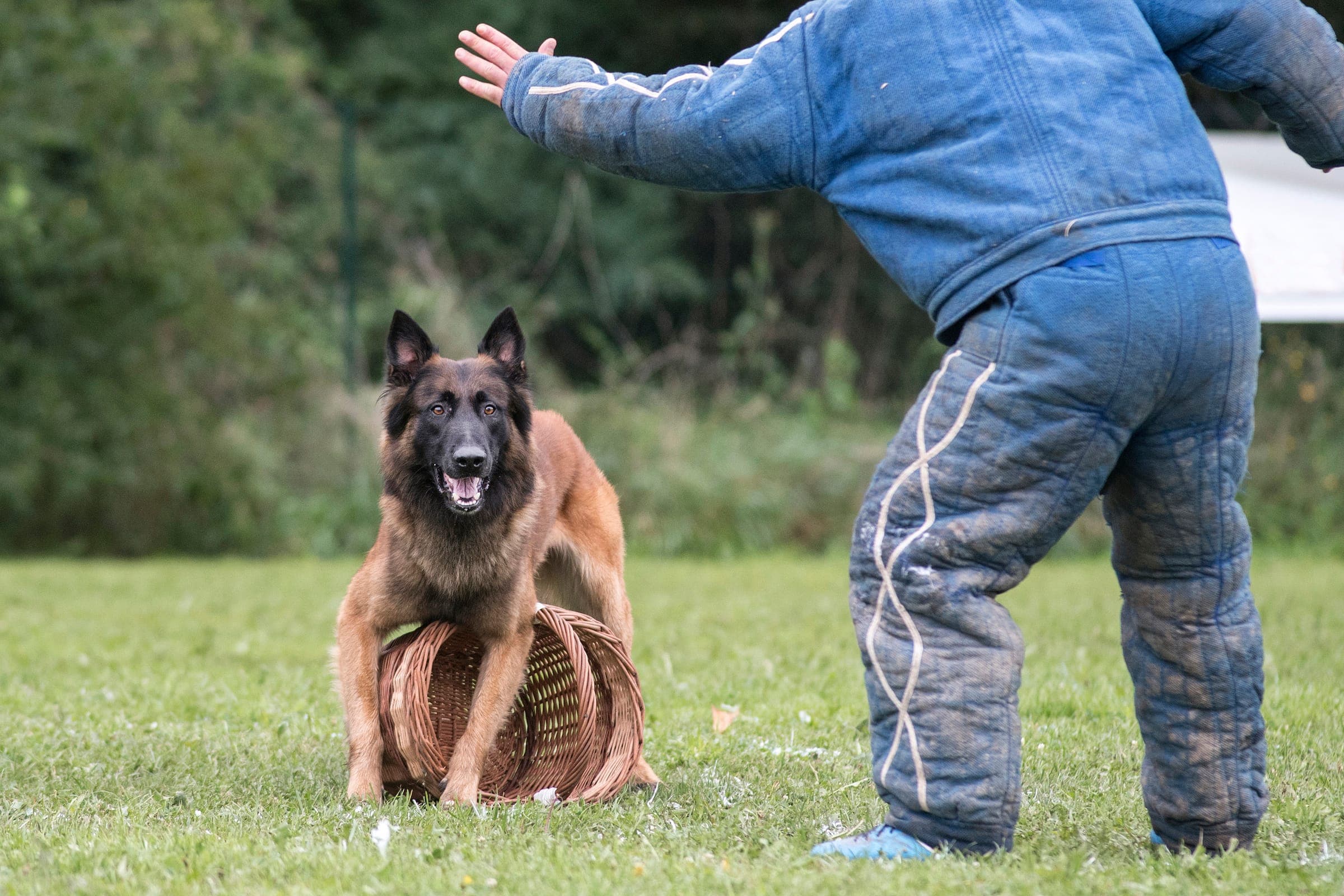
Mondioring is a protection sport that runs obedience, jumps, and bitework as one continuous routine on a themed field. A Level III routine can include up to 17 exercises and run around 45 minutes without a real break. Dogs work almost entirely off leash and without collars or reward equipment. The handler cues with voice and body position, and heavy handler help is penalized — the dog is expected to read the picture and act on its own training. Obedience covers heeling with pace and direction changes, positions at a distance, food refusal, retrieves of unusual objects, send-aways, and recalls under distraction. Jumping uses three standardized obstacles: a hurdle, a long jump, and a palisade. Protection runs scenarios with one or two decoys in full bite suits — attacks, defense of handler, object guard, hidden-decoy search, stopped escapes — under strict rules about when the dog may engage, where it must bite, and how quickly it must out.

The 'themed field' is the signature move. Each trial is dressed as a setting — campsite, construction site, market — with props, costumes, and noises the dog has not seen in training. The judge and decoy use that environment to test environmental neutrality and whether the team's training generalizes outside the club field. Mondioring suits medium-to-large athletic dogs with high prey and fight drive, sound nerves, and the structure to clear tall, wide obstacles at speed. Belgian Malinois and similar working-line herders dominate the entries, but environmentally stable dogs from other breeds compete where jump dimensions and bitework are appropriate. Reactivity to dogs or people is a real obstacle, not a training challenge — the trial environment runs off-leash dogs around decoys, spectators, and other competing teams. The sport is hard on joints; sound hips, elbows, and shoulders matter.

Origins
Late 1980s
Representatives from French Ring, Belgian Ring, IPO/Schutzhund, and KNPV collaborate under the FCI Working Dog Commission to design a protection sport that would be recognizable to all national traditions but biased toward none.
Early 1990s
FCI codifies the first Mondioring rulebook — exercises, jump dimensions, scoring, and a four-level structure: Brevet, I, II, III. Adoption is strongest in Belgium, France, and neighboring European countries with existing ring-sport infrastructure.
2000s–2010s
The United States Mondioring Association (USMRA) forms as the FCI-recognized US national body, sanctioning trials, certifying judges and decoys, and selecting the US FCI World Championship team.
2010s
USMRA introduces an Obedience-Only program — Mondioring obedience exercises at three levels with no protection — as an alternative pathway for teams not interested in or eligible for full Mondioring.
Recent
FCI and USMRA tighten registration and male reproductive-status requirements: FCI-recognized registration, microchip identification, and veterinary documentation of testicles for males in some contexts. USMRA prohibits competition by males with one or zero descended testicles or males neutered for non-medical reasons.
Through Dec 31, 2026
FCI variance allows USMRA to run 'any dog' at US trials regardless of registration. After that date, FCI Mondioring registration restrictions are expected to apply.

02 · The routine

A Mondioring routine runs as a single continuous program — obedience, jumps, and protection — performed in a sequence the judge sets within the themed field. The judge announces jump dimensions and key parameters at the start; many environmental and decoy details are deliberately novel to test generalization. Dogs work off leash without collar or reward equipment for nearly the entire routine.

Element 01
Obedience
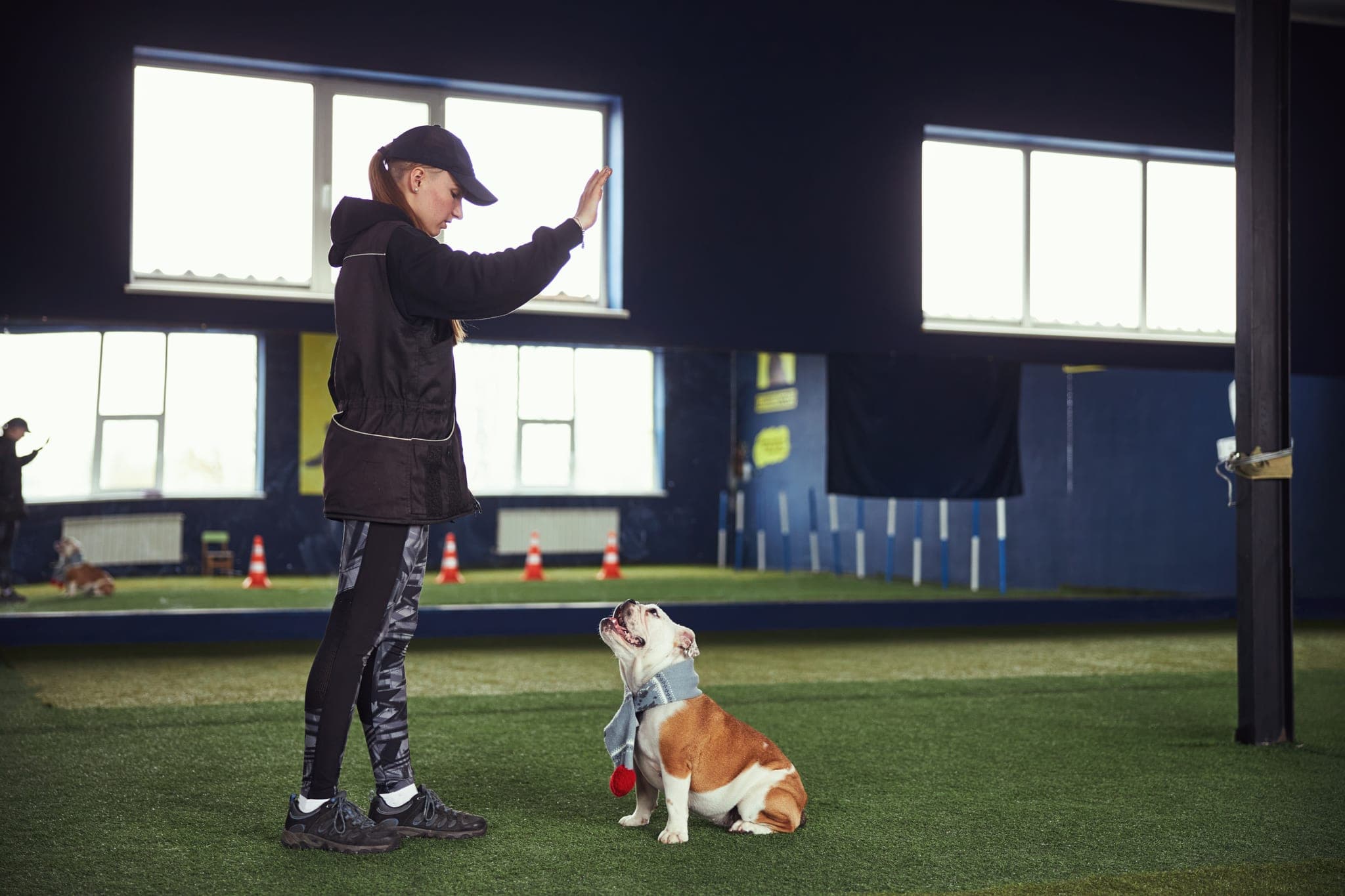
Heeling with changes of pace and direction, positions at a distance (sit, down, stand), food refusal, retrieves of objects (some unusual), send-aways to a designated point, and recalls under distraction. Scoring weighs precision of position, speed of response, and the dog's ability to ignore food, props, and environmental noise while staying engaged with the handler.
Element 02
Jumps — hurdle, long jump, palisade
Three standardized obstacles. The hurdle and long jump test takeoff, form, and a clean return as directed. The palisade is a sloped wall the dog scales and returns from. Jump dimensions scale up by level, with the judge announcing the day's settings at the start. Refusals, touches, or failures to return cost points; extreme failures are eliminating.
Element 03
Protection scenarios
One or two decoys in full bite suits run scripted scenarios — attack during heeling, defense of handler, guard of an object, search for a hidden decoy, stopped escapes. The dog must engage on cue, bite cleanly, out cleanly, and guard under control. Decoy creativity is part of the sport: decoys may use props, costumes, and unusual movement within rule limits to test the dog's judgment under pressure.
Element 04
The themed field
Every trial is dressed as a setting — a campsite, a construction site, a market scene — with props, surface changes, and visual clutter built into the exercises. A retrieve might happen in a simulated tent, a send-away around a stack of pallets. The theme is the mechanism for testing environmental stability, and it is the part of Mondioring that most distinguishes it from IGP and other protection sports.
The signature move
Element 05
Continuous performance and control
The full routine runs with minimal breaks. The dog wears no collar and the handler carries no food or toys on the field, aside from a brief on-leash heeling segment. Heavy handler help — repeated commands, body-block corrections, leaning into cues — is penalized. The sport rewards routines that the dog has internalized rather than ones the handler has to drive in real time.

03 · FCI

The Fédération Cynologique Internationale (FCI) is the international governing body for Mondioring. Its Working Dog Commission publishes the rulebook that defines the exercises, scoring, jump parameters, and four-level structure used at every FCI Mondioring trial in the world, including the FCI Mondioring World Championship. National organizations like USMRA implement those rules. They do not alter them.

01
Brevet — the entry test
Single-test introductory evaluation, scored out of 100 points, with 75 to pass. Routines are shorter than Level I, with reduced jump dimensions and simpler obedience and protection scenarios. Recommended before entering Level I but not required as a prerequisite.
02
Mondioring I
200 points possible. Two qualifying scores of at least 160/200 under two different judges, with no zero in any compulsory exercise.
03
Mondioring II
300 points possible. Two qualifying scores of at least 240/300 under two different judges. Larger jump dimensions, more complex obedience patterns, more sophisticated decoy work.
04
Mondioring III — the top
400 points possible. Prerequisite: two qualifying scores at Level I and two at Level II. Up to 17 exercises in one ~45-minute routine, maximum jump dimensions, the most complex obedience patterns, and the most demanding decoy work. The qualifying level for international competition through the FCI World Championship.
Key facts
Role
International rulebook
Levels
Brevet · I · II · III
Marquee
FCI Mondioring World Championship
Registration
FCI-recognized studbook required
ID
Microchip mandatory
Working Commission
Maintains rulebook, decoy standards
Eligibility and identification
Dogs must be registered in an FCI-recognized studbook for FCI championships; mixed breeds and unregistered dogs are excluded under standard FCI rules. Microchip identification is required. Males: FCI rules require two normally descended testicles, with veterinary documentation expected in some contexts. The FCI Working Dog Commission revises the rulebook over time — recent changes concentrate on documentation requirements, decoy training standards, welfare-minded handling of outs and rebites, and clarifying environmental neutrality language.

04 · USMRA

The United States Mondioring Association (USMRA) is the FCI-recognized US national body. It sanctions US trials, certifies US judges and decoys, runs the US National Championship, and selects the US team for the FCI World Championship. USMRA applies the FCI rulebook and adds two things on top: a US-only Obedience-Only program with its own three-level title ladder, and US-specific membership, eligibility, and conduct policies.

01
Full Mondioring titles
Brevet, Mondioring I, Mondioring II, Mondioring III — same rulebook as the FCI framework. USMRA-sanctioned trials award FCI Mondioring titles using the FCI scoring tables and titling math. USMRA tracks qualifying scores, rankings, and championship eligibility for US handlers.
02
Obedience-Only Level I
Single qualifying score earns the title. Minimum 40/55 without jumps or 50/70 with jumps. The entry to the US-only Obedience-Only program — Mondioring obedience exercises without protection.
03
Obedience-Only Level II
Single qualifying score with higher minimum thresholds (65/85 without jumps; higher figures when jumps are included). The middle level of the US-only program.
04
Obedience-Only Level III
Single qualifying score at the top of the Obedience-Only ladder. The endpoint of the US-only program — no FCI equivalent.
05
FCI World Championship selection
Selection runs through USMRA according to its published criteria — qualifying scores, residency, and FCI-recognized registration. The premier international event for Level III teams. Handlers chasing this path operate primarily at Level III and follow USMRA's selection cycle.
Key facts
Role
FCI-recognized US national body
Full titles
Brevet → I → II → III (FCI)
Obedience-Only
Levels I → II → III (US-only)
US variance
All dogs eligible through Dec 31, 2026
Marquee
US National Championship
World selection
Per USMRA published criteria
US eligibility through Dec 31, 2026
Through December 31, 2026, any dog may compete in USMRA-sanctioned Mondioring in the US under an FCI variance, regardless of FCI registration status. After that date, FCI Mondioring registration restrictions are expected to apply. Males with one or zero descended testicles, and males neutered for non-medical reasons, are not allowed to compete. Spayed females may compete. Microchip identification is required. Vet checks and identity verification happen at major events including world-team qualifiers.

05 · Which path

Mondioring has one rulebook and one US sanctioning body — but newcomers still face a real decision about which path to take. The choice is between three paths, not between competing organizations. Most newcomers do not pick all three at once. The skills transfer between paths because they share the same obedience rulebook; the protection work is the part that does not.

Full Mondioring
Brevet → I → II → III
Full FCI program with decoy-driven protection scenarios, jumps, and obedience as one continuous routine. The standard path for handlers with high-drive working-line dogs and access to a club with experienced decoys. Most US Mondioring handlers operate here.
Obedience-Only
US-only path · no bitework
Mondioring obedience exercises — heeling, distance positions, retrieves, send-aways, food refusal, recalls under distraction — without bitework. A US-only program with its own three-level ladder. A fit for handlers and dogs that are not appropriate for full protection but want exposure to Mondioring-style precision and the trial environment.
International competition
FCI World Championship
Selection runs through USMRA according to its published criteria — qualifying scores, residency, and FCI-recognized registration. The premier international event for Level III teams. Handlers chasing this path operate primarily at Level III and follow USMRA's selection cycle. A serious campaign decision, not a starting point.

06 · Getting started

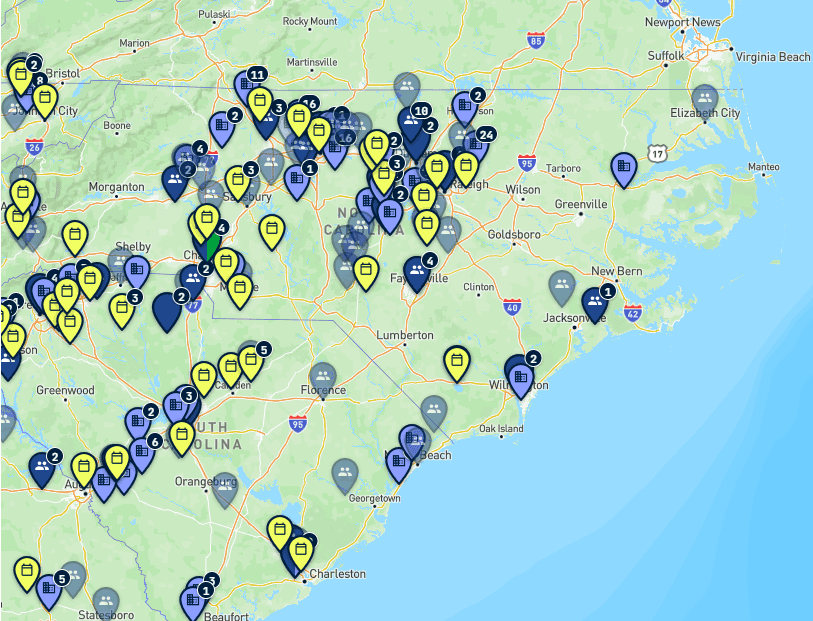
Mondioring is not a drop-in class sport. The first step is finding a USMRA-affiliated club or a ring-sport club with decoy access, then building foundation obedience, engagement, and play before any decoy work begins. In some regions, handlers start at a broader protection-sport club (IGP, French Ring) for early decoy access, then move to Mondioring-specific training as their dog matures. Online courses can support the obedience side — especially for the Obedience-Only program — but cannot replace live decoy work for full Mondioring.

The club
Find your decoy
The gating resource for full Mondioring. Suits, blinds, regulation jumps, and protective gear are club-level investments, not handler purchases. Handlers in regions without a USMRA-affiliated club sometimes train at a French Ring or IGP club for early decoy work and transition to Mondioring as their dog matures.
Foundation · 6–18 months
Drive, control, generalization
Engagement, reliable recall, an emergency stop, food and toy motivation, and the ability to work in distraction. Mondioring's obedience pattern is built on this foundation. Many teams reach Brevet or USMRA Obedience-Only Level I in 12–24 months from a green-dog start. No full-pressure decoy work for young dogs.
First trial · year 2+
Brevet or Obedience-Only Level I
Mondioring I titles take 2–3 years for a new team. Levels II and III add several more years of focused work, especially in regions with limited trial opportunities. Experienced handlers bringing well-started dogs from other protection sports may move faster — FCI rules allow dogs titled in other working sports to enter Mondioring at equivalent levels in some circumstances.
Before you enroll
Age: foundation work starts at 10–18 months depending on breed and structure; full-height jumping and protection work are delayed until at least 18–24 months for most dogs and longer for giant or slow-maturing breeds. Soundness: sound hips, elbows, shoulders, and good cardiovascular fitness — heavier breeds, long-backed dogs, and dogs with known orthopedic predispositions need cautious jump management. Reactivity: dog- or human-reactive dogs do not fit the trial environment. Reproductive status: USMRA prohibits competition by males with one or zero descended testicles or males neutered for non-medical reasons; spayed females may compete. ID: microchip required; FCI-recognized registration required for FCI championships (US variance covers domestic trials through Dec 31, 2026).

07 · Trial day

Mondioring trials run as long, focused days with relatively short field time per team. The atmosphere is working-dog: rule-driven, social among regulars, with quiet stretches broken by high-energy protection routines and cheering. First-time handlers report a mix of excitement and anxiety. Club-trained dogs handle the environment well; the novel theme, the props, and the decoy picture are what challenge teams that have not generalized their training.

The flow
How the day runs
Check-in with membership and registration documentation, microchip and ID verification at larger events, vet checks where required. The judge explains the day's theme, jump settings, and local procedures in the handler briefing — but the exact run pattern is not fully disclosed (generalization is part of the test). Running orders posted by trial staff, grouped by level. Scoring happens by exercise or as total points after each run; title legs accrue per FCI rules.
The kit
What to bring
Crate, shade, water — long days with significant downtime between runs. Handler comfort gear: chairs, snacks, sun and rain protection. Warm-up gear and rewards: tugs, food, and toys for warm-up and post-run reward (none of it goes on the field during the routine). Sport-specific gear: bite tugs and harnesses for warm-up between runs. Collars and equipment must come off for nearly the entire routine.
The mistakes
What goes wrong
Underestimating distraction impact — heeling, food refusal, and outs that were solid in training break down under trial-environment pressure; the themed field exists to find these gaps. Misunderstanding rules — when the dog may engage the decoy, how to handle a jump refusal, where to report before entering the field; rule mistakes cost points or trigger elimination. Heat and downtime management — long stretches between runs, dogs left ringside with too much arousing input show up overstimulated.
The reality
What videos don't show
The waiting — highlight reels compress hours of warm-ups, downtime, and crate management into a few minutes of field performance. The ambient noise and clutter — generators, loudspeakers, children, other dogs, and the props of the themed field create a sensory load that does not transfer through screens. The travel — many US handlers drive several hours each way to reach a trial; multi-day events require lodging and rapid turnarounds. The mental load — tracking the day's theme, managing the dog's arousal, walking through the routine in your head.

08 · What it costs

Mondioring's cost structure is wide. Casual participation in club training and Obedience-Only tests sits at the low end. Serious campaigning toward the US Nationals or FCI World Championship — frequent training, multiple trial weekends, decoy fees, and travel — sits at the high end. Costs concentrate in three places: club access for decoy work, travel to sparse trials, and the per-trial entry plus weekend logistics.

One-time setup
$200$600
Handler equipment — collar/harness, leashes, tugs, toys, crate, shade. USMRA membership and dog registration on top.
Practice / test
$14$30
Franklinville NJ club anchor — $14/practice, $30/dog test. Local club pricing varies.
Per-trial entry
$60$120
Protection-level trials; Obedience-Only tests lower. Direct Mondioring 2025–2026 premiums sparse online.
Active annual
$3k$15k+
Casual $1k–$2.5k; active competitor $3k–$7k; championship-level campaigner $8k–$15k+ — travel scales fastest
The honest truth
Mondioring is reachable on a club-and-Obedience-Only budget — a few practice sessions and a couple of Obedience-Only tests per year sit comfortably under $2,000 annually for handlers near a club. The gap between casual participation and a serious Level III campaign is wider than in most dog sports because of decoy access, travel to sparse trials, and the multi-year timeline to advanced titles. Costs scale most steeply with travel range and trial frequency.
Related sports

If Mondioring interests you, look at these too.