Discover Shed Dog
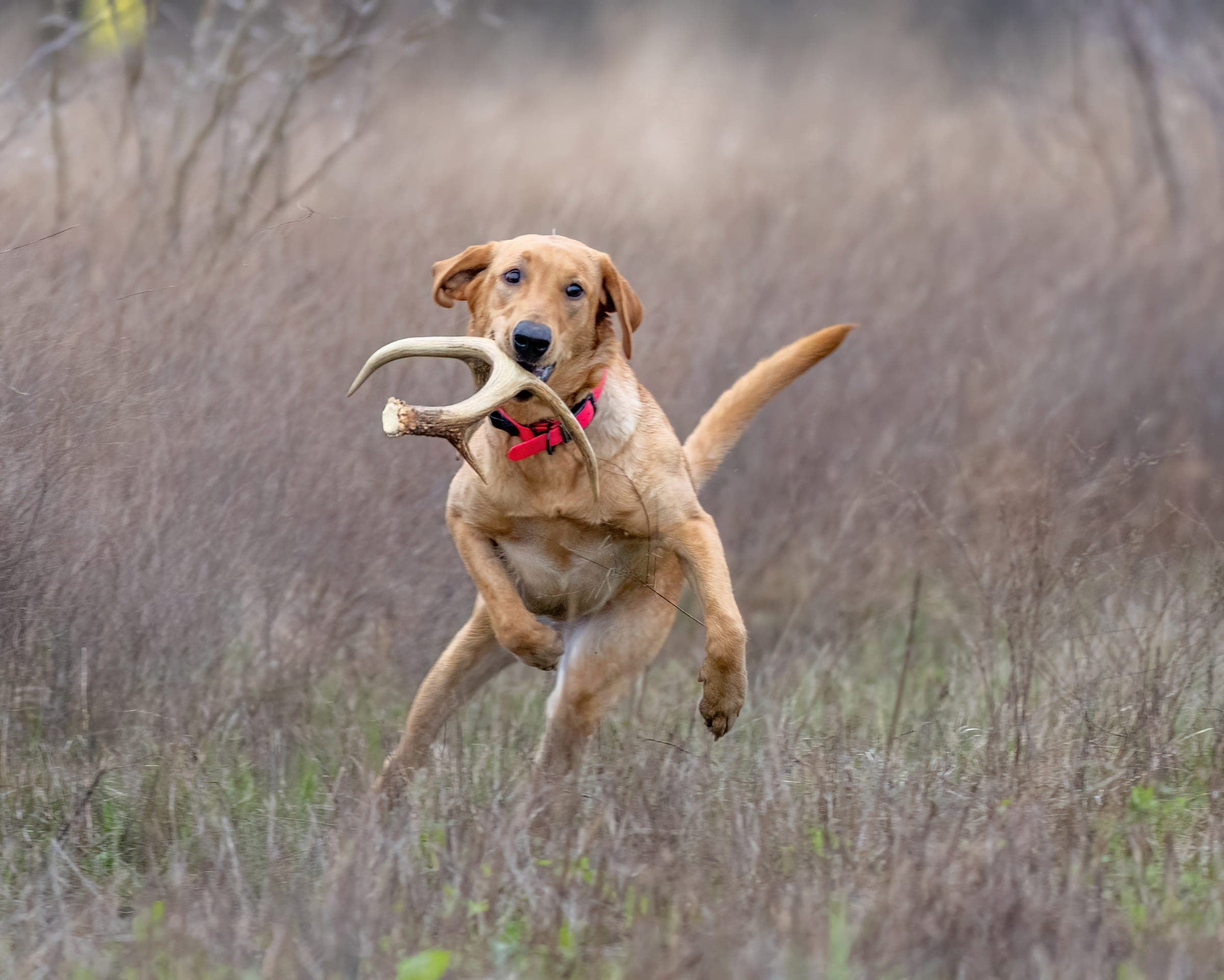
A field scent sport where dogs locate shed deer and elk antlers across grass, timber, and brush — the off-season counterpart to upland and waterfowl work, scored on search style and clean retrieves.
01 · What is it
Shed dog and shed hunt is an outdoor scent sport in which a dog searches real cover off-leash for naturally cast or training-placed deer and elk antlers within a defined search area and time limit. The handler casts and reads the dog but cannot point out hide locations or cross boundaries. Antlers are located by nose and sometimes sight, then either retrieved to hand or clearly indicated, depending on the level and the organization. Search areas are fields, timber, brush, or mixed cover meant to look like the places hunters actually walk in late winter. Tests are scored on search style, use of nose, terrain difficulty, and clean retrieves more than on raw speed.
The sport suits dogs with steady hunting drive and an interest in carrying objects — without the explosive impact of upland flushing or the cold-water demands of waterfowl. Retrievers, spaniels, pointing breeds, and versatile working dogs dominate the entry lists, but NASDA and UKC frame their programs as open to all breeds and mixed breeds, provided the dog can cover ground and handle an antler safely. Shed tests run outdoors with significant spacing between teams, which makes them more forgiving for mildly reactive dogs than tight indoor venues — but staging areas are still busy, and dogs have to be safe around people and other dogs. Very small dogs and short-muzzled breeds face real physical limits: heavy or tined antlers and rough late-winter footing are part of the sport.
02 · The search
Shed dog tests run as a single timed search per entry. Difficulty scales by changing the cover, the number of antlers placed, the distance between hides, the time limit, and whether the handler watched the antlers go down.
03 · NASDA
NASDA (North American Sport Dog Association) is a multi-event scent-sport organization founded in 2016. Its stated purpose is to test natural and trained scenting, tracking, and retrieving abilities in field scenarios that resemble historic working and hunting work. Shed Dog is one event within that framework, alongside Trailing & Locating, Urban Locating, and other programs that often share a trial weekend. Handlers who want an all-breed scent-sport program with multi-event weekends and an online entry path start here.
04 · UKC
The United Kennel Club's Elite Shed Dog Series sits inside a broader UKC performance-events registry. The rulebook frames the program around identifying dogs that hunt in a style effective for shed antler recovery, and the most recent rulebook update was effective August 2025. Local trials feed a formal Elite Shed Dog Nationals with class-based qualification rules. Handlers already running other UKC performance events — coonhound trials, gun-dog tests, obedience — find shed dog easy to add to a UKC trial weekend.
05 · Side by side
NASDA Shed Dog, UKC Elite Shed Dog Series, and NASHDA cover the same fundamental sport — dogs locating shed antlers in real outdoor cover — through different rulebooks, different titling structures, and different community cultures. Titles do not transfer formally across organizations. The skills do: search strategy, antler-safe retrieves, reading the dog, and conditioning all carry from one program's training into another's tests. The credentials are organization-specific.
| NASDA | UKC | NASHDA | |
|---|---|---|---|
| Role | All-breed scent-sport org with Shed Dog as one program among several | Performance program within a kennel-club registry with a formal Nationals | Dedicated shed hunting dog association with a hunting-community orientation |
| Eligibility | All breeds and mixed-breed dogs; direct NASDA registration | UKC registration, Performance Listing, or Temporary Listing; mixed breeds eligible via listing pathways | All dogs start at Junior regardless of age or prior training; mixed-breed eligibility per current rules |
| Levels | SD-I → SD-II → SD-III (and Excellent), with parallel online SD-I and SD-II titles | Working and Champion classes with related titles and Nationals qualification | JRSHTR → SRSHTR → MRSHTR; six qualifying ribbons per level |
| Scoring frame | Point-based per Master Handbook; deductions for boundary violations, poor retrieves | Per the 2025 Elite Shed Dog rulebook | Standard-based qualification; dogs compete against a standard rather than head-to-head |
| Online path | Yes — SD-I and SD-II combine video-submitted and in-person points | Not available | Not available |
| Marquee event | Multi-event weekends combining Shed Dog with other NASDA disciplines | Elite Shed Dog Nationals | Master World Shed Dog Championship Invitational |
| Known for | Multi-event weekends, online titling path for under-served regions, all-breed access | Integration with the broader UKC hunting events ecosystem; Youth handlers free at Nationals | Hunting-community orientation, season-based qualification math, six-antler standardized layouts |
Titles do not transfer formally across organizations. A NASDA SD-I does not substitute for a UKC Working pass, and a NASHDA JRSHTR does not confer NASDA or UKC status. The skills transfer between systems. The cultures don't: NASDA leans sport-side scent-game, UKC leans kennel-club registry, NASHDA leans hunting-community. Pick based on which culture you want to spend your weekends in.
06 · Getting started
Most teams start with retrieve foundations and antler-specific introductions at home, then layer in structured search games before trial entries. Shed dog instruction is scattered — some field-sport trainers and hunting-dog programs cover it explicitly, online courses dedicated to shed hunting have grown more visible in 2024–2025, and many handlers train largely alone after a foundation phase. Joining a regional NASDA or UKC club for fun tests or training days speeds the transition from backyard practice to trial-pattern searches.
07 · Trial day
Shed trials are quieter and more spread out than indoor dog-sport events, but check-in zones, crating areas, and field staging still get busy. First-time handlers report feeling unsure about boundaries and search strategy more than anything else. Most dogs handle the environment well if they're already used to outdoor sights, sounds, and smells.
08 · What it costs
Shed dog has modest equipment costs and per-trial fees that sit in the same range as other field sports, but trial calendars cluster by region and season, so travel and lodging drive the total for handlers chasing titles outside their home area.
Made for shed dog & shed hunt.
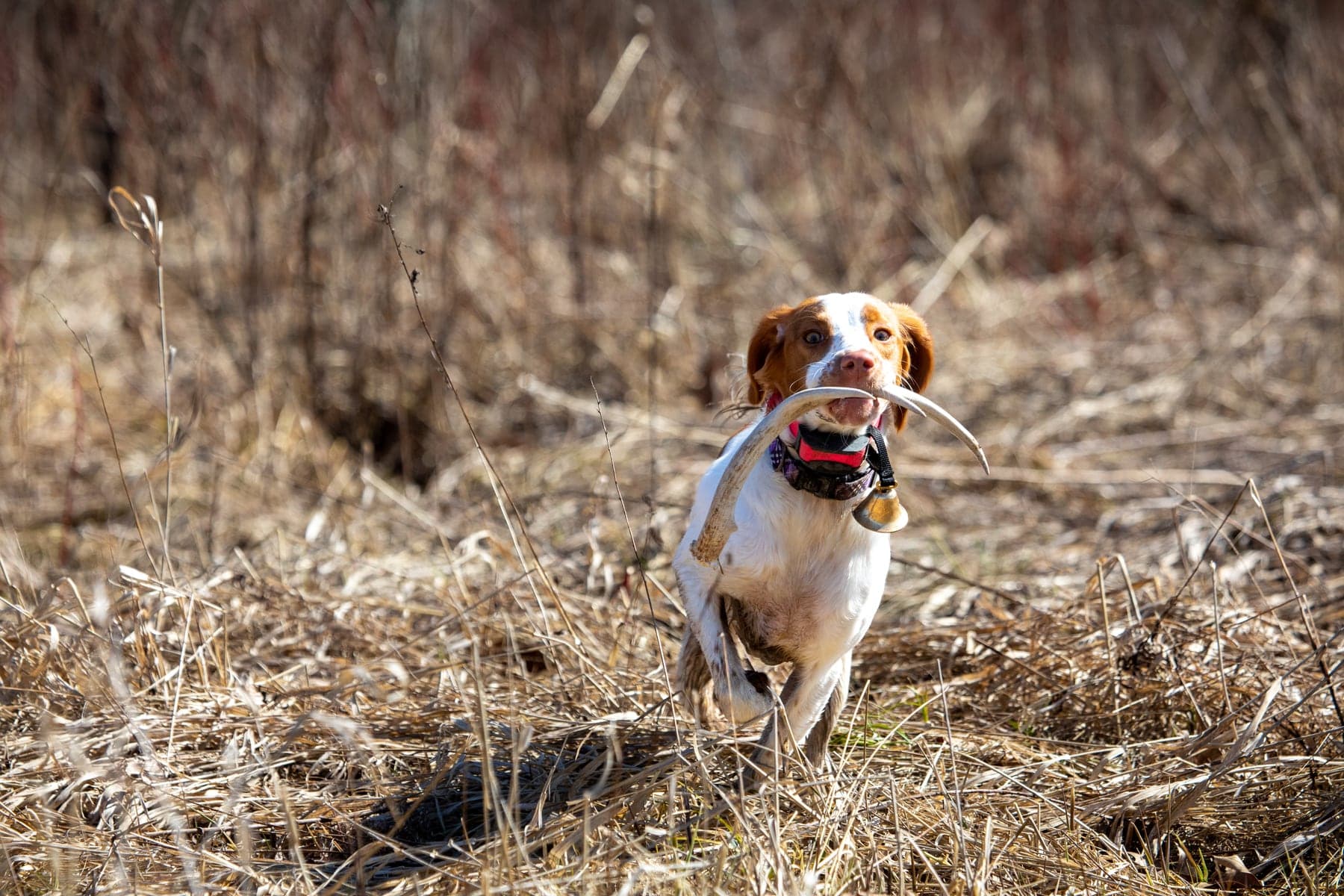
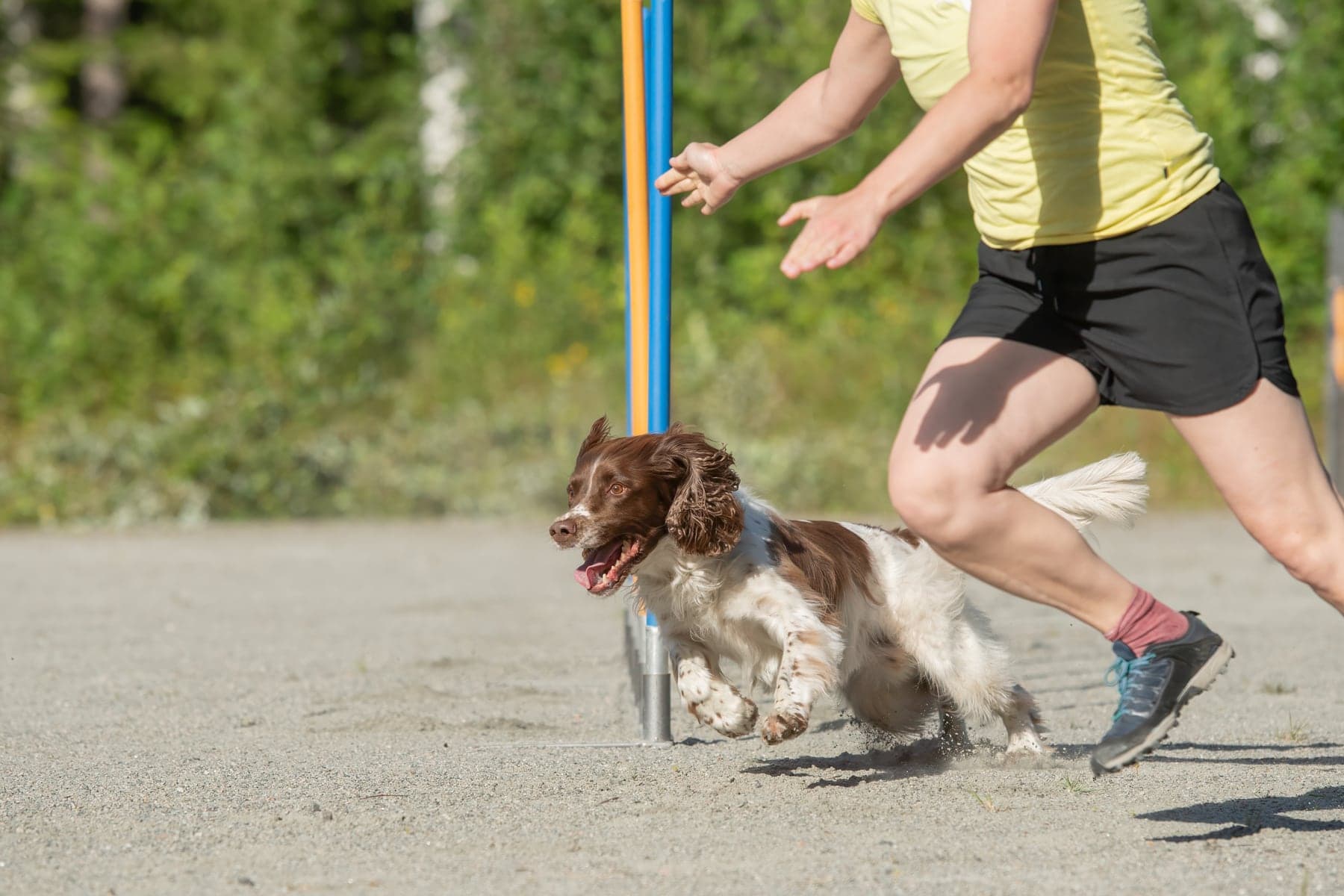
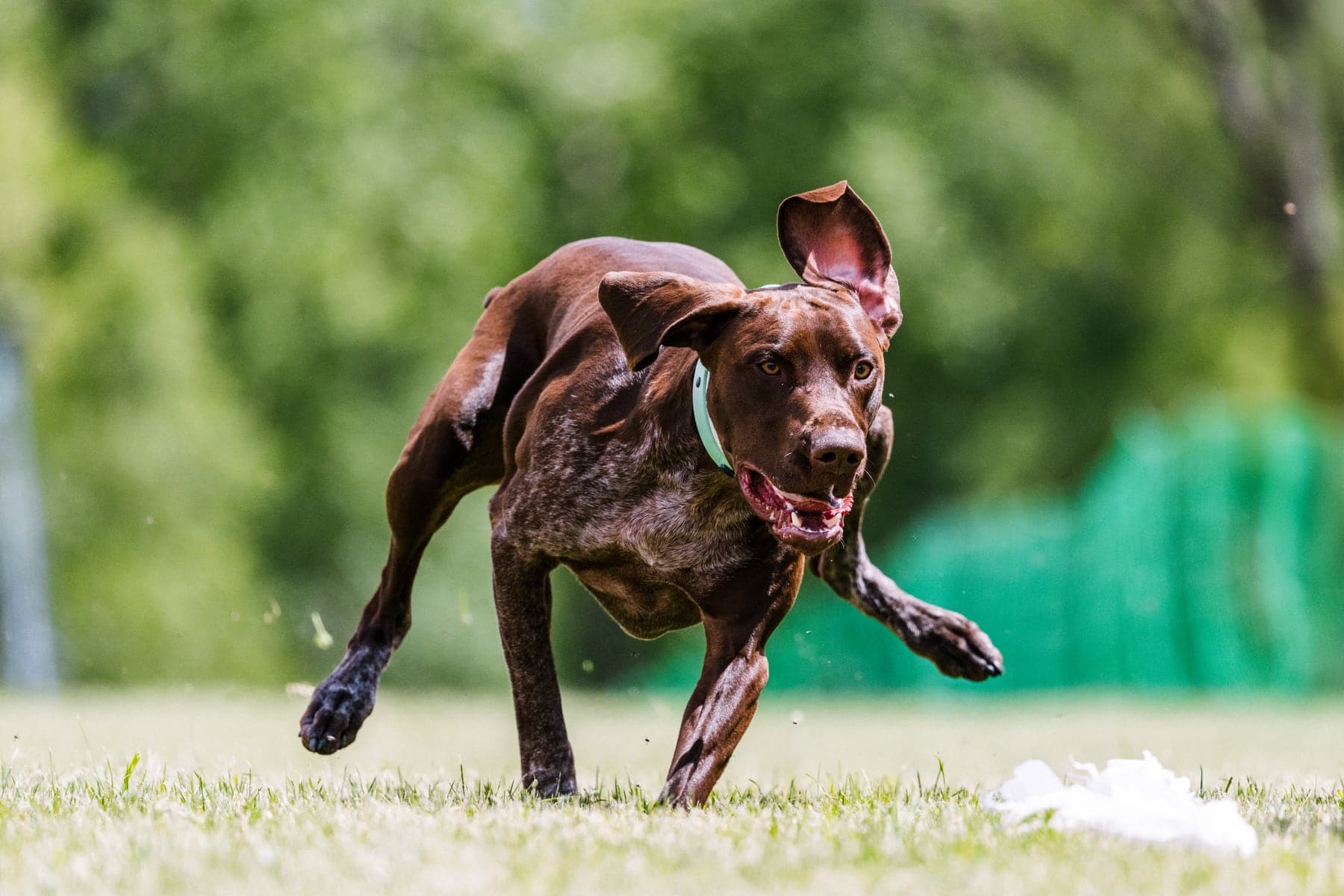
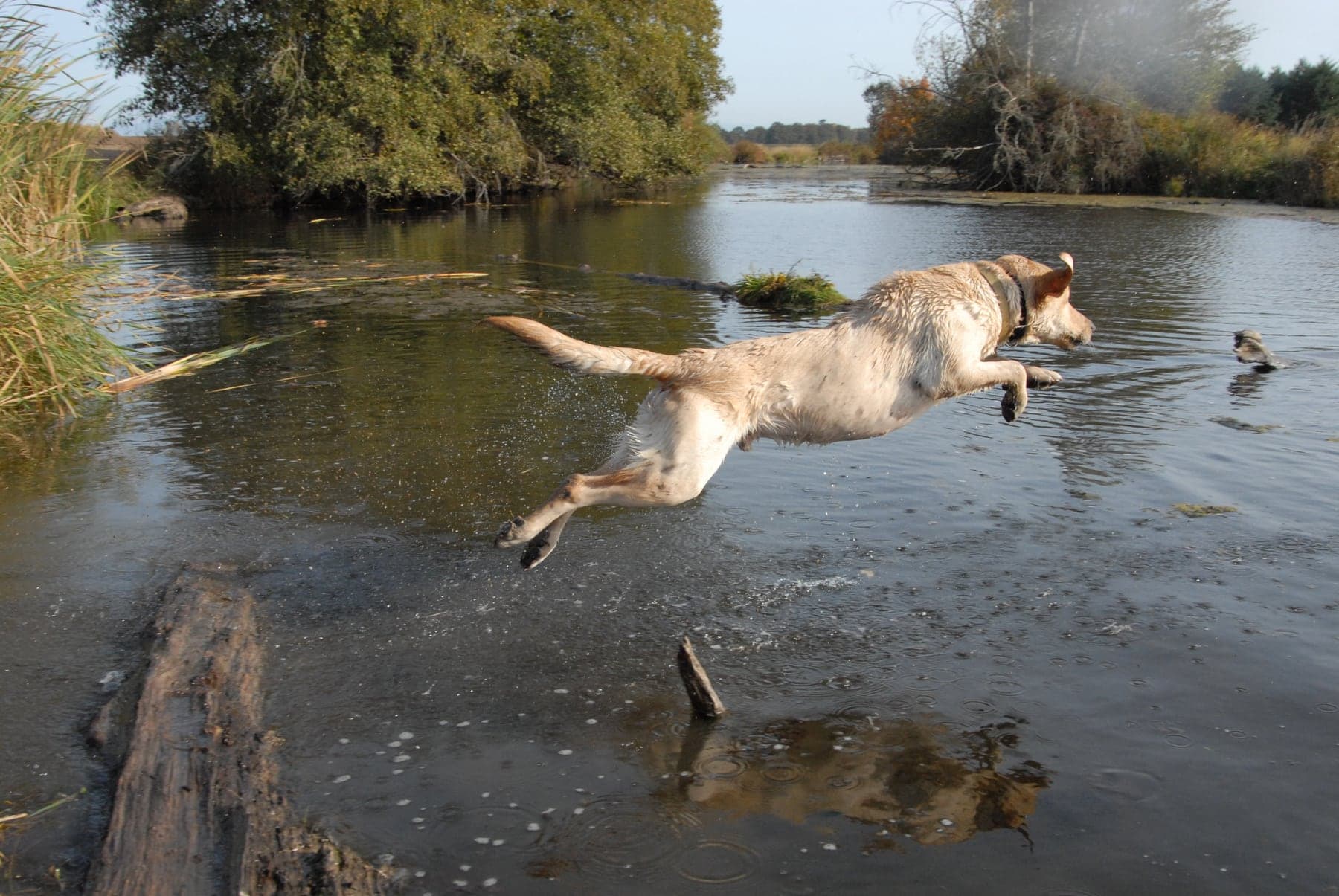

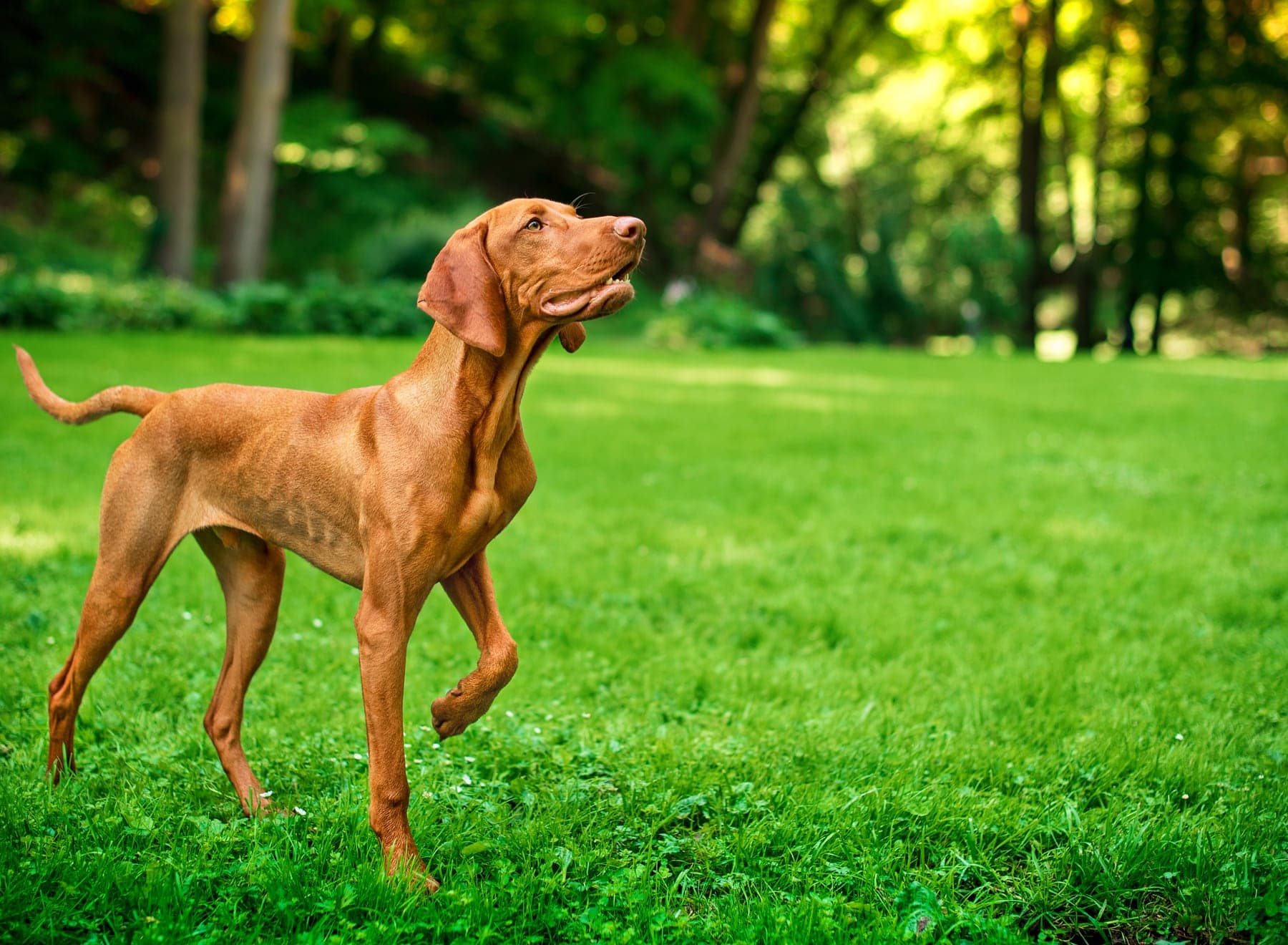
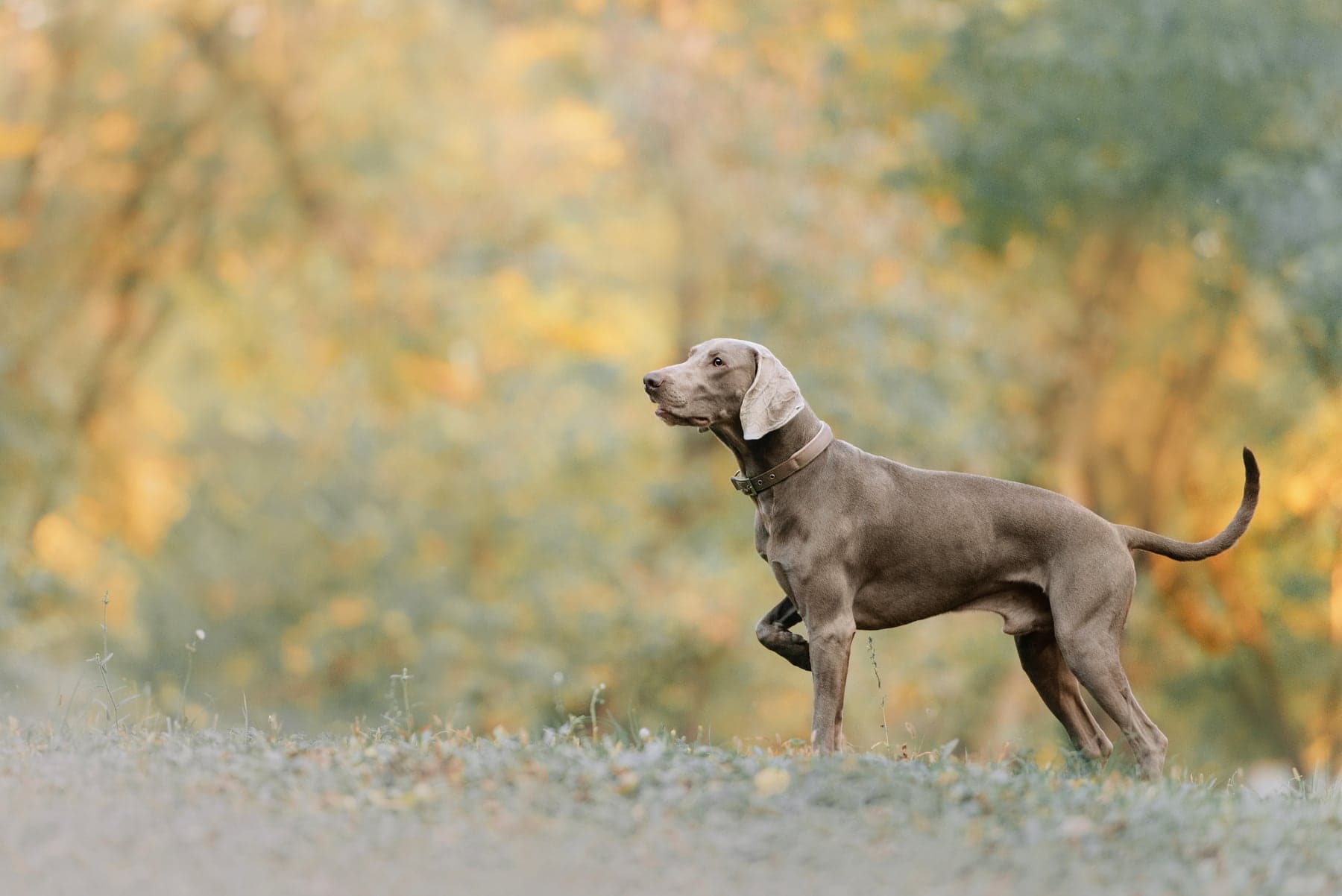
Breeds in our field guide that take naturally to shed dog & shed hunt — not every breed that competes, just the ones we’ve written up so far.
Sources & verificationLast reviewed May 2026
Our Shed Dog & Shed Hunt guide is an independent, plain-English orientation — not an official rulebook. Rules, titles, eligibility, and fees vary by organization and change over time, so always confirm the specifics with the current rulebook or event premium before you enter.
Checked against
Spot something out of date? Tell us and we’ll fix it.