Sport Profile

Discover Skijoring

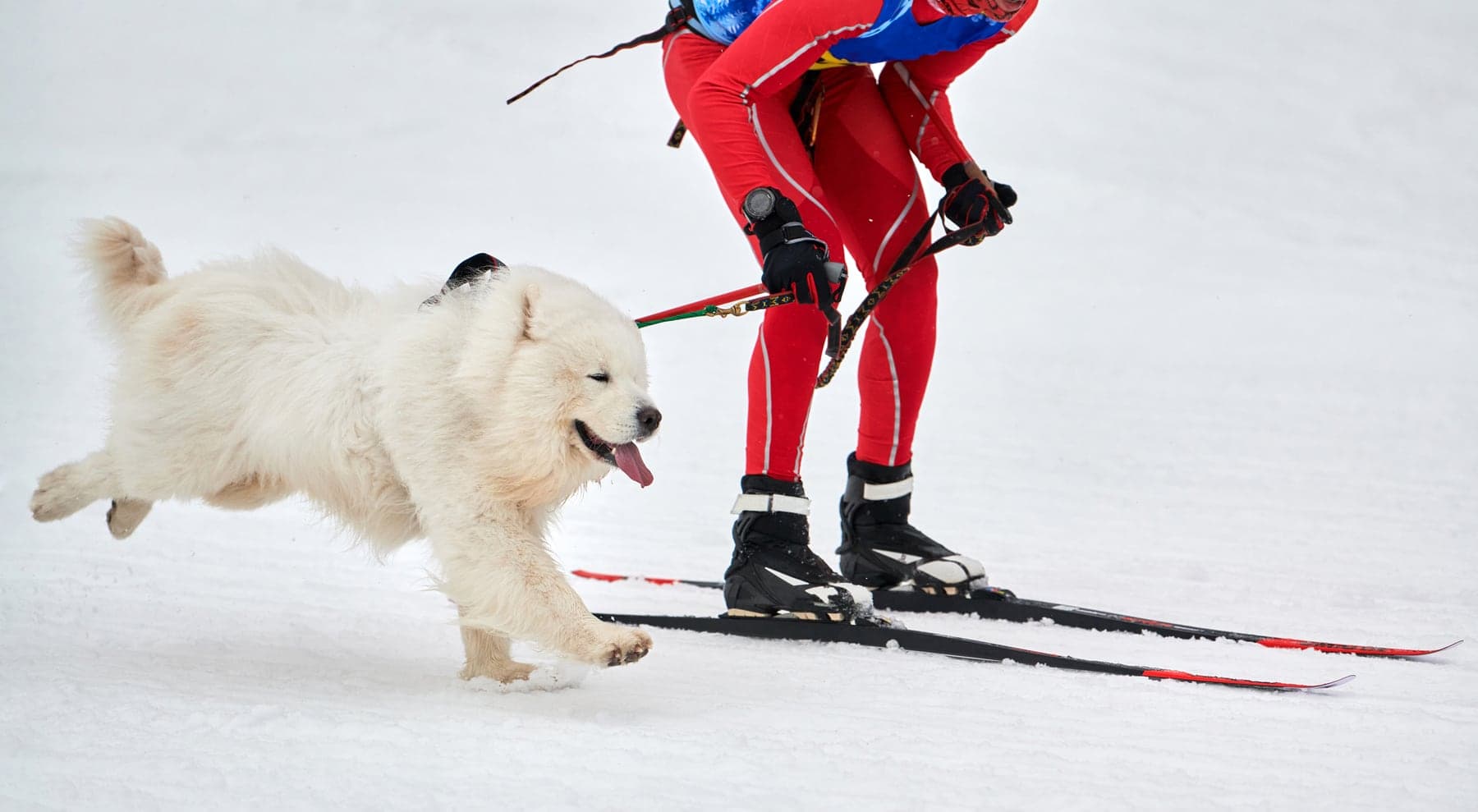
A winter sport where one or two dogs in pulling harness tow a cross-country skier on a bungee towline — equal parts sled-dog tradition and Nordic ski race.

Jump to a section

01 · What is it

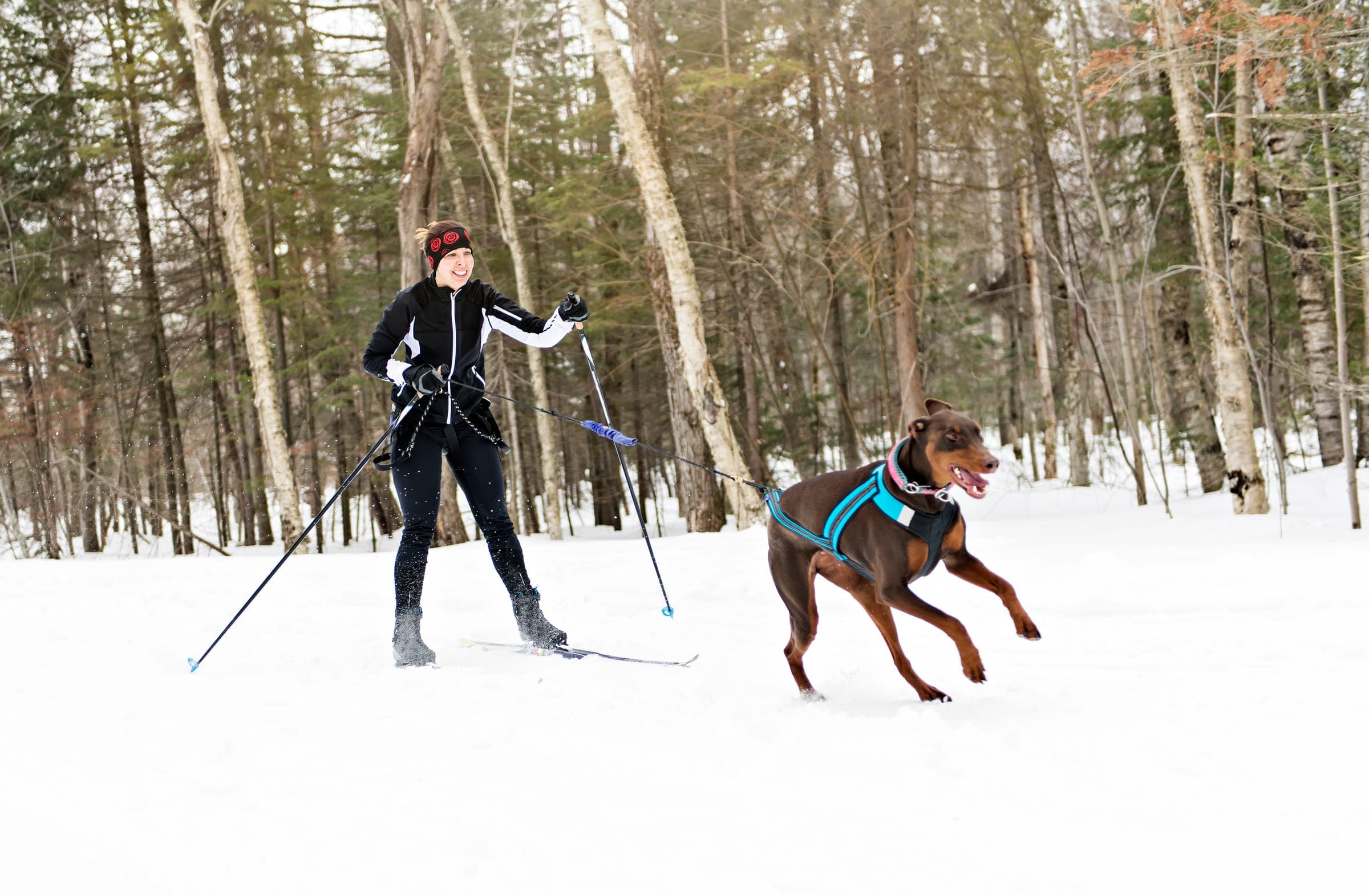
Skijoring pairs a cross-country skier with one or two harnessed dogs connected by a bungee-integrated towline to a padded skijor belt. The skier's hands stay free for poles. The dog runs in front on a taut line, the skier contributes real propulsion with skis and poles, and the team covers groomed snow or packed trails — most race classes sit between 3 and 10 kilometers depending on dog count and venue. Direction comes from verbal commands ('gee,' 'haw,' 'on by'), not leashes; the dog works semi-independently up front while the handler manages line, pace, and passing. The winning team is the one with the fastest clean time. There's no style judging.

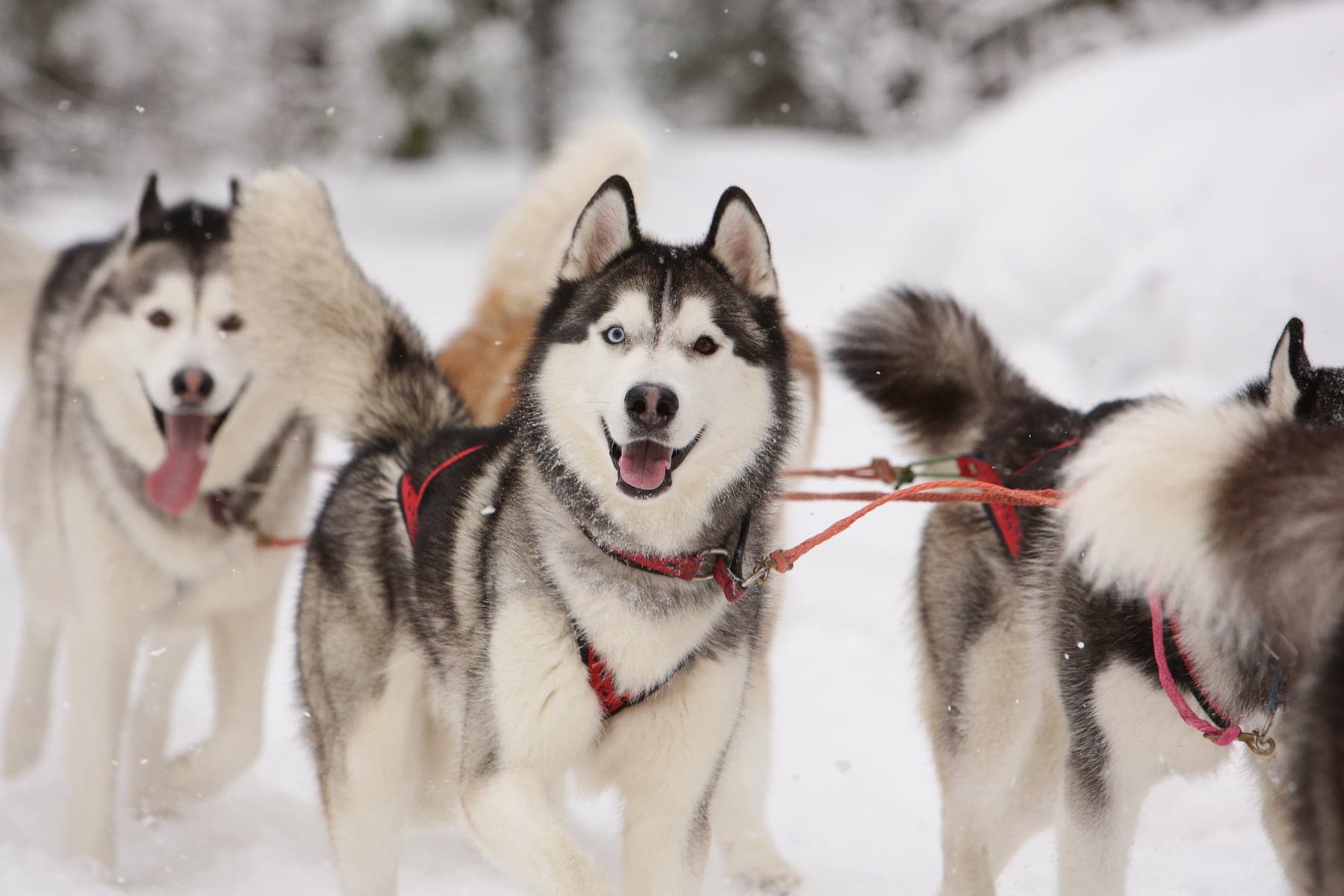
The dogs that thrive here are medium-to-large, athletic, and pull-driven — Nordic breeds, gundog and herding mixes, purpose-bred Eurohounds and Greysters at the elite end, plus a wide range of recreational mixed breeds. Brachycephalic, toy, and structurally fragile dogs are discouraged from racing. So are dogs that can't tolerate close, fast passing on narrow trails — the environment is dynamic, and most races aren't a fit for highly reactive teams unless a club offers wide-trail novice classes. The on-ramp has two parts that the rest of the sport assumes you've handled: you need to ski, and your dog needs to pull on cue. Most newcomers underestimate the skiing half.

Origins
Scandinavian roots
Skijoring's roots reach back to Scandinavian and Arctic ski-travel traditions, where people on skis were pulled by reindeer or working dogs through the late 1800s and early 1900s.
Mushing crossover
Mushers used it to condition sled-dog teams on lighter equipment and narrower trails before it became its own race discipline.
1990s–2000s
IFSS formalized World and Continental Championships at sprint and mid-distance levels, and North American race weekends began stacking skijor classes alongside traditional sled-dog races.
Today
The sport sits at a stable niche — concentrated in Scandinavia, central Europe, Alaska, and the snow-reliable parts of the northern US. Growth tempered by variable winters.

02 · The course

A skijor race is a timed point-to-point or loop on groomed Nordic tracks or snowmobile-packed trails. Teams release one at a time at set intervals, or in small waves at a mass start. The course avoids blind turns and extreme descents but rolls — climbs, corners, and technical sections are normal. Five things define every clean run.

Element 01
The start chute
The dog is held or staked at the line, tension on the towline, while the skier clips in. The countdown drops. The dog accelerates straight onto the trail; the skier lands on skis and starts poling immediately. Clean starts mean a straight launch, no crossing the line, no turning back, and tension picked up fast.
Element 02
Trail and terrain
Most courses use a groomed Nordic track with a flattened skate lane wide enough for safe passing. Teams hold a smooth line, manage tension on descents and through corners, and stay in the designated trail. Cutting corners or leaving the marked route is penalized or disqualifying in most rule sets.
Element 03
Passing etiquette
Passing rules come straight from sled-dog racing. The overtaking team calls 'Trail!' The overtaken team yields where possible — sometimes by stepping off the track, sometimes by holding the dog steady while the faster team passes. Failure to yield safely draws penalties or disqualification.
The hardest skill
Element 04
Equipment compliance
Required gear includes a padded skijor belt with quick-release, a bungee-integrated towline, and an X-back or skijor-specific pulling harness fitted to the dog. Flexi leashes, choke collars, and short non-shock lines are prohibited at organized races. Towline length is capped per ruleset. Pre-start gear checks are routine.
Element 05
The finish
The skier crosses the line upright on at least one ski with the towline still attached or in hand, and the dog's body crosses the line for time to be recorded. Penalties for gear violations or course infractions are added to the recorded time.

03 · IFSS

IFSS is the global governing body for sleddog disciplines, including skijoring. IFSS sets the technical regulations — equipment standards, course design, anti-doping protocols, passing rules — and runs World Championships and Continental Championships in skijoring sprint and mid-distance classes. National federations affiliate up to IFSS; they run their own qualifying races and select teams for World Cup events and championship rosters.

01
How US handlers connect
US handlers connect to IFSS indirectly. There is no US-only IFSS member federation that serves as a stand-alone US skijor body. Historically ISDRA and breed-specific clubs have served as the bridge. Most US handlers chasing IFSS-level competition either travel to international qualifiers or align with a Canadian or European federation for World Cup eligibility.
02
Title and recognition
IFSS does not award lifelong title letters that follow a dog's name. Progression is measured in championship medals (World Champion, Continental Champion) and World Cup ranking points across a season. Point formulas vary by competition cycle and are set in IFSS regulations.
03
Rule set
The most widely referenced dryland and snow rulebook in international skijoring. Detailed safety and equipment regulations: padded belt with quick-release, bungee towline, pulling harness, helmet recommendations, passing protocol, anti-doping protocols.
04
US footprint
Real but indirect — most US handlers race under IFSS-style rules at regional events rather than at IFSS-accredited championships directly. Becomes the relevant framework when handlers chase World Cup standings or international championship eligibility.
Key facts
Role
International governing body
Marquee
World + Continental Championships
US footprint
Indirect — via federation affiliation
Title model
Championship medals + World Cup points
Helmet
Required at most events
Rule set
Most widely referenced international rulebook
When IFSS matters
Chasing international championships and World Cup points. IFSS is the only path. Plan for a national federation affiliation, qualifying races abroad, and travel.

04 · ISDRA

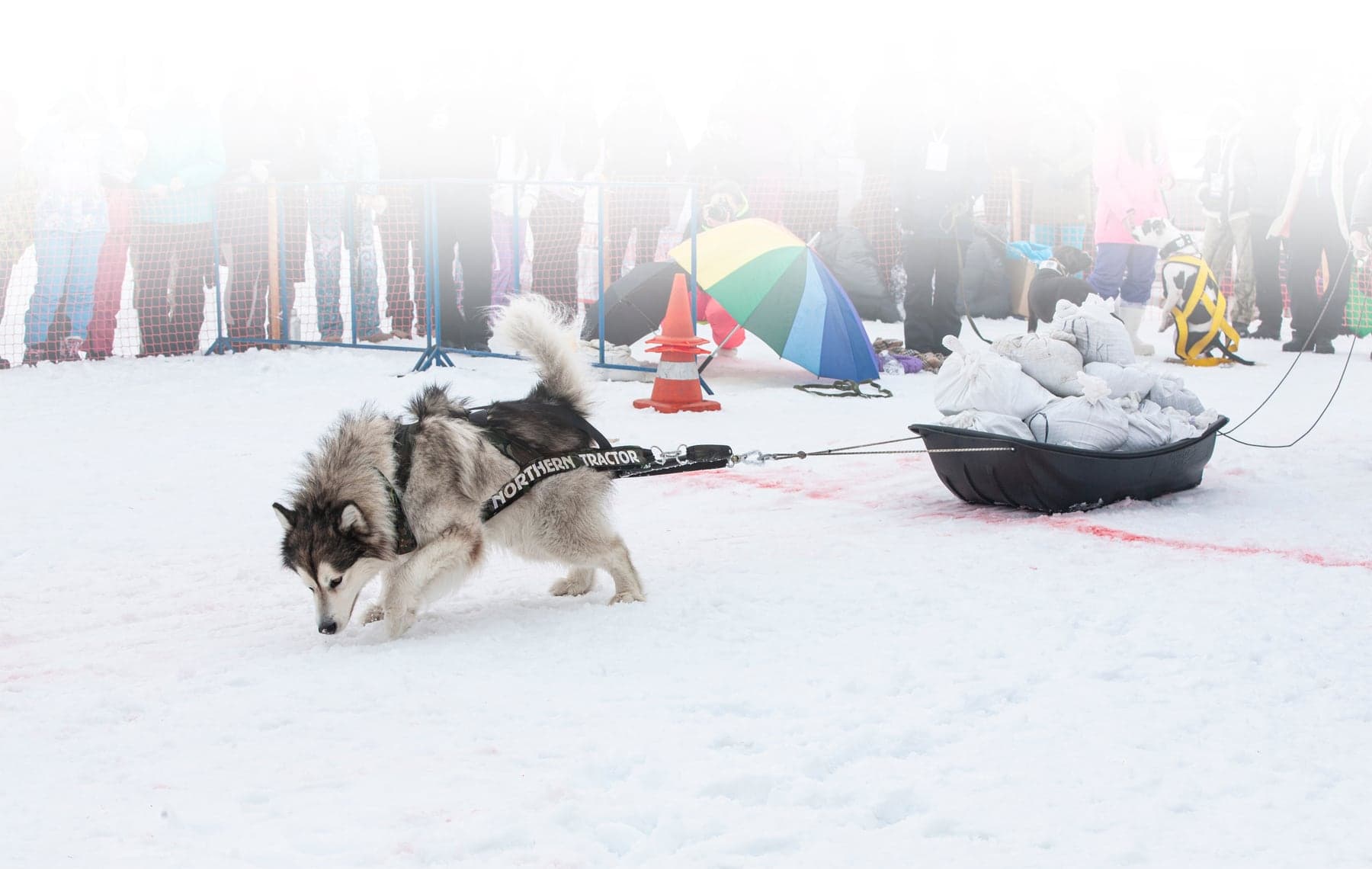
ISDRA is the North American sanctioning body that hosts most US skijor classes. ISDRA-sanctioned race weekends are typically multi-class events — mid-distance and sprint sled-dog teams plus skijor — run on snowmobile-packed trails or Nordic-center venues. Skijor classes appear at most ISDRA-sanctioned race weekends in snow-reliable regions, embedded in the broader sled-dog program rather than as standalone events.

01
How ISDRA runs skijor
Membership opens up race entries, season points, and access to ISDRA-listed events. The competitive structure is points-based: place in races, accumulate points across the season, end up on a season-standings board by class. ISDRA recognizes class winners and tracks championship-level standings; specific titles are less formalized than AKC-style letters and are tied to season points rather than completed legs.
02
Embedded with sled-dog programs
Most US skijor classes happen at race weekends where mid-distance and sprint sled-dog teams race alongside. Skijor is one discipline among several rather than a standalone event. Volunteers, judges, vet teams, and trail crews are shared across classes.
03
Culture and on-ramp
Culture leans traditional sled-dog. Most handlers come from mushing backgrounds, train year-round through canicross and bikejor in shoulder seasons, and treat skijor as one discipline within a broader pulling-sport practice. Newcomers from pet-dog or agility backgrounds find a learning curve in the etiquette — line manners, passing protocol, vaccination and welfare requirements — but ISDRA-affiliated clubs are the most reliable on-ramp to organized US skijor racing.
04
Class structure
1-dog and 2-dog skijor classes most common. Some events add junior, veteran, or multi-dog skijor. Class points roll up to season standings and class champion recognition at season's end.
Key facts
Role
North American race sanctioning
Footprint
Strong US + Canada presence
Title model
Season points → class champion
Classes
1-dog · 2-dog · sometimes junior/veteran
Culture
Traditional sled-dog
Race format
Embedded in multi-class race weekends
When ISDRA matters
Want organized US race weekends with season-long points and a sled-dog community. Most US skijor classes happen here. The most reliable on-ramp to organized US skijor racing.

05 · Side by side

Skijoring does not have a single US governing body. IFSS is the international federation; ISDRA is the North American race-sanctioning body; everything else is a patchwork of regional skijor clubs and Nordic-center series running events under adapted rule sets.

IFSS
International Federation of Sleddog Sports. Global governing body — World and Continental Championships. Most widely referenced dryland and snow rulebook. US handlers connect indirectly through national federation affiliation.
sleddogsport.net →
ISDRA
International Sled Dog Racing Association. North American race sanctioning body. Most US skijor classes happen at ISDRA-sanctioned multi-class race weekends. Season points → class champion.
isdra.org →
Regional skijor clubs
Local series, fun runs, novice clinics — the on-ramp for most US handlers. Range from family-friendly fun runs to serious sprint series modeled on IFSS standards. Track series points or local championships rather than lifetime titles. Concentrated in Alaska, Minnesota, Wisconsin, Michigan, and the Mountain West.
IFSSISDRARegional clubs
RoleInternational governing body — World and Continental ChampionshipsNorth American race sanctioning + season pointsLocal series, fun runs, novice clinics
FocusElite sprint and mid-distance racing under standardized rulesMixed pro/am race weekends with skijor classes embedded in sled-dog programsRange from family-friendly fun runs to serious sprint series
LevelsNational qualification → Continental → World → World Cup ranking pointsClass points → season standings → class championSeries points or local championships
DivisionsSingle-dog and multi-dog skijor; commonly split by gender and dog count; junior classes via national federations1-dog and 2-dog skijor; some events add junior, veteran, or multi-dog classes1-dog and 2-dog most common; some clubs run novice, open, and big-dog classes
Known forAnti-doping enforcement, prestige championships, technical sprint racingSeason-long point chasing, integration with traditional sled-dog cultureRegional culture, accessibility, local trail norms

Titles do not transfer cleanly across these bodies. IFSS tracks championship medals and World Cup ranking points; ISDRA tracks season points; regional clubs track series standings. There is no AKC-style letter title that follows a skijor dog's name across all three. Some national kennel clubs informally acknowledge sled-dog or skijor achievements for pedigree records, but practice varies.

Which one fits you?
International championships · IFSS
Chasing World Championships and World Cup points. IFSS is the only path. Plan for a national federation affiliation, qualifying races abroad, and travel.
US race weekends · ISDRA
Want organized US race weekends with season-long points and a sled-dog community. ISDRA-sanctioned races are the answer. Most US skijor classes happen here.
Local fun run · regional club
Closer to 'I want to try a fun run with my dog and a club nearby.' A regional skijor club or Nordic-center series is the right entry point. You don't need IFSS or ISDRA membership to start.
Nordic breed · breed-club working program
Have a Siberian, Malamute, or Samoyed and want breed-specific working events. A Nordic breed club with a sled-dog and skijor working program is the better fit alongside the general circuits.

06 · Getting started

The on-ramp has two parts that the rest of the sport assumes you've handled: you need to ski, and your dog needs to pull on cue. Most newcomers underestimate the skiing half. Even strong dog handlers spend a season getting their cross-country skiing solid — balance, controlled turns, safe falls — before they trust themselves at race speed behind a pulling dog.

The kit
Two equipment stacks
Pulling harness fitted to your dog (X-back or skijor-specific). Padded skijor belt with quick-release and a bungee-integrated towline. Cross-country skis (skate or classic), boots, poles. Cold-weather layers, gloves, eye protection. Optional but recommended: dog booties, dog coat for downtime, reflective gear.
Foundation · months 0–6
Skiing + pulling cues
Months 0–3: learn cross-country skiing if you don't already ski. Acclimate the dog to harness, belt, and towline tension off-snow with canicross or scootering. Months 3–6: short, low-traffic snow sessions building line manners, directional cues, and conditioning. First fun run or club intro day.
First race · year 1–2
Conditioning across the season
Year 1–2: first sanctioned race, conditioning across the season, refining starts and passing. Many teams need multiple seasons before they're competitive at sanctioned-event pace. Most US skijor handlers travel 1–4 hours each way to reach trails or races, depending on region.
Before you enroll
Dog age: minimum competition age is 12–18 months across most rule sets, with growth-plate closure as the underlying concern. Veterinary clearance for hips, elbows, spine, and cardiovascular fitness before serious pulling. Snow access: skijoring requires snow-reliable trails. A baseline of cross-country skiing competence — you can stop, turn, and fall safely.

07 · Event day

A skijor race day looks more like a sled-dog meet than a Nordic ski race. Expect a long winter field day — early arrival, equipment staging, gear inspections, multiple class waves, and significant downtime between runs.

The flow
How the day runs
Check-in: present membership and vaccination paperwork, pick up bib or number. Pre-race meeting covers course layout, start intervals, passing rules, and safety procedures. Staging: teams stage at the start chute according to running order — randomized, seeded, or by pre-assigned wave. Run the course: finish time recorded; penalties added for any infractions. Results posted; some events award class places same-day.
The kit
What to bring
Crate, tie-out, or vehicle setup for the dog's downtime. Water (warm if it's cold), high-value food, dog coats and booties. Belt, harness, towline, plus a backup of each if you have them. Skis, poles, spare gloves and hats, layers for staging cold. Folding chair, thermos, snacks for the human.
The mistakes
What goes wrong
Underestimating the skiing — relying on the dog to compensate for shaky technique gets ugly fast on descents and corners. Skipping start practice — line tension at the gate is its own skill. Not practicing passing before race day — first contact at speed with another team is hard to recover from cold. Misreading the rules — passing protocol, finish-line requirements, and gear specs vary by ruleset. Under-dressing or over-dressing for the staging-vs-running temperature delta.
The reality
What videos don't show
Race videos show the fast clean runs. They don't show the long staging time, weather delays, or the work of moving dogs and gear over snow at the venue. Noise levels at staging are high — sled-dog teams in particular can be loud at the line. Multi-day events compound fatigue. Cold mornings, long drives, and the logistics of dog care between runs are part of the sport.

08 · What it costs

Skijoring's cost structure is wider than most dog sports because it stacks two equipment piles (dog pulling gear plus cross-country ski gear) on top of travel to snow. The honest budget depends on what you already own and where you live.

Dog pulling gear
$150$350
Harness, padded belt, bungee towline together. Well-known brands; high-end imports can run higher
Cross-country ski setup
$300$1k+
Skis, boots, poles. Used gear at the low end; performance setup new at the high end. Rentals available at many Nordic centers
Per-race entry
$30$80
ISDRA-sanctioned skijor classes typically $30–$80/class for North American club events; major festivals and championship events higher
Active annual
$2k$15k+
Casual low four figures; active mid four figures; championship-level high four to low five figures with international travel
The honest truth
The biggest cost variable is geography. A handler an hour from Nordic-center trails with reliable winters runs a different annual budget than one driving four hours to find snow. Equipment is a one-time investment; snow access is the ongoing one. Most US skijor handlers travel 1–4 hours each way to reach snow-reliable trails or races, especially in lower-elevation or southern regions.
Related sports

If Skijoring interests you, look at these too.