Sport Profile

Discover Straight Racing

An amateur sprint sport where sighthounds chase a mechanical lure 200 yards down a flat, straight track in small packs — testing acceleration, chase drive, and clean pack manners.

Jump to a section

01 · What is it

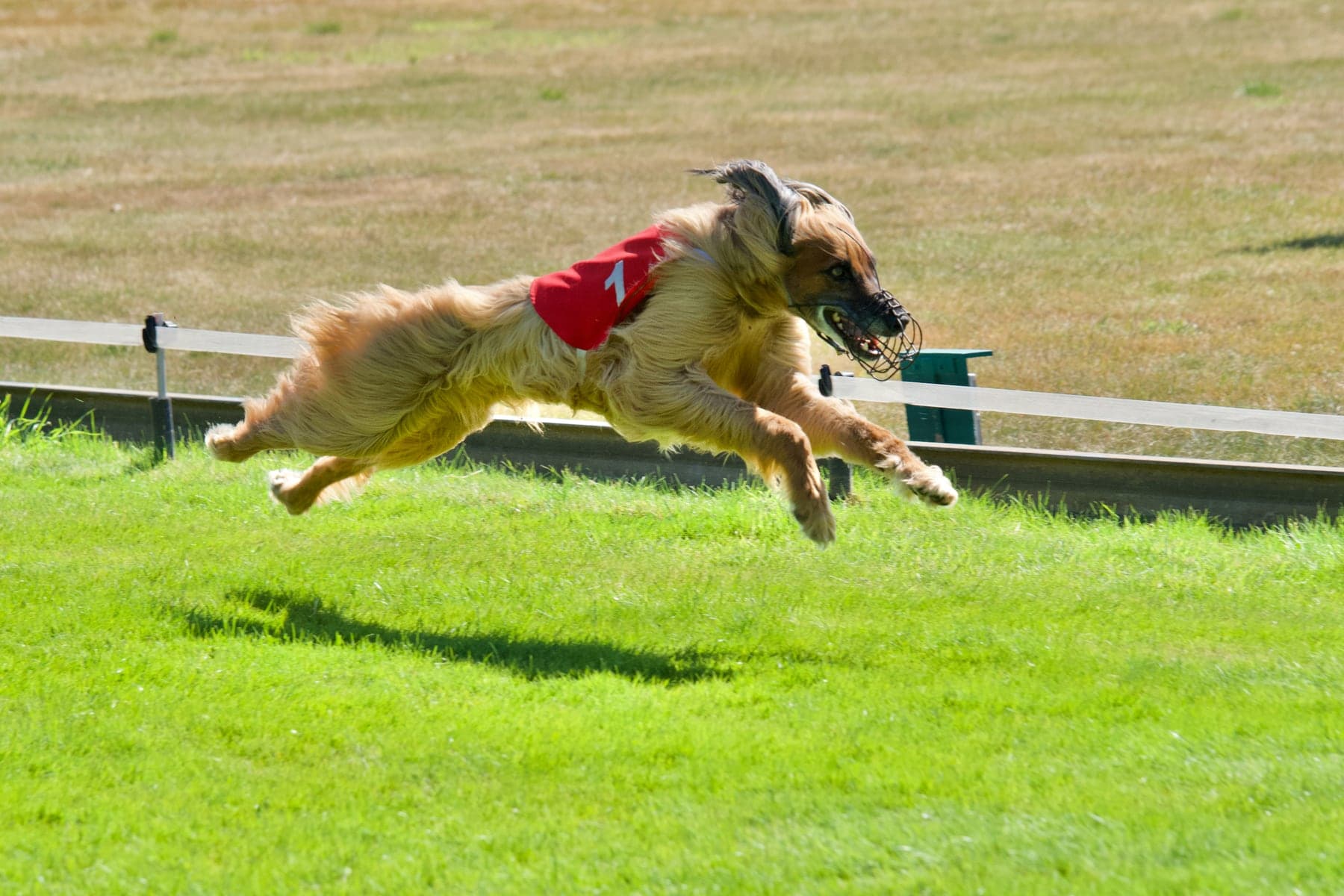
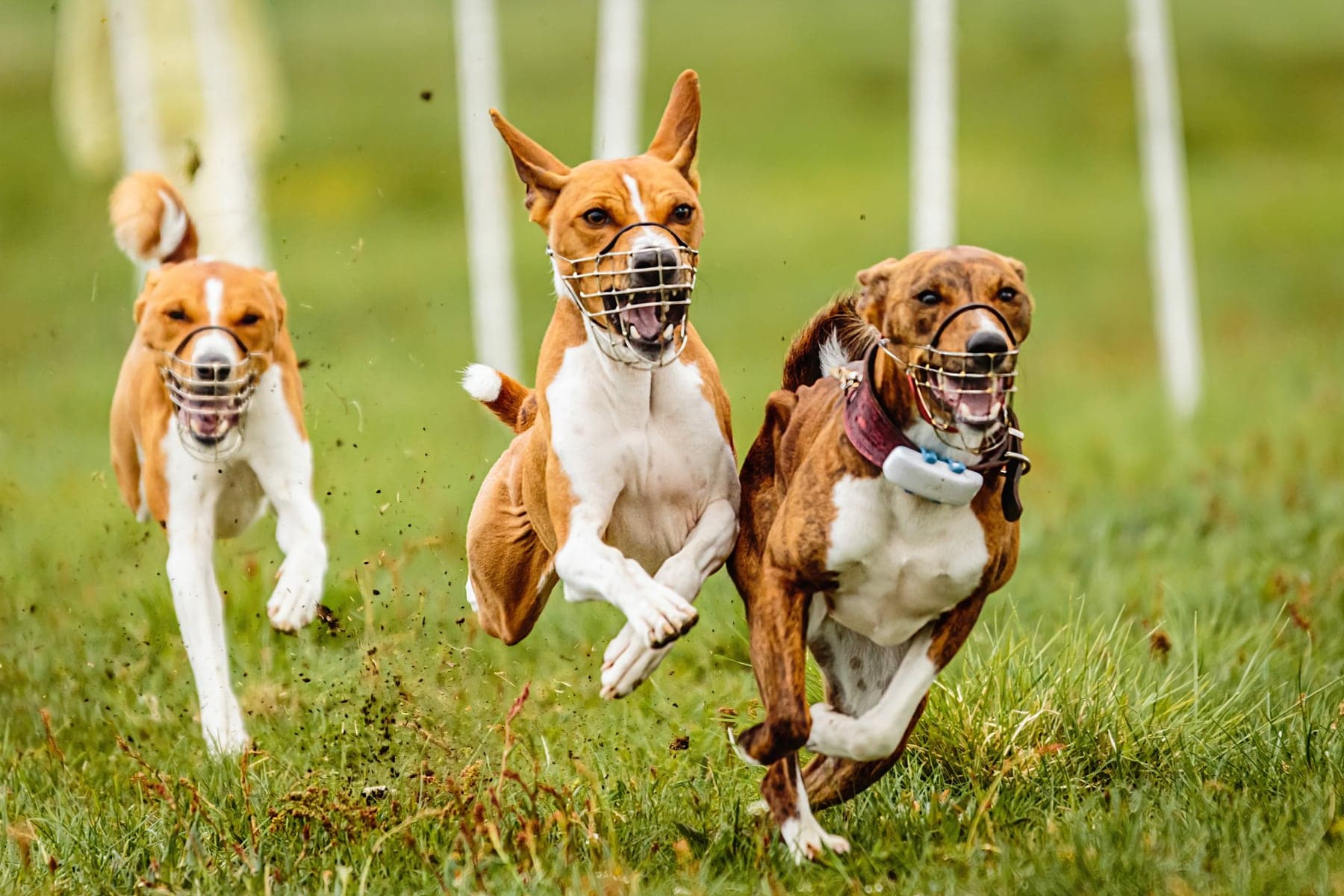
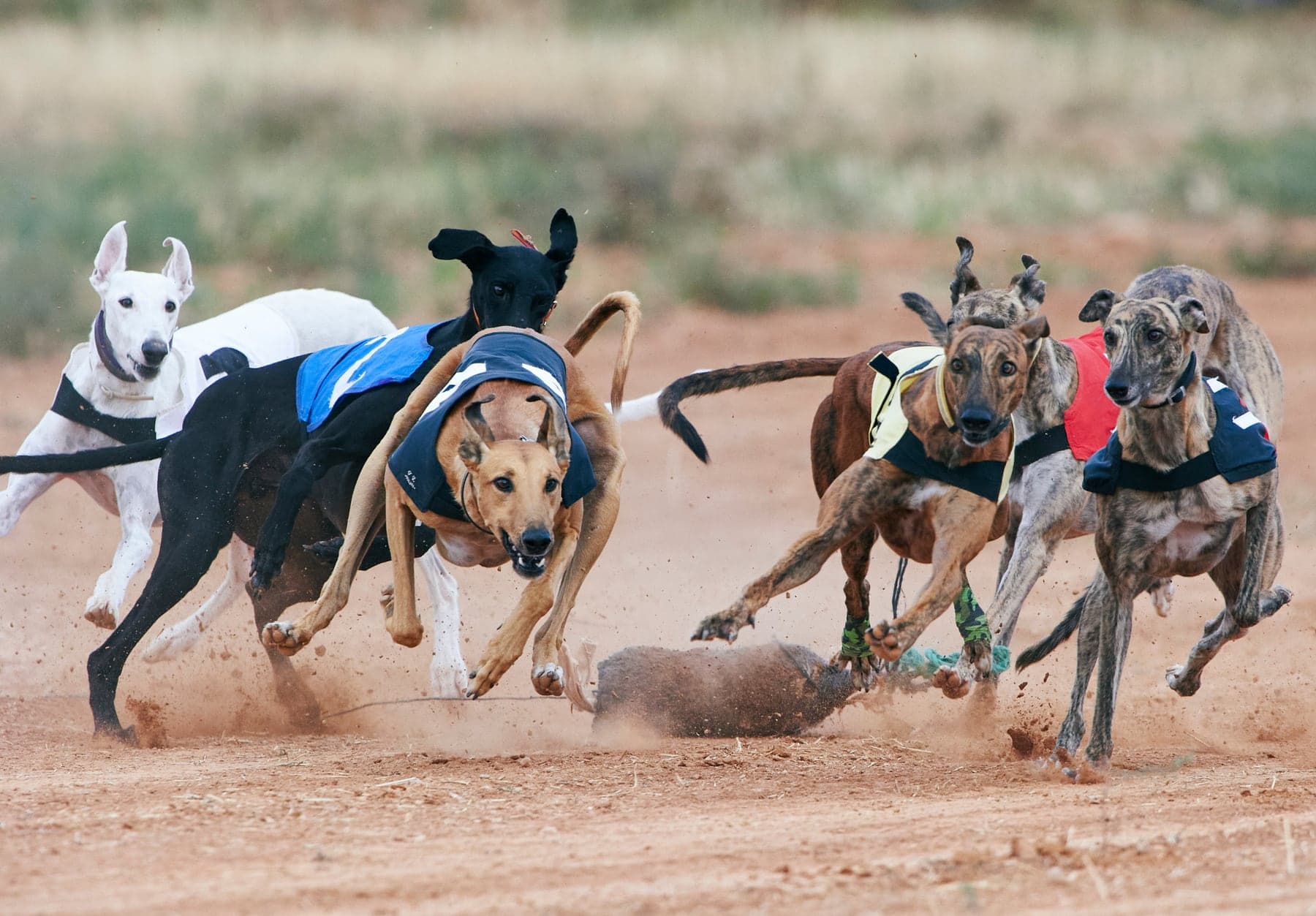
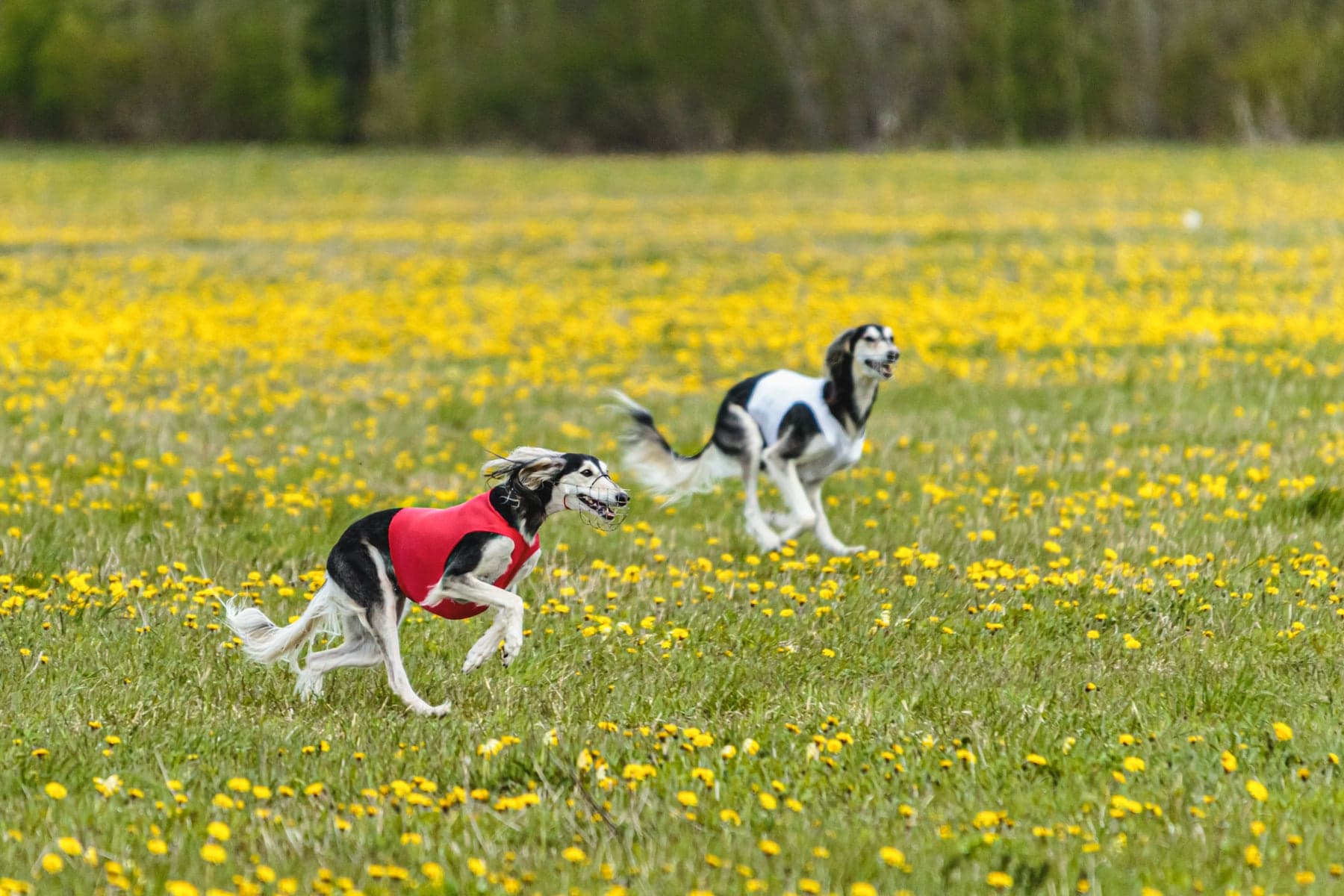
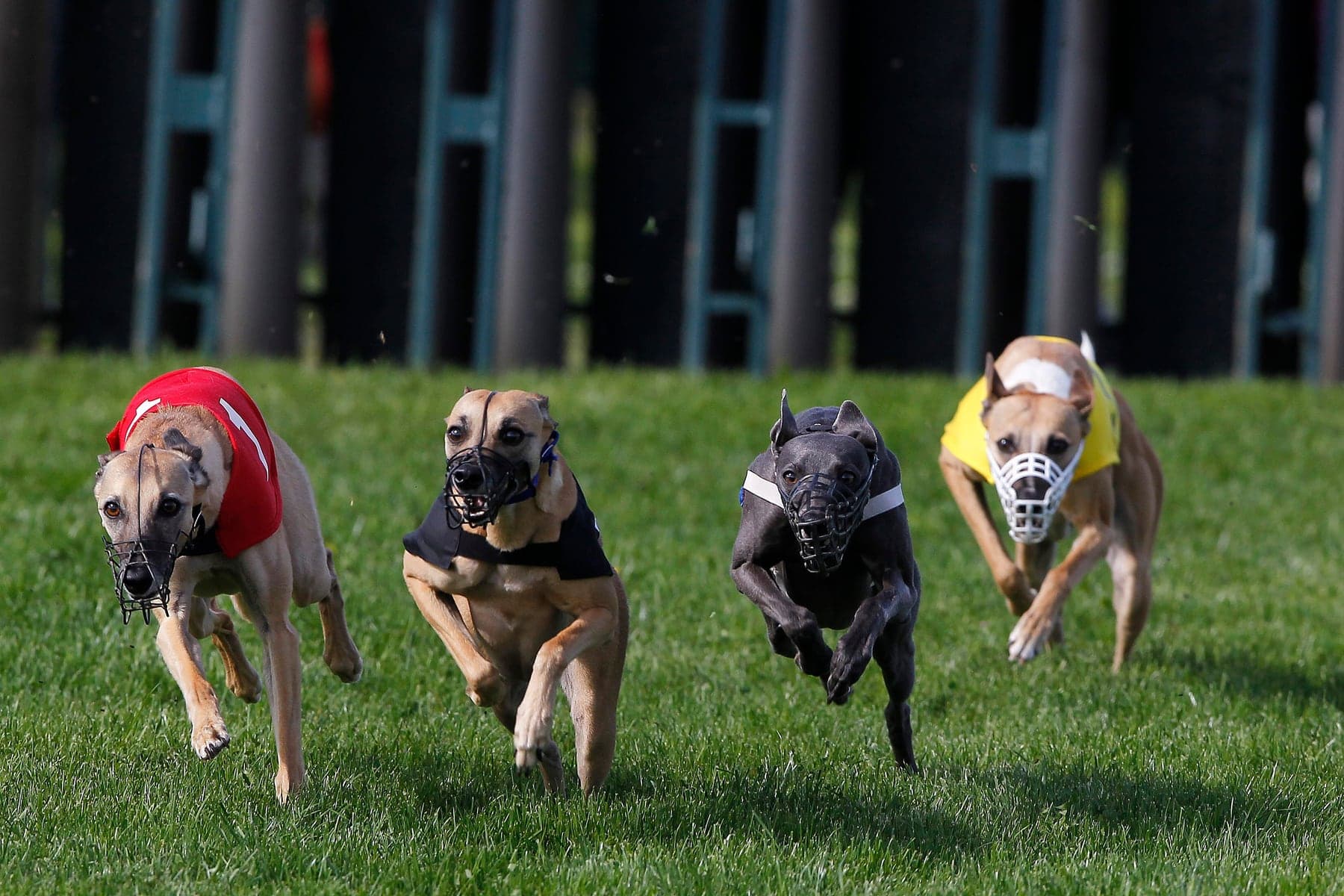
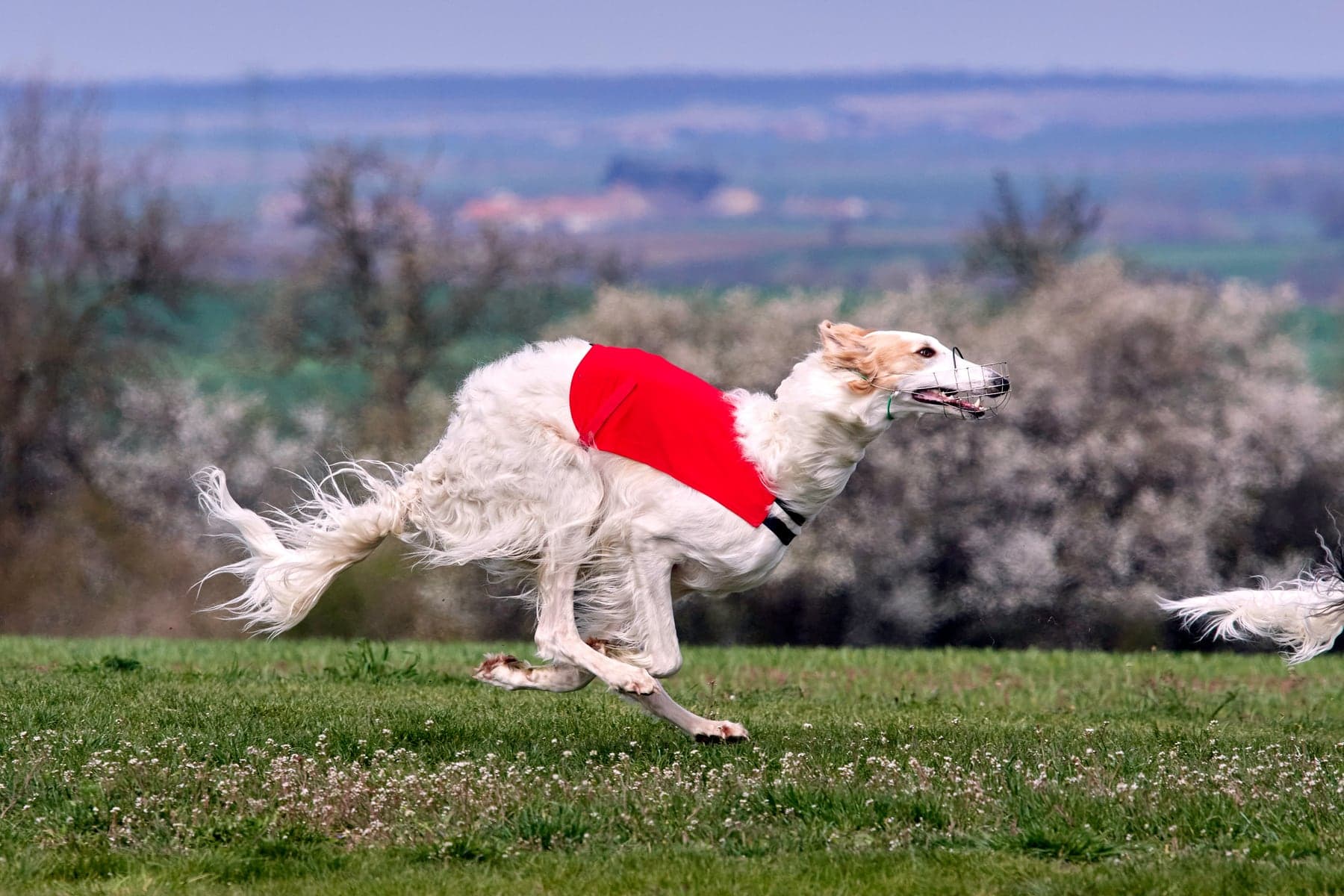
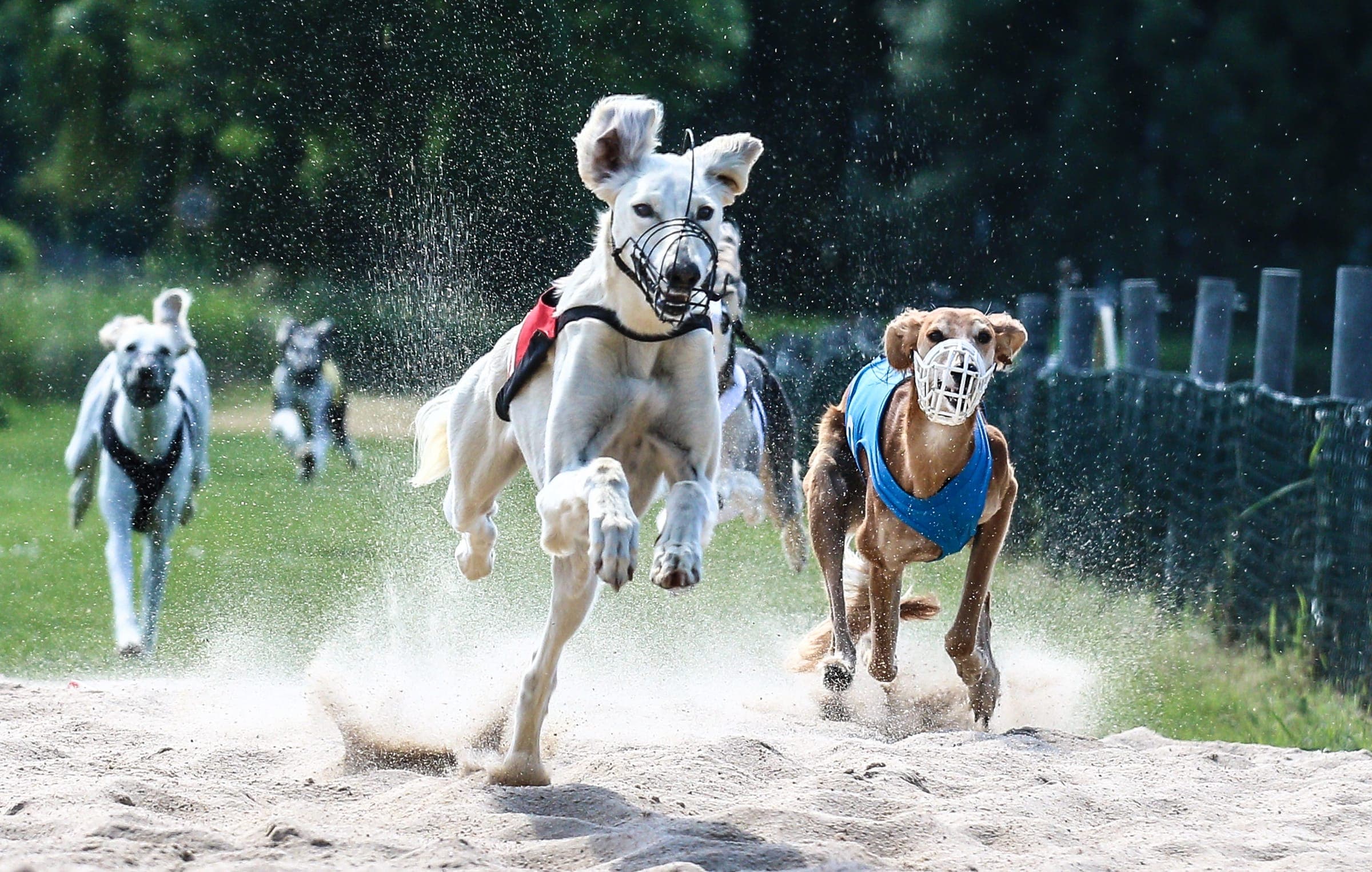
Straight racing is an amateur sprint sport where sighthounds run a 200-yard flat track in small packs, chasing a mechanical lure from starting boxes to a clearly marked finish line. Dogs wear racing blankets and muzzles and break from the boxes off-leash; the first nose over the line wins the heat. A meet is built from three programs (heats), and placements across those three programs determine grading, points, and title progress. Handlers release at the boxes and move to the finish to catch and leash the dog once the lure stops.

Amateur sighthound straight racing under LGRA, WRA, CWA, and CARA is a completely different sport from commercial Greyhound racing. Amateur straight racing has no gambling, runs on grass fields at amateur clubs, and is governed by sport organizations that prioritize welfare and clean racing. Commercial Greyhound racing — the parimutuel betting industry — is nearly defunct in the US (only two tracks remain, both in West Virginia), and the federal Greyhound Protection Act of 2025 passed the House in April 2026 pending Senate action to ban it nationwide. These are different sports with different histories, governing bodies, settings, and welfare standards. The visual rhyme (multiple dogs in muzzles breaking from boxes) confuses newcomers — amateur straight racing is the surviving sport-club tradition. The sport fits high-drive sighthounds who lock onto a moving lure and stay focused with other dogs running beside them. The pack format makes it a hard fit for space-sensitive dogs unless their reactivity is non-social and their race manners are proven.

Origins
Coursing & oval roots
Straight track racing for sighthounds grew out of two older traditions: open-field coursing, which channeled the chase instinct into sport via live quarry, and mechanical oval Greyhound racing, which scaled that instinct into a commercial spectacle. Mid-20th-century clubs began using mechanical drag lures on straight tracks as a conditioning and competition format — an amateur alternative to the commercial track and a more controllable alternative to live quarry.
Whippet-led organization
As the format spread, regional clubs formed organizations to standardize distances, rules, and titling. The Whippet Racing Association (WRA) and the Continental Whippet Alliance (CWA) grew as Whippet-only racing bodies. The Canadian Amateur Racing Association (CARA) developed in Canada. The Large Gazehound Racing Association (LGRA) was established in 1995 to give multiple sighthound breeds — not just Whippets — a structured straight racing program.
Rules mature
LGRA codified the format that most newcomers now meet first: a 200-yard track, three programs per meet, and the WAVE grading system (a weighted average of a dog's last three meets) used to keep race fields competitive. Title structures filled in around the format — Junior Straight Racer (JSR) and Senior Straight Racer (SSR) for participation and consistency, then point-based championships starting at Gazehound Racing Champion (GRC).
Current (2026)
Straight racing is a niche but stable sport in the US and Canadian sighthound performance community. LGRA covers multi-breed sighthound straight racing; WRA, CWA, and CARA continue as Whippet-focused or regional systems. The sport's biggest events are the WRA & NOTRA Whippet Nationals (which pair straight and oval racing) and club-level LGRA specialties. Welfare conversations around commercial Greyhound racing have nudged amateur clubs toward more attention to surface safety, injury tracking, and retirement planning.

02 · The meet

A straight racing meet is built from three programs (sets of heats), with each dog running once per program. Total points across the three programs decide final placements and title points for the day. Dogs are graded so similar speeds run together. The mechanics below repeat in every program.

Element 01
Starting boxes
Dogs load into mechanical starting boxes that open on cue. The break — leaving the box promptly when the doors open — is decisive at 200 yards. Dogs need to tolerate the confined space, the sudden noise of the gate, and the energy of dogs in adjacent boxes. Some clubs hand-slip dogs rather than using boxes, depending on equipment availability.
Element 02
The 200-yard track
Standard LGRA distance is 200 yards on a flat, straight track. Whippet programs run 150–200 yards, with 200 most common. Surface is grass or maintained dirt at the amateur level — not the polished dirt-track surface associated with commercial racing. Visual lane guides are used but no physical lane dividers — dogs are trusted to run their line.
Element 03
The lure
A mechanical lure (plastic strips or a bag) runs ahead of the field on a drag line. The dog has to lock onto the lure and stay locked, ignoring handlers, other dogs, and finish-line activity. Looking back, breaking off, or interfering with another dog disqualifies the run.
Element 04 · Handler work
The catch
Handlers don't run with the dogs. They release at the boxes, then move to the finish to catch and leash the dog after the lure stops. Catch technique, immediate cool-down walking, and post-race checks for abrasions or soreness are part of safe race-day handling. Repeated interference or aggression results in scratches and can result in a ban.
Pack discipline

03 · LGRA

LGRA (Large Gazehound Racing Association, founded 1995) is the primary multi-breed sighthound straight racing body in the US and Canada. It runs amateur 200-yard meets for 18+ eligible sighthound breeds — Afghan Hounds, Azawakh, Basenji, Borzoi, Chart Polski, Cirneco dell'Etna, Greyhounds, Ibizan Hounds, Irish Wolfhounds, Italian Greyhounds, Magyar Agar, Pharaoh Hounds, Portuguese Podengo Medio/Grande, Rhodesian Ridgebacks, Salukis, Scottish Deerhounds, Silken Windhounds, and Sloughi. Whippets are not eligible in LGRA — they have their own racing organizations (WRA, CWA, NAWRA). The WAVE grading system — a weighted average of a dog's last three meets — assigns grades and keeps fields competitive.

JSR
Junior Straight Racer
Complete four LGRA meets cleanly — running all three programs per meet without scratches or disqualifying interference. Rewards consistent participation and safe race manners, not high placements. The math works out to twelve clean races (3 programs × 4 meets), and JSR is the first title most new racers earn.
SSR
Senior Straight Racer
Complete six meets with finishes in the top half of competition. By this point a dog is racing in more competitive grades and breaking from the boxes confidently. The standard ramp from clean participation to competitive consistency.
GRC
Gazehound Racing Champion
Earn 12 GRC points across LGRA meets, with points awarded based on placement and the size or strength of the field. The core champion recognition in LGRA. Most teams reach GRC over one to two active seasons of regional racing once they're past SSR.
SGRC
Superior Gazehound Racing Champion (SGRC, SGRC2, …)
Continuing accumulation past GRC. 30 National Points required for SGRC; each additional 30-point block adds a numeral (SGRC2, SGRC3, and on). The accumulating ladder gives actively-campaigning dogs visible recognition that stacks indefinitely.
Key facts
Founded
1995
Eligible breeds
18+ sighthounds (not Whippets)
Distance
200 yards
Grading
WAVE — weighted avg of last 3 meets
Title spine
JSR → SSR → GRC → SGRC (SGRC2, …)
Co-hosting
Often paired with lure coursing weekends
WAVE grading keeps fields fair
LGRA's WAVE system uses a weighted average of a dog's last three meets to assign a grade, so each dog races against similarly fast dogs rather than being eaten by a faster Greyhound or stalling behind a slower Silken. The grading is what makes a multi-breed program viable — without it, a fast Whippet-sized dog would never see clean competition against an Irish Wolfhound.

04 · WRA

WRA (Whippet Racing Association) runs straight track sprint racing for purebred Whippets only, often paired with oval racing (NOTRA) on specialty weekends. Mixed breeds and non-Whippet sighthounds are not eligible. The relationship with Whippet breed clubs creates pathways for combined show-and-race recognition that don't exist in LGRA's multi-breed structure. The 2026 WRA & NOTRA Nationals premium confirms WRA as actively governing, with adult and puppy entries listed at $22 per entry at the national-level event.

01
Whippet-specific point ladder
WRA maintains its own point-based titles, awarded based on accumulated placements at sanctioned WRA meets. The full progression — specific abbreviations, point thresholds, and division logic — is the single largest documentation gap in this profile and needs handler verification. The publicly accessible event premiums confirm WRA is actively governing; they don't expose the title progression beneath that.
02
Divisions & grading
WRA-specific divisions and grading optimized for the single-breed competitive landscape. Because every dog is a Whippet, grading doesn't need to span the speed range an LGRA WAVE grade has to. The result is tighter, faster fields where small placement differences matter more than they would in a mixed-breed meet.
03
WRA & NOTRA Nationals
The highest-profile straight racing event in the Whippet calendar — straight racing (WRA) and oval racing (NOTRA) run on the same weekend. The deepest competitive Whippet fields of the year. Adult and puppy entries at the 2026 Nationals are listed at $22 per entry. The biggest single-weekend platform for Whippet-only racing recognition in the US.
Key facts
Eligibility
Purebred Whippets only
Distance
150–200 yards (200 most common)
Top event
WRA & NOTRA Nationals (annual)
Nationals entry
$22 / dog (2026)
Pairing
Often co-hosted with NOTRA oval racing
Title structure
Whippet-specific point ladder (verify)
Show-race versatility integration
WRA sits closer to the conformation-and-performance pipeline most Whippet households already navigate — combined recognition pathways for dogs that hold both conformation titles and race performance records are part of the WRA culture in a way LGRA's multi-breed program doesn't replicate. The exact recognition mechanics are handler-knowledge territory and need verification.

05 · Side by side

LGRA and WRA are the two orgs with the strongest US footprint and full deep-dive treatment above. CWA and CARA are real but more specialized — covered briefly here. None of the four organizations recognize each other's titles automatically.

CWA — Continental Whippet Alliance
A second Whippet-only body operating in the US and Canada, with a culture that emphasizes combined show-and-race versatility. Covers similar ground to WRA for Whippet handlers; CWA's exact straight-racing titles, point thresholds, and any cross-recognition with WRA need handler verification.
CARA — Canadian Amateur Racing Association
Canada's amateur sighthound racing body, covering both straight and oval formats. Two straight racing titles are explicitly defined: Straight Racing Champion (SRCh) and Straight Racer of Merit (SRM). CARA titles are recognized in some US pedigrees for cross-border racers. CARA is geography-driven — relevant if you race in Canada or cross the border for entries.
LGRAWRACWACARA
RolePrimary multi-breed sighthound straight racing bodyMajor Whippet-only straight racing bodyAlternate Whippet-only racing bodyCanadian amateur racing body (straight + oval)
Breeds18+ eligible sighthounds; NOT WhippetsPurebred Whippets onlyPurebred Whippets onlySighthounds (verify full list)
Distance200 yards150–200 yards (200 most common)150–200 yards (verify)Verify exact distance
TitlesJSR → SSR → GRC → SGRC (SGRC2, …)Whippet-specific point ladder (verify)CWA-specific (verify)SRCh, SRM
GradingWAVE — weighted average of last 3 meetsWRA-specific divisionsCWA-specific (verify)CARA-specific (verify)
Known forMulti-breed accessibility · structured gradingCompetitive Whippet fields · Nationals eventShow-race versatility cultureCanadian scene · cross-border recognition

No organization recognizes another's titles automatically. A dog's LGRA GRC does not map to a WRA, CWA, or CARA title. Handlers who race across two or more bodies are titling separately in each. The visual sport is the same; the title progressions are independent.

Which one fits *you*?
Multi-breed entry list, not a Whippet
LGRA. The only one of the four with a structured multi-breed program, and the WAVE grading system keeps your dog matched against similar speeds across meets.
Whippet + competitive fields + a national event
WRA. Anchors the WRA & NOTRA Nationals weekend, has the deepest competitive Whippet entries, and sits closest to the conformation-and-performance pipeline most Whippet households already navigate.
Whippet + show-race versatility
CWA, with WRA as a parallel. CWA's culture leans toward show-race versatility; many Whippet households run both as separate title tracks rather than choosing one.
Racing in Canada or across the border
CARA, plus LGRA or WRA depending on breed. CARA's SRCh and SRM titles are the Canadian baseline, and CARA titles are recognized in some US pedigrees for cross-border racers.

06 · Getting started

Most teams enter straight racing through a local sighthound club or a breed-specific group already running LGRA, WRA, CWA, or CARA meets. There is no commercial class infrastructure equivalent to agility school — instruction is club-based, with new dogs introduced to the lure, the boxes, and pack running across a series of practice or schooling days. At home you focus on recall, fitness, and impulse control. Specialized equipment — boxes, lure machines, the track itself — is club-supplied.

Phase 1 · Schooling
Lure, boxes, pack manners
Schooling days at a local club introduce the dog to the lure, the noise of the gate, and running alongside other dogs at speed. Lure-keen mature dogs with reliable recall can move from first practice to first formal meet within a few months when local clubs run regular events. Kit at this phase: flat or limited-slip collar or well-fitting harness, secure crate, shade, water, high-value rewards for after the run (never near the lure).
Phase 2 · First meet
JSR target
First formal meet aimed at JSR (LGRA's clean-participation title). Run all three programs per meet without scratches or disqualifying interference, repeat across four meets. The pack-running pressure tests whatever foundation the dog has — and dogs who can't tolerate other dogs at the boxes find out fast. Confident pack racing and a first title typically take one to two active seasons depending on schedule density and travel willingness.
Phase 3 · Title chase
GRC and beyond
Past JSR, the ladder shifts to point-based competition. GRC requires 12 points; SGRC requires 30 National Points, and continuing 30-point blocks add numerals (SGRC2, SGRC3). GRC-level points take regional travel and a season or more of consistent racing — faster in dense regions, slower in sparse ones. Titles do not transfer across organizations, so handlers who cross-compete in WRA or CARA are running parallel ladders.
Before you enroll
Wait for skeletal maturity — growth plates close around 12–18 months depending on size, and straight racing is a maximal sprint, high-impact on muscles, tendons, and joints. Foundation skills: recall, crate manners, ability to settle around excited dogs. Sighthound-only eligibility — non-sighthounds don't have a straight racing path under these four orgs. The pack format off-leash from boxes is a hard fit for reactive dogs; mildly reactive dogs may race with careful management, but severely reactive or dog-aggressive dogs are not suitable.

07 · Meet day

Straight racing meets are short bursts of intense activity inside long stretches of waiting. First-time handlers describe the noise — lure squeals, dogs in adjacent crates, the gate opening — as more disorienting than they expected. Most dogs adapt fast and become intensely excited as soon as they associate the venue with running.

Day flow
Check-in, three programs
Arrive and check in at the secretary's tent. Confirm registration, weigh in or otherwise verify dogs as required. Attend the handlers' meeting if held — local rules, safety expectations, and running order get covered briefly. Run program 1, then program 2, then program 3 with hours of waiting and dog-management between programs. Placements are usually announced shortly after each program; final results land at the end of program 3.
The kit
What to bring
Crate or secure resting setup, away from the track if possible — dogs who watch every race burn out mentally. Water, shade, and a cooling solution for warm weather; open fields, full sun, long days. Warm-up and cool-down layers depending on weather, plus a basic first-aid kit for paw pads and abrasions. High-value rewards for after the catch — never near the lure or the finish area.
The mistakes
What to avoid
Arriving late to the boxes — by the time you hear your dog's number called, you should be moving. Skipping shade and hydration on a 70°F day because it isn't that hot; sighthounds running flat-out generate real heat. Forgetting to walk the dog between programs to keep the muscles loose. Not crating away from the track — a dog who watches all 30 races is exhausted before their third run.
The reality
What videos don't show
The amount of waiting between programs and how long a full meet day actually runs. Weather shifts on open fields — wind, sun angle, temperature swings between 7am and 3pm. The mental fatigue of managing an excited sighthound for six hours in a busy crating area. Travel logistics, especially when meets pair with lure coursing or oval racing — early departures, late returns, and dogs who race well on day one but soften on day two.

08 · What it costs

Straight racing is less equipment-intensive than agility and more travel-intensive than local obedience. Most cost variance comes from how far you drive to meets — clubs are sparse compared to mainstream sports, and serious campaigners log real miles. Practice and fee ranges below are inferred from the one publicly accessible 2026 premium (WRA Nationals at $22/entry) plus comparable sighthound-sport handler reports.

One-time setup
$75$300
Crate, shade, leash; org reg + breed paperwork adds $10–$35 per body
Schooling / fun run
$5$40
$5–$15 per run · $20–$40 per practice day at clubs
Per-meet entry
$15$30
WRA Nationals $22 / dog (2026); club-level meets in the same band
Active annual
$1.5k$4k
6–12 events, overnight travel; championship campaigns scale higher
The honest truth
Entry fees are the smallest line item in a serious straight racer's budget. Travel and lodging are the real cost. If a sighthound club runs LGRA or WRA meets within driving distance of where you live, the sport is genuinely affordable — a casual JSR season lands under $1,000 all-in. If the nearest club is six hours away, the math changes fast.
Related sports

If Straight Racing interests you, look at these too.