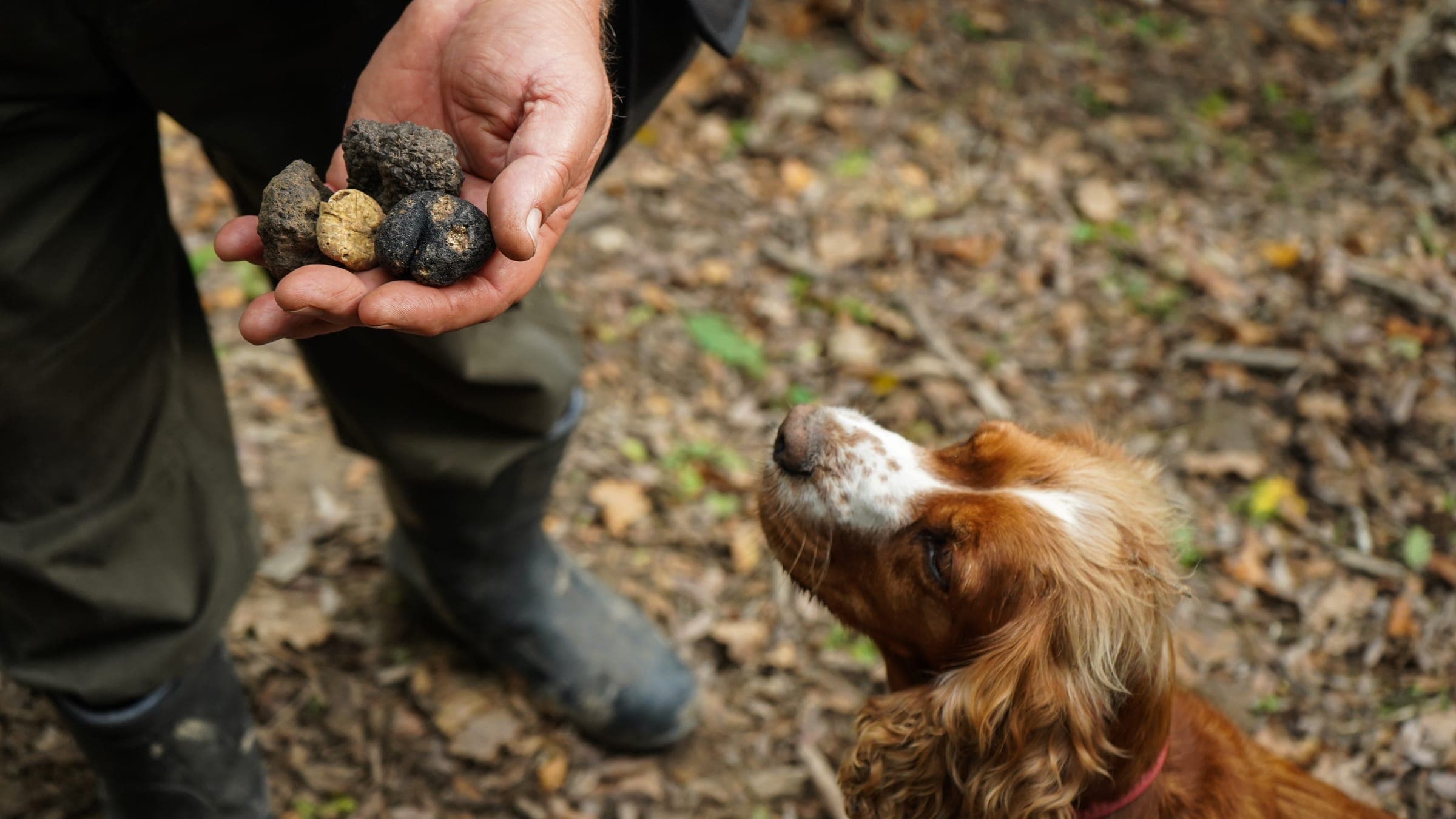
Discover Truffle Hunting
A scent-driven search sport where dogs locate ripe truffles — mycorrhizal fungi growing underground — in forests and orchards. Lives at the intersection of competition, recreation, and small-scale commercial foraging.
01 · What is it
Truffle hunting is a scent sport where a dog uses its nose to locate ripe truffles — underground fungi that grow in mycorrhizal partnership with the roots of certain trees — and performs a trained alert at the spot. The handler watches for that alert, carefully excavates the truffle so the roots and mycelium stay intact, and confirms the find by scent and shape before re-covering the soil. Foundation work starts with truffle pieces or truffle-scented hides in containers and scent tubes at home, then progresses to buried hides in controlled environments, and finally to forest or orchard ground where the dog ranges independently within the handler's reach.
Truffle hunting rewards methodical scent work, sustained focus, and the physical comfort to work uneven, often muddy or brushy terrain for up to an hour at a time. The Lagotto Romagnolo is the breed historically associated with the work, but US training programs and Joriad fields include retrievers, herding breeds, sporting breeds, and mixed-breed pet dogs. Many handlers come to the sport through overlapping interests in foraging, mycology, and local food. The format accommodates mildly reactive dogs because teams work one at a time with significant spacing between them, though group events still require leashed control near other teams.
02 · Phases of a hunt
Every truffle hunt — competition, recreation, or commercial — uses the same building blocks. Difficulty scales by moving from controlled scent tubes to real forest ground, increasing distance and depth, and layering in weather, wildlife, and competing odors.
03 · OTF & The Joriad
The Oregon Truffle Festival, held near Eugene in the Willamette Valley, runs a culinary and cultural event around native Oregon truffles and includes two-day truffle dog training intensives on local farms. The Joriad™ North American Truffle Dog Championship sits inside the festival as the only recurring named truffle dog competition in North America, combining an arena qualifier at the Lane Events Center with a forest final on working forest land. For 2025: handlers at least 18, non-aggressive dogs, and an explicit exclusion of professional truffle hunters and professional truffle dog trainers from the competition field. Multiple dogs per household are allowed when each has a separate handler.
04 · NATS & training businesses
The North American Truffling Society (NATS), based in Corvallis, is a non-profit mycological group dedicated to the study of truffles and truffle-like fungi. It runs educational meetings, field identification sessions, and truffling forays — some of which include dog-assisted hunts on working tree farms and private forest land. There is no titling structure; participation centers on learning the fungi, the forest, and ethical harvest. Training businesses like Truffle Dog Company (PNW) sit alongside NATS as the practical training infrastructure: Zoom-based foundation courses, in-person clinics, and guided forest hunts that, in the absence of a centralized governing body, set most US training norms.
05 · Compare them
US truffle hunting splits into two pathways rather than two competing title ladders. The math most handlers actually track isn't titles — it's harvest weight per outing, average truffles per hour, and the percentage of indications that produce mature, saleable truffles. Regional festivals (Napa) and Southeast orchard programs sit alongside these two as a smaller third layer.
06 · Getting started
Most US teams enter through one of three doors: a regional workshop or class (densest in the PNW), an online foundations course paired with local scent-work practice, or — for handlers with access to a truffle orchard or experimental cultivation site — an orchard-led demo or introductory day. Access to truffle-bearing land is the single biggest constraint outside the PNW, and relationships with landowners, NATS members, or guides shape what's actually possible in your region.
07 · Joriad day
The Joriad combines two very different atmospheres in a single day. The arena round looks like a small enthusiast dog sport trial embedded in a food festival. The forest round looks like working field conditions in the PNW in winter. Most teams crate, manage downtime, and rotate through both rounds with the support of friends or club partners.
08 · What it costs
Truffle hunting's costs sit between recreational nosework and a small specialty trade. Training and travel are the biggest line items — equipment is modest, but PNW access is concentrated, and many non-PNW handlers travel to Oregon for festival weekends or clinics.
Made for truffle hunting.
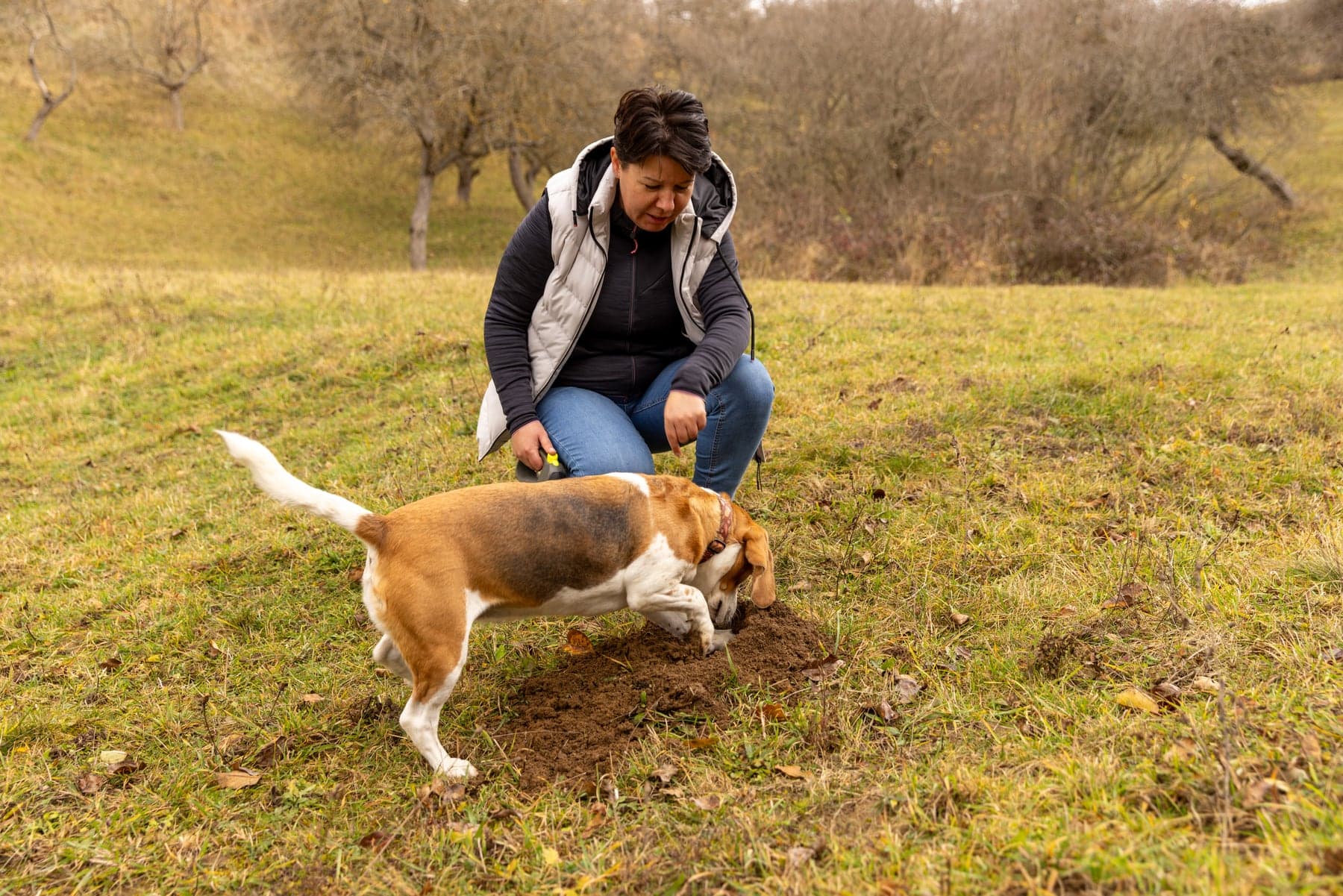
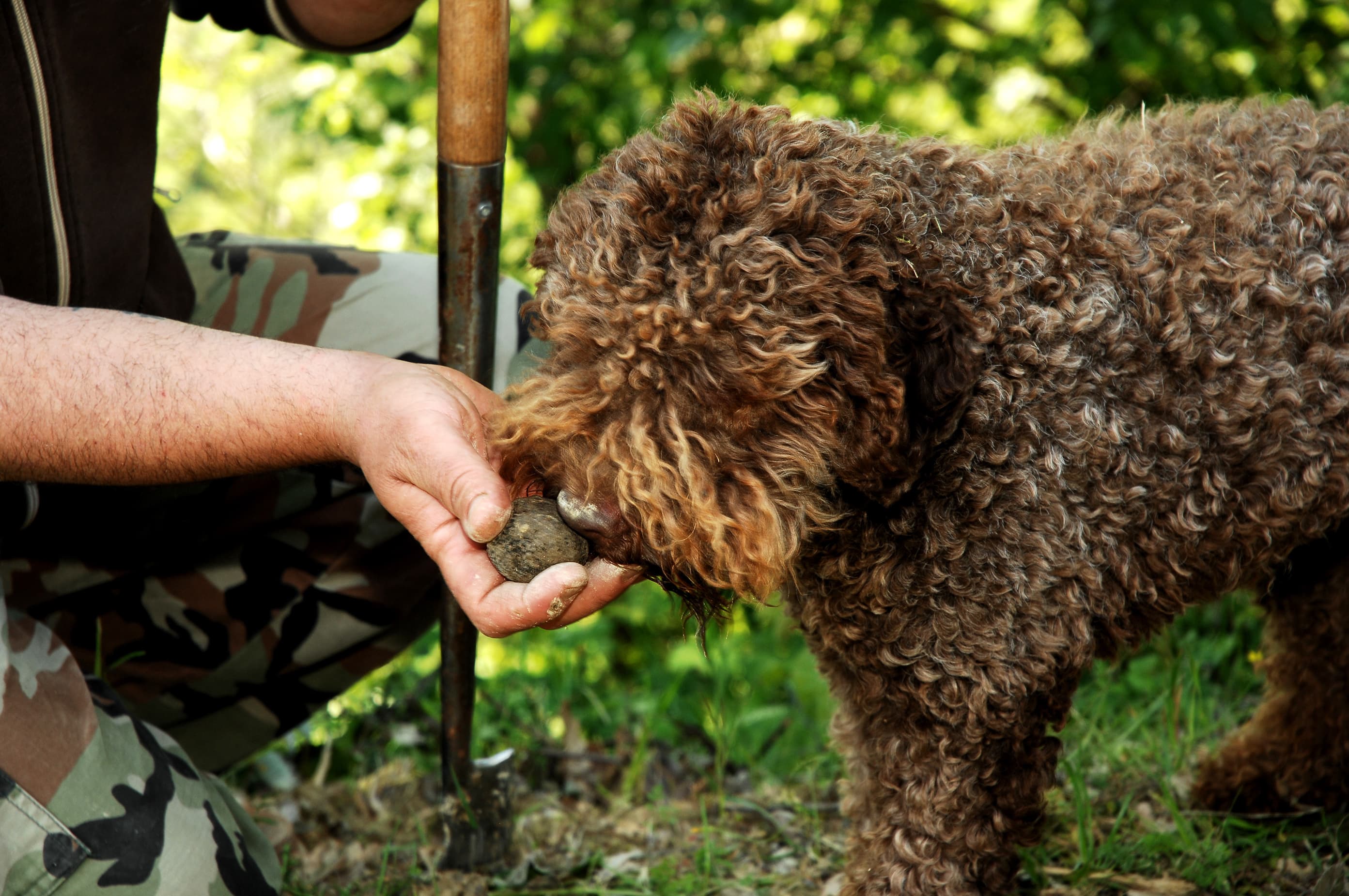
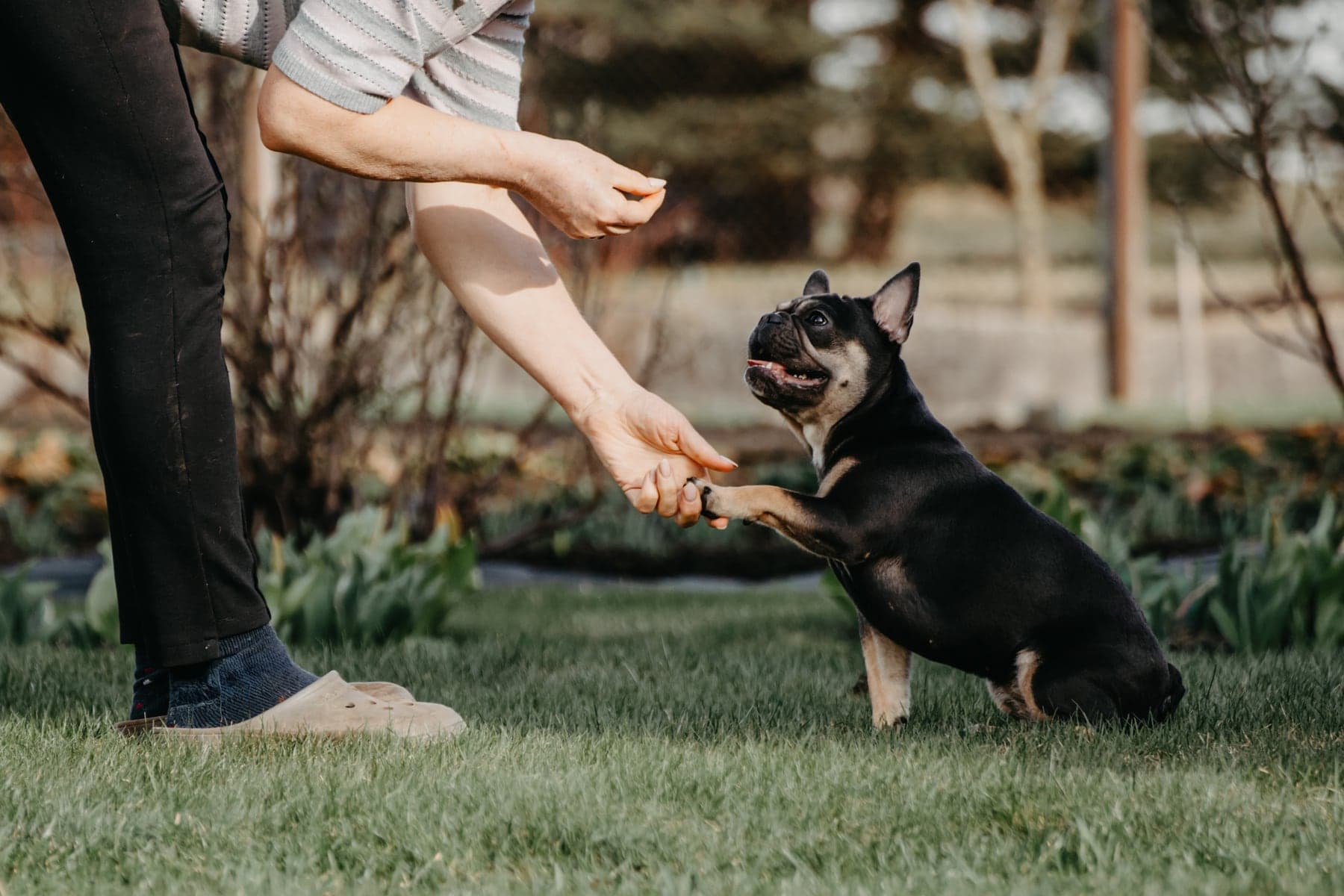
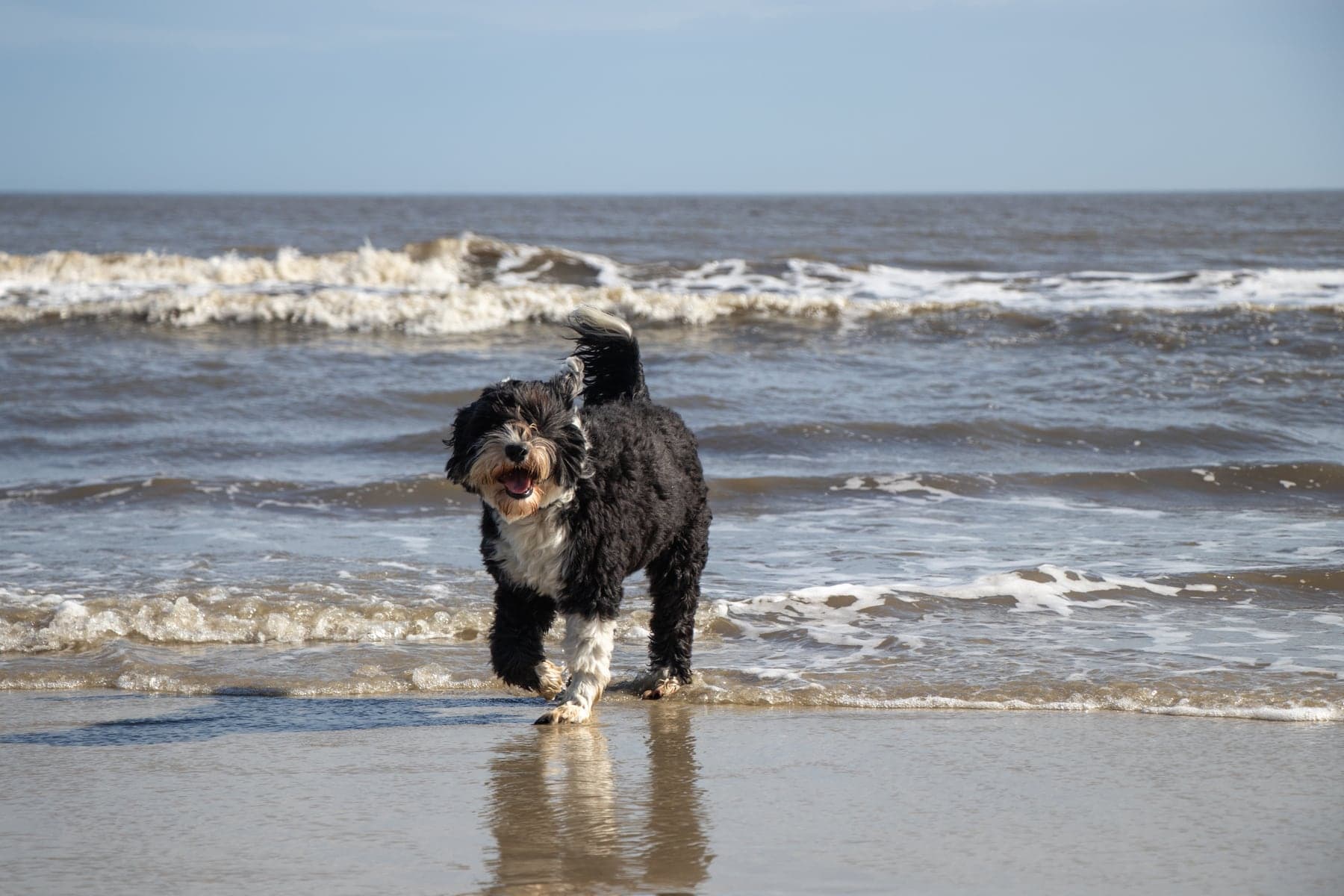
Breeds in our field guide that take naturally to truffle hunting — not every breed that competes, just the ones we’ve written up so far.
Sources & verification
Our Truffle Hunting guide is an independent, plain-English orientation — not an official rulebook. Rules, titles, eligibility, and fees vary by organization and change over time, so always confirm the specifics with the current rulebook or event premium before you enter.
Checked against
Spot something out of date? Tell us and we’ll fix it.