Photo coming soon
Sourcing handler-verified photography for this sport.
Discover Working Dogs of America
An all-breed, US-developed working-dog registry with five titling divisions — obedience, tracking, protection, protection sport, and police dog — built as a practical alternative to FCI Schutzhund.
01 · What is it
Working Dogs of America is an all-breed registry and titling program founded in 2001 that runs five divisions in a single rulebook: Obedience, Tracking, Protection, Protection Sport, and Police Dog. The same dog can title in any one of them, or work through several over a career. The format is structured rather than scenario-improvised — written field patterns, posted heel patterns, defined retrieves — but the framing is American and practical: founders built WDA as a counterweight to what they saw as FCI Schutzhund's drift toward stylized sport polish.
Disambiguation: this is Working Dogs of America, Corp (workingdogsofamerica.com), NOT GSDCA-WDA (German Shepherd Dog Club's working-dog arm, which sanctions IGP). Newcomers confuse the two constantly. What makes a team title in WDA is precision under arousal — off-leash heel patterns run with another dog working in parallel, recalls and outs with a decoy 20 feet away, tracking on a long line over natural surfaces with article indications scored against the rulebook. Dogs that title tend to be medium-to-large, athletic, environmentally stable, and biddable. Handlers do well if they tolerate rule-sets and train inside a club.
02 · The five divisions
WDA's rulebook covers five divisions, each with its own field pattern, scoring, and ladder. The same dog can hold titles across multiple divisions over its career — an OB2 / PS1 / T1 dog is a recognizable WDA résumé. The five-division structure means a dog can pursue an obedience-only or tracking-only career and still earn meaningful WDA titles without ever putting on a sleeve.
03 · WDA
WDA has no parallel governing organization in the United States. Working Dogs of America, Corp writes the rulebook, licenses every titling event, certifies judges and decoys, and maintains the registry and title records. There is one ladder, one rulebook, and one database. Many WDA handlers cross-train and trial in PSA, IGP, APPDA, or K9 Street League — but those titles do not transfer into the WDA system, and WDA titles don't appear on AKC or UKC pedigrees. Founded 2001 as a US-based all-breed working-dog registry. Mission language references 'meaningful, utilitarian tasks,' 'common-sense methods,' and a blend of family-dog and sport orientation — language the founders chose to distinguish WDA from FCI-style Schutzhund. Eligibility runs through registration and temperament, not pedigree: explicitly all-breed, any breed or mix is eligible.
04 · Title ladder
WDA titles are pass/fail at each trial — the team either clears the scoring criteria for the level under a licensed judge, or comes back and tries again. Scoring is points-based with deductions per fault. Consult the current WDA rulebook (revised 1-1-2025) for the exact passing thresholds, leg counts, and minimum scores at each level.
05 · vs sibling sports
Because Working Dogs of America has no parallel governing body, the comparison most newcomers need is across the US practical-protection sports — APPDA, K9 Street League, PSA, and IGP. They share handlers, decoys, training nights, and breed pools, but they test different things and reward different scoring philosophies. The decision pivot uses the bolded-answer format because the practical decision spans six organizations.
| WDA | APPDA | K9SL | PSA / IGP | |
|---|---|---|---|---|
| Role | All-breed registry + titling across 5 divisions | Scenario-based protection sport focused on personal-protection + patrol-style events | Competitive 'professional protection sport' — urban realism + paid decoys | PSA: scenario protection w/ surprise elements · IGP: international 3-phase under FCI |
| Breadth | 5 divisions, separable obedience-only, tracking-only, and protection ladders | Primarily protection / patrol-style scenarios | Primarily protection + integrated obedience/control; one main competition format | PSA: scenario protection · IGP: tracking + obedience + protection in every trial |
| Breed openness | Explicitly all-breed; registry + titles open to any dog meeting temperament standards | Reportedly open to various breeds; details vary by club | Marketed for 'working dogs' with strong cultural pull toward protection breeds | PSA: all breeds + mixes · IGP: all breeds (FCI rules) but working-line GSDs/Mals dominate |
| Culture | Hobby sport with practical working orientation; explicit emphasis on family-safe dogs with control | Civilian personal-protection + patrol-dog mindset; scenario realism + defensive work | High-intensity, media-visible; branded around street-realism | PSA: showy, competitive · IGP: rule-driven, international rule alignment |
WDA sits at the broad end of the working-sport spectrum. It tests more divisions than IGP or American Schutzhund, more breeds in practice than PSA or K9 Street League, and runs structured field patterns instead of the scenario-improvised routines APPDA and K9SL are built around. The trade-off is reach versus depth: a handler who wants to pour a decade into one rubric finds more competitive density in IGP or PSA. A handler who wants to title a family-stable dog in obedience or tracking — and possibly add protection later — finds more room in WDA.
06 · Getting started
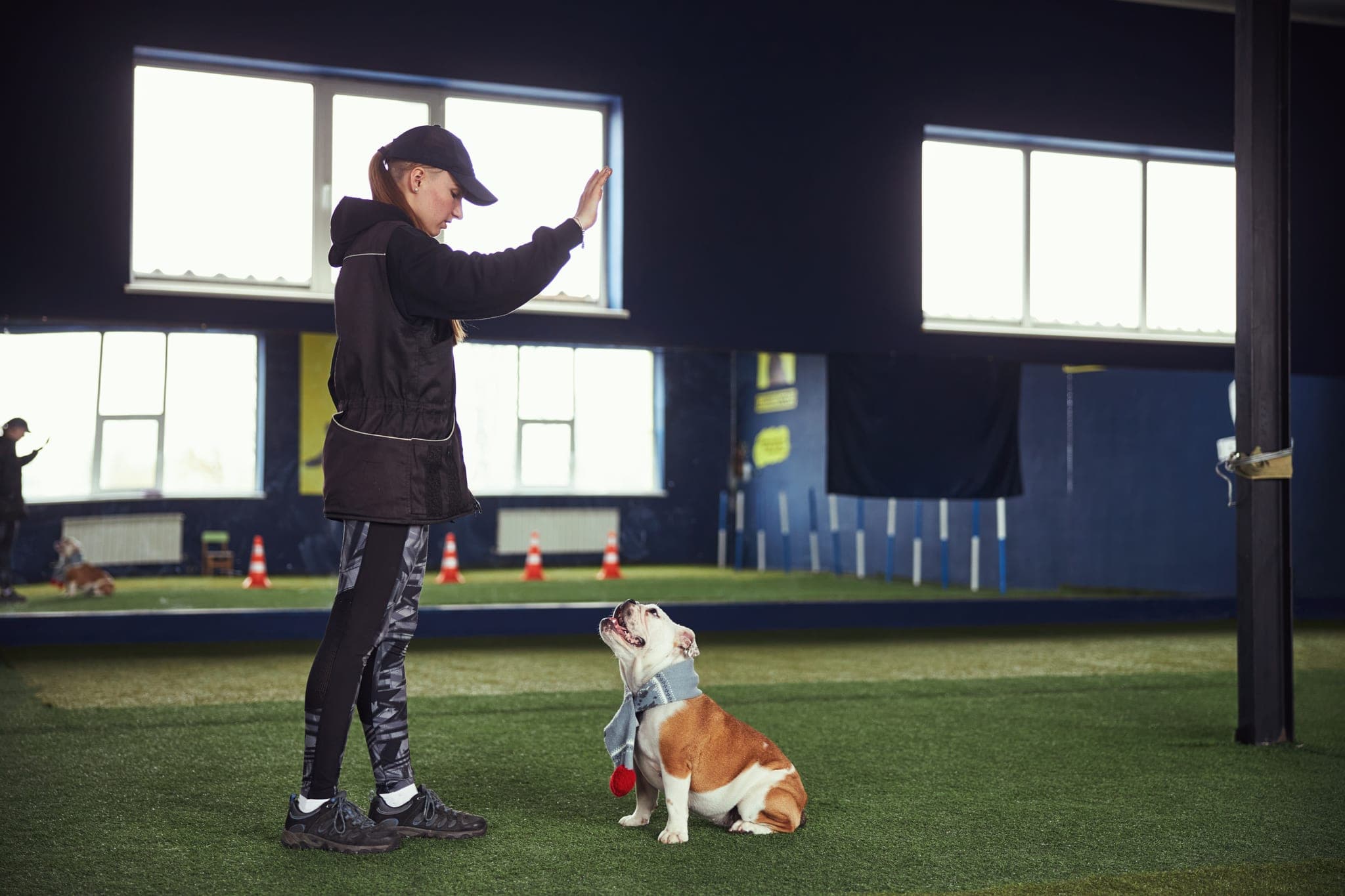
WDA is not a drop-in class sport. Obedience and tracking can be foundation-trained through any sport-aware obedience coach, but everything past PSOB1 needs a trained decoy and a club with the field, blinds, and bite equipment to run sessions safely. The first practical step is the WDA 'Training Groups' page — clubs and trainers listed there are the most direct route to a structured program.
07 · Trial day
WDA trials run like small-to-medium-scale working-dog events — outdoor fields, parked rigs and crates around the perimeter, alternating periods of quiet focus and noisy protection work. Dogs that have trained at the club where the trial is held handle the environment better than dogs arriving cold. First-time handlers get more nervous than they expect.
08 · What it costs
WDA-specific cost data is thin in public materials. Entry fees are posted to PDFs and club Facebook pages rather than centralized on the WDA site. The ranges below combine the limited public WDA figures with norms from comparable US working-dog sports (IGP, PSA, American Schutzhund) that share clubs, decoys, and trial logistics, so treat them as estimates and confirm current fees with the hosting club.
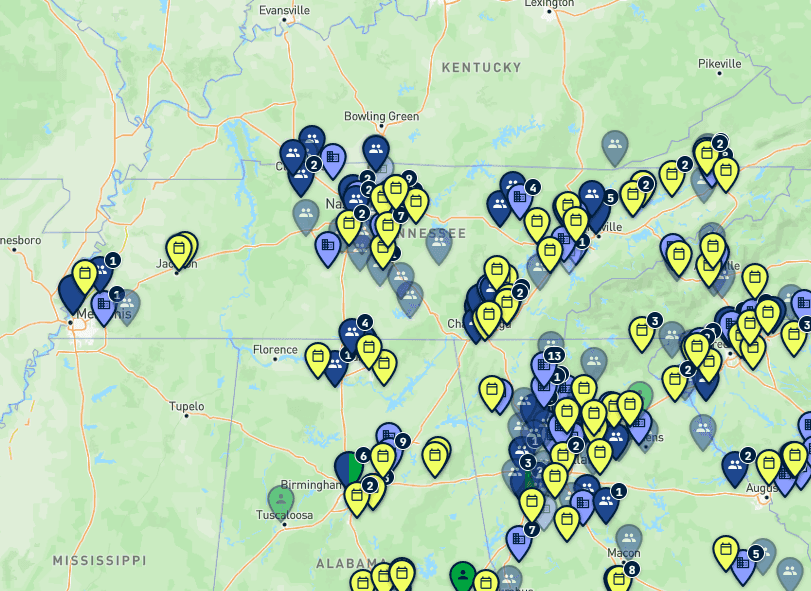
Find working dogs of america near you.

Sources & verificationLast reviewed May 2026
Our Working Dogs of America guide is an independent, plain-English orientation — not an official rulebook. Rules, titles, eligibility, and fees vary by organization and change over time, so always confirm the specifics with the current rulebook or event premium before you enter.
Checked against
Spot something out of date? Tell us and we’ll fix it.