Rally
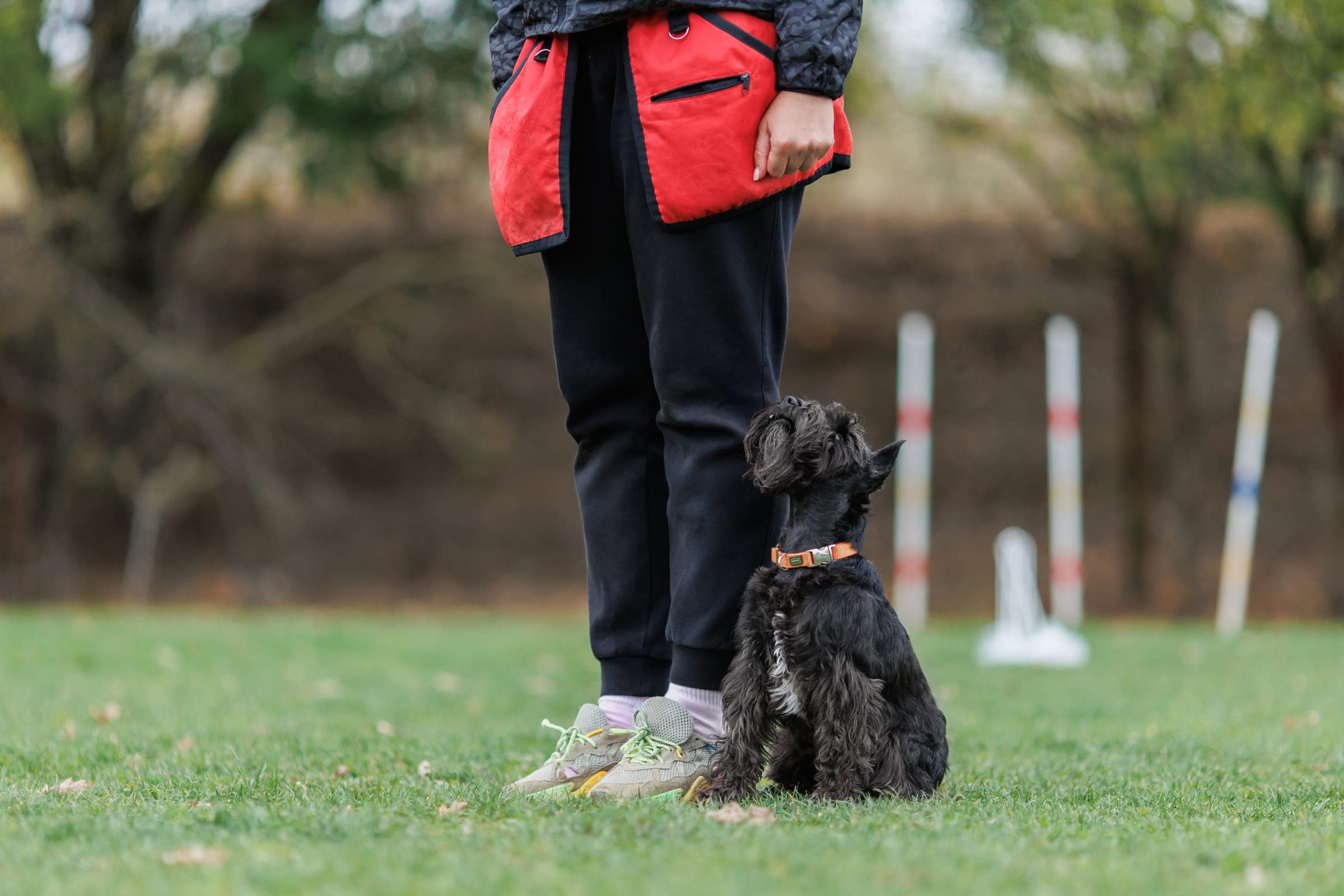
Rally — short for Rally Obedience, sometimes called Rally-O — is a sign-based obedience sport. The judge designs a numbered course of 10 to 20 stations laid out around the ring, and each sign tells the team what to do at that spot: a 270-degree right turn, a halt and call-front, a moving down, a pivot in heel position. The handler walks the course alone before the class to memorize the order. Then the dog comes in, the judge says "Forward," and the team flows from sign to sign without stopping for judge-called exercises. A team starts at 100 and the judge subtracts. A qualifying run is 70 or better; time only breaks ties. In AKC, qualifying runs at three trials earn the Novice through Excellent titles; Master and Choice take ten, under at least two judges.
Obedience
Obedience is the oldest formal dog sport in the United States. A team starts a class with 200 points and the judge subtracts. Crooked sit: deduction. Lagging on the heel: deduction. Wide turn, slow response, extra command, broken stay: deduction. To qualify — to earn one of the three "legs" required for a title — the team needs a final score of 170 or better and more than 50% of the available points on every individual exercise. Three legs at three trials earn the title. The math is rigid, and the rigidity is the appeal: every team, regardless of breed or handler experience, is judged against the same precise standard.
Agility
Agility is an off-leash sport where the dog runs a numbered obstacle course against the clock while the handler directs from the ground. The course is set by a judge and revealed only on trial day. Handlers walk the course in person, usually for a few minutes in groups, before the class begins, plan their handling on foot, then execute it while running alongside the dog. Obstacles draw from a fixed vocabulary: jumps, tunnels, weave poles, and the three contact obstacles (A-frame, dogwalk, teeter), with a pause table appearing in some classes and levels. Agility tests speed, accuracy, focus, and the legibility of the team. Handlers cue with body rotation, foot timing, and voice. Dogs read those cues at a distance and commit to obstacles independently.