The best dog sports for a German Shorthaired Pointer
Bred to point, track, and retrieve across every kind of ground, the German Shorthaired Pointer is the ultimate all-rounder — and a tireless one. These are the sports that fit that range, and where to try each one near you.
Why a GSP needs a job.
The German Shorthaired Pointer is the definition of a versatile hunting dog — bred to find game with its nose, hold a point, track a wounded deer, and retrieve from land or water, all in one athletic package. That produced a dog with a phenomenal nose, real speed, and an engine built to cover ground for hours. A GSP needs one to two hours of genuinely vigorous work a day, and a leash walk doesn't come close.
Under-exercise a GSP and you don't get a calm house dog — you get a bouncing, counter-surfing, wall-climbing dog looking for a job you didn't give it. The saying in the breed is simple: a tired GSP is a happy GSP. The sports below are how you actually tire one — because there's no single lane for this breed, the smart plan is a mix of nose, water, sprint, and distance.
Sports that fit a German Shorthaired Pointer.
Shed Dog & Shed Hunt
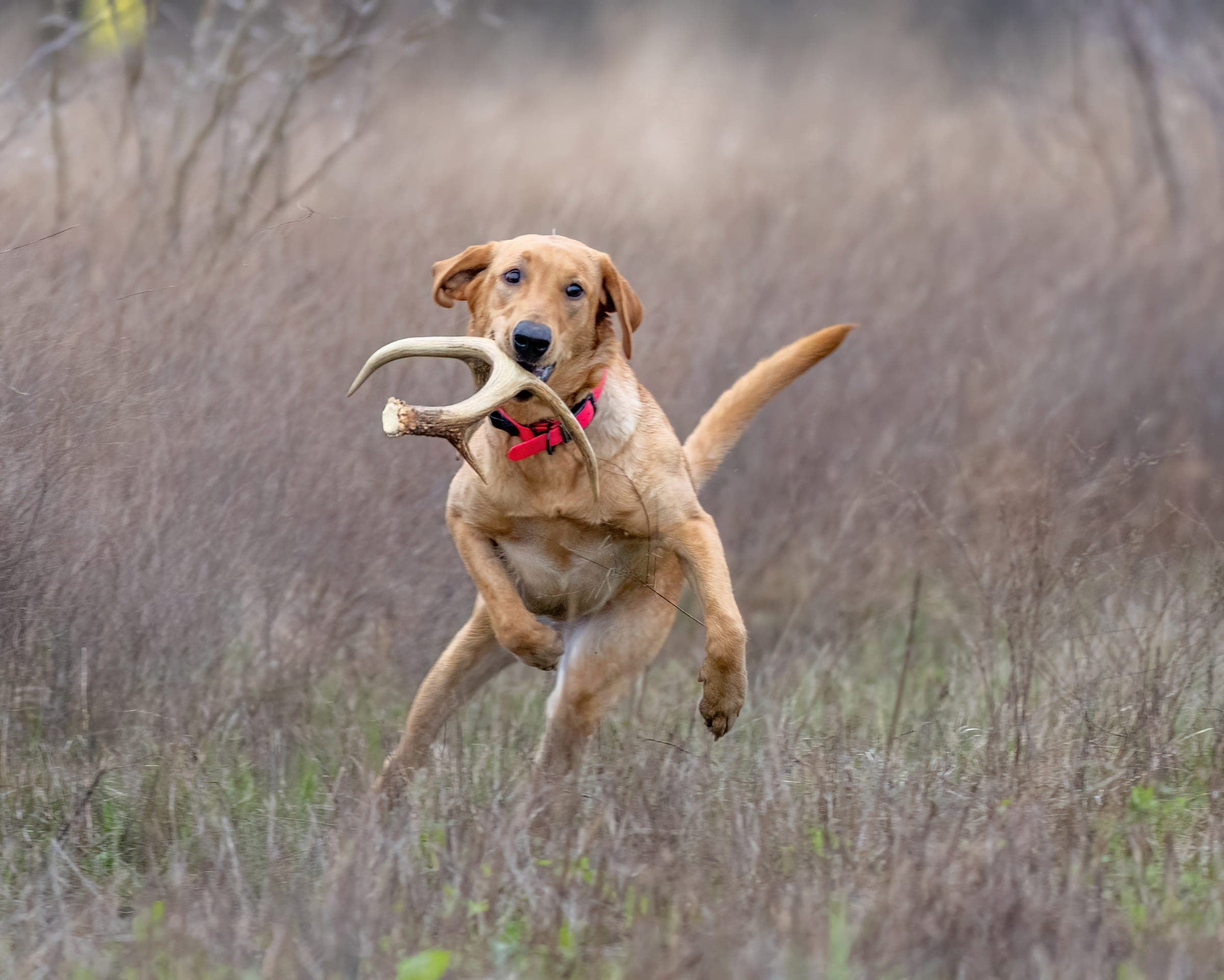
The closest thing to a GSP's actual field job on any sport list: quarter open ground, find by nose, and retrieve to hand over distance. It's point-track-retrieve in sport form, and the breed does all three natively.
Nose Work
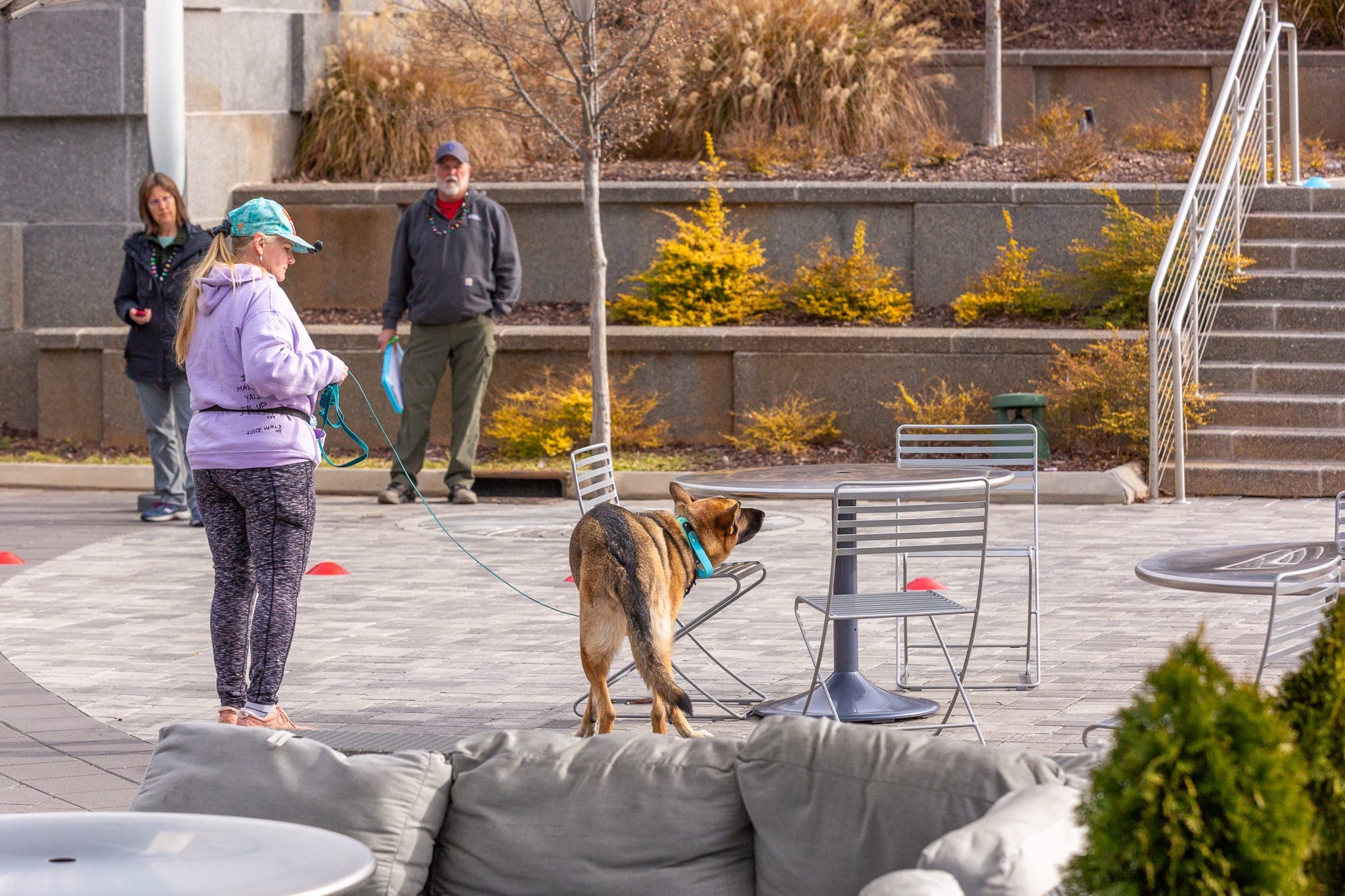
Scent is the GSP's single most powerful natural ability — the bird-finding nose turned into a game. It's the core mental outlet that tires the brain, and a good GSP is a fast, driven, methodical searcher.
Dock Diving
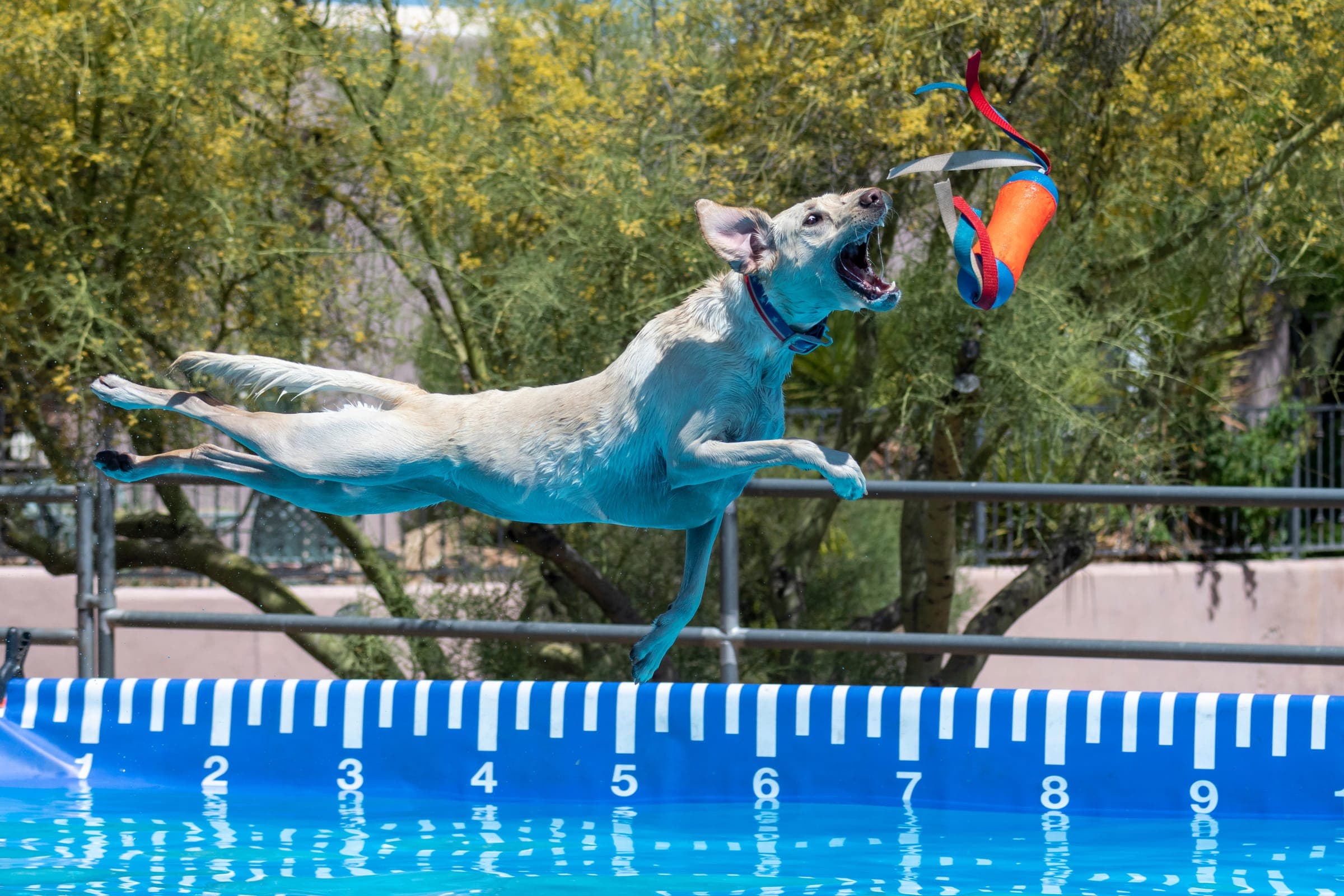
Webbed feet and a waterfowl-retriever heritage make this a documented GSP standout — it's a breed-club-sanctioned event. Grip, launch, and a genuine love of water, burning body and mind at once.
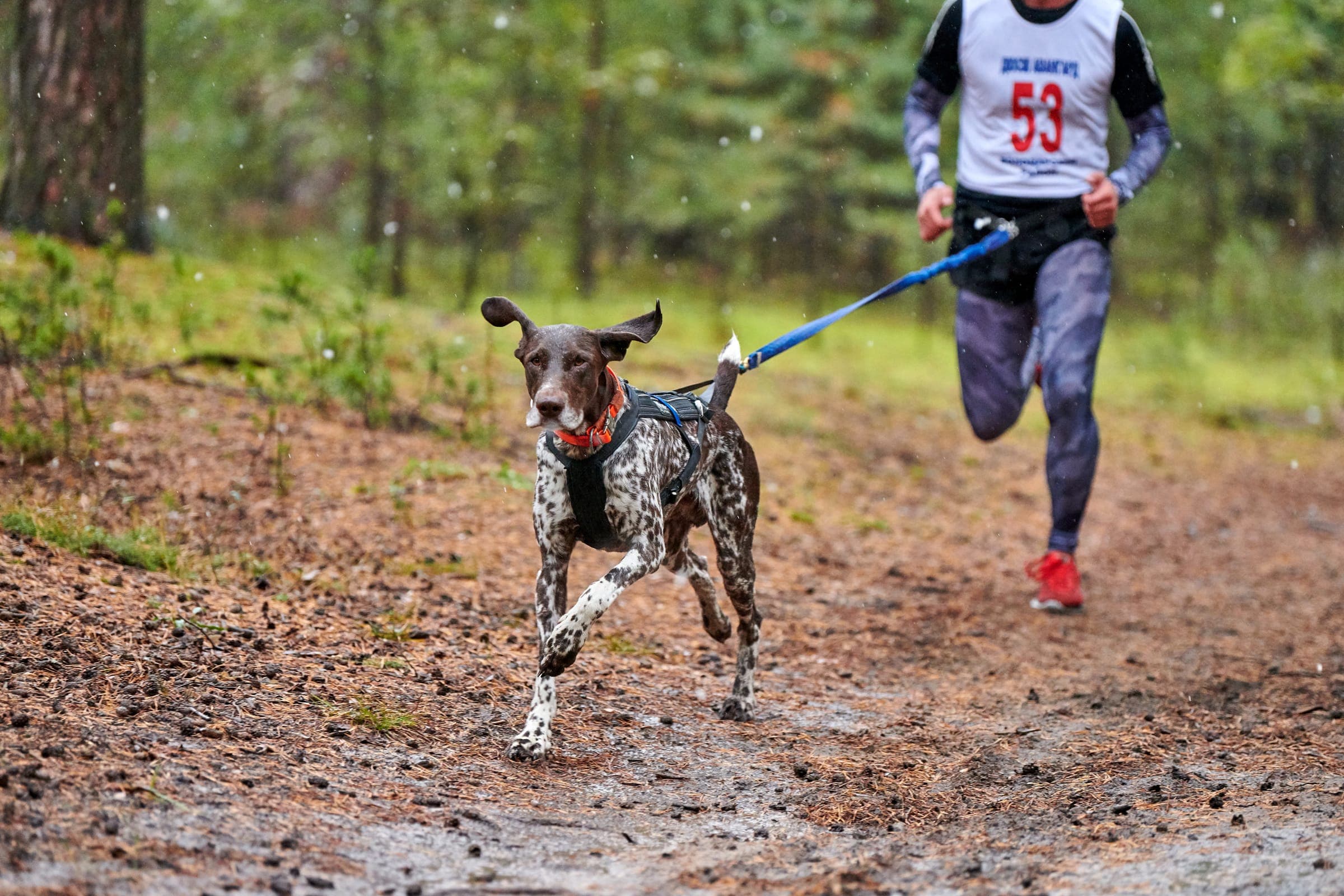
Canicross
The most-recommended real-world way GSP owners actually tire the breed — an endurance dog bred to cover ground for hours is repeatedly named one of the best canicross partners there is. Your daily run becomes a real sport for both of you.
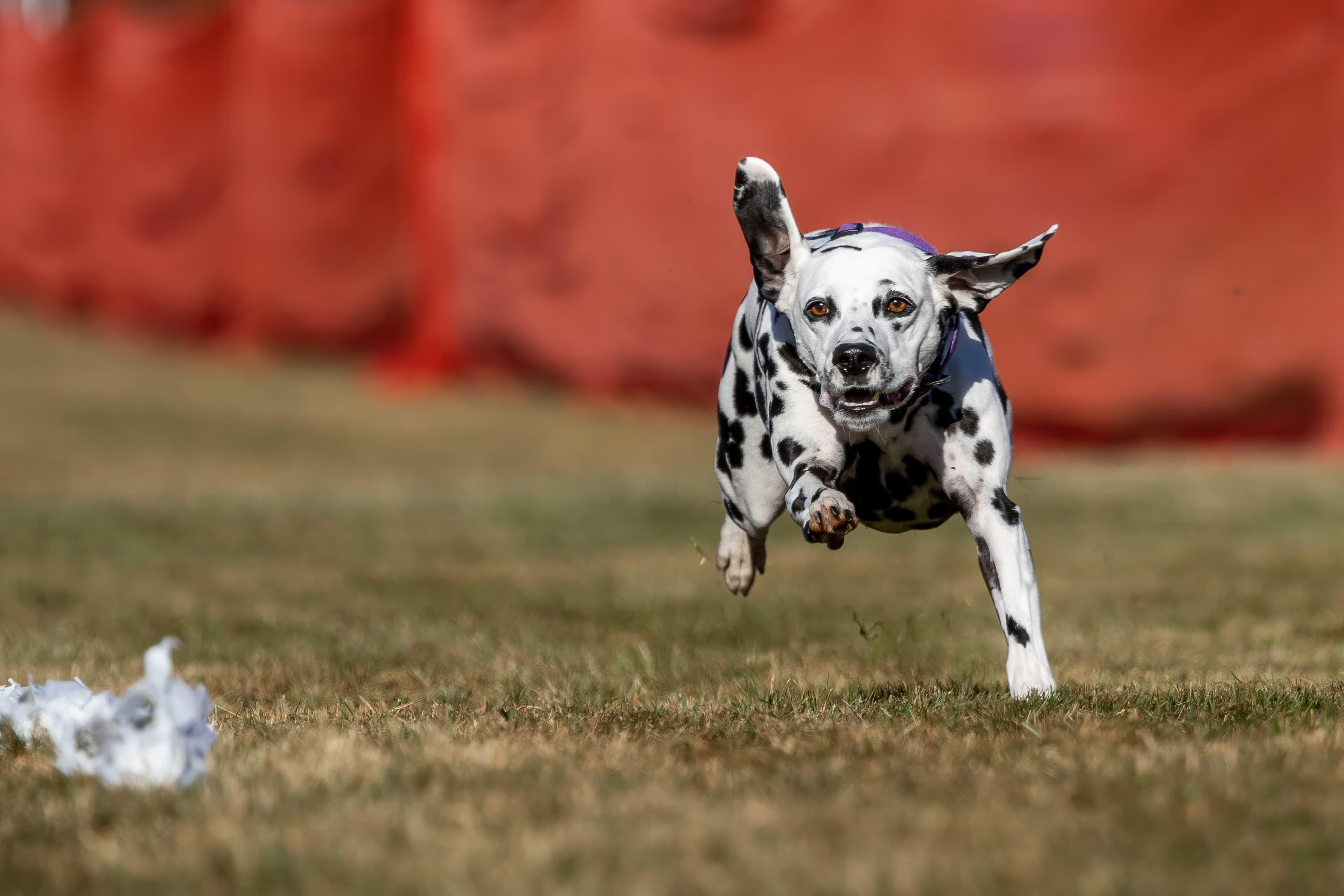
Fast CAT
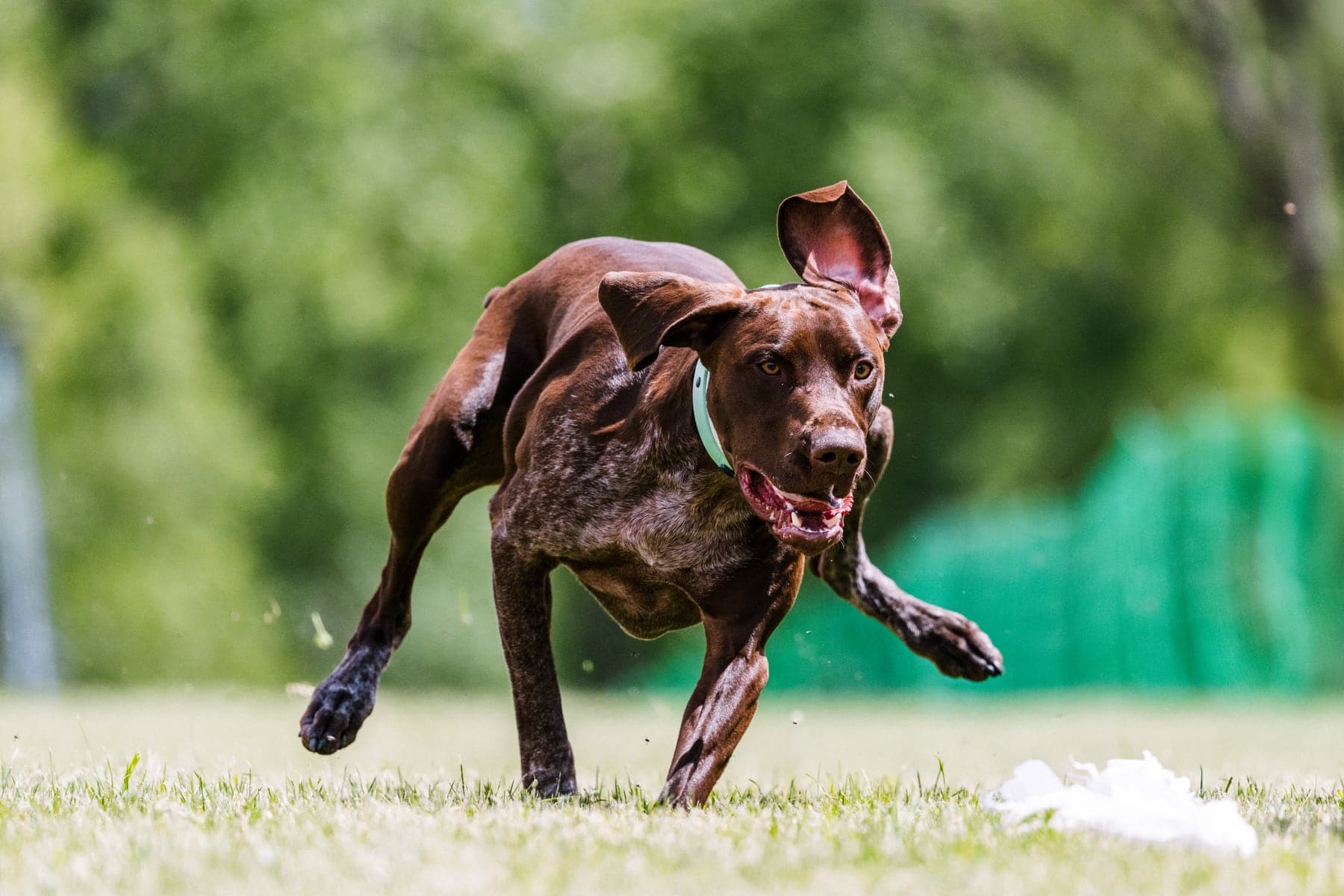
A pointer on the coursing line surprises people, but the GSP is one of the fastest non-sighthound breeds (33-plus mph on record). A 100-yard flat-out lure sprint is a pure, contained outlet for a field dog's chase drive.
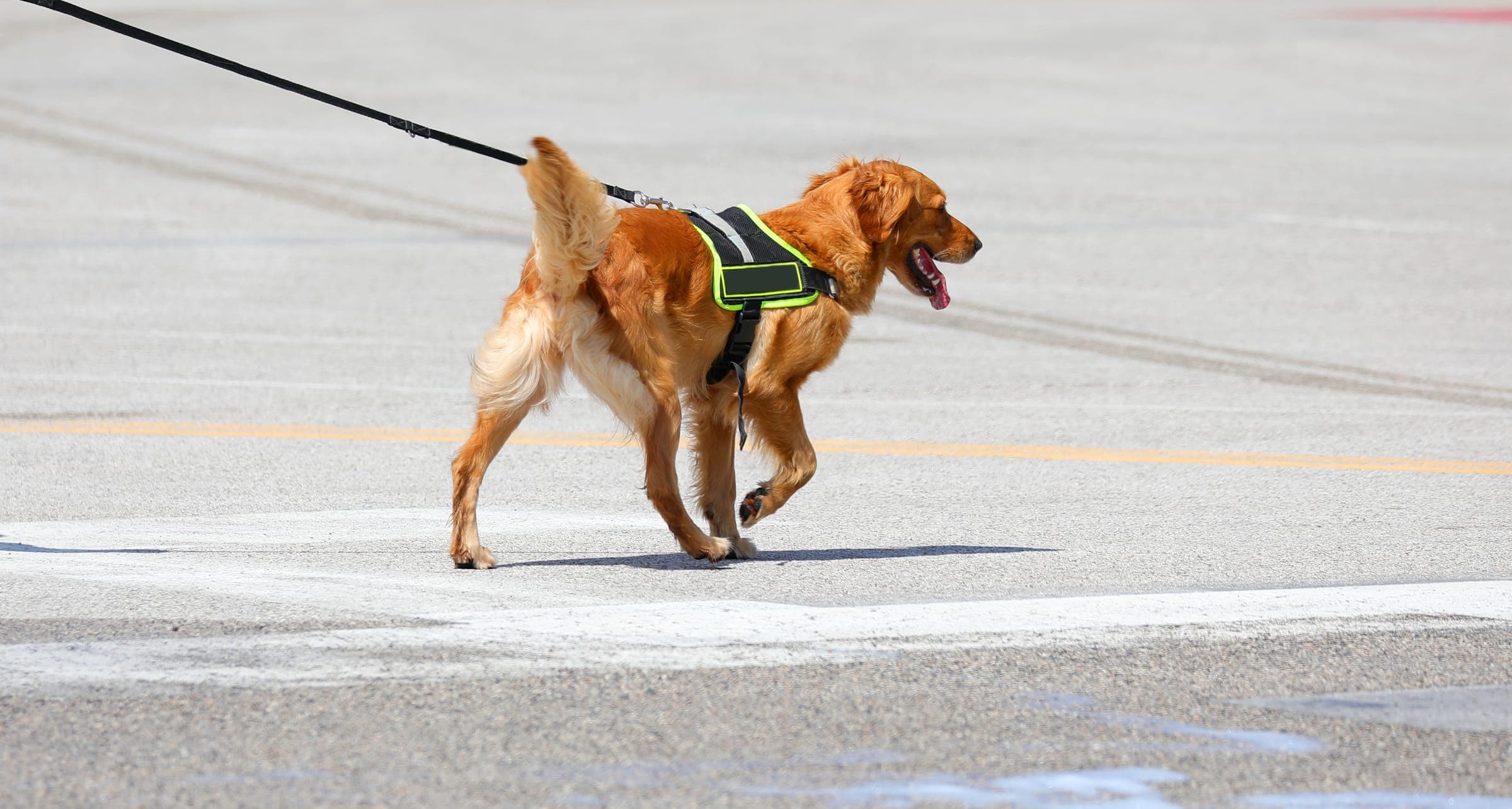
Tracking
The GSP's deer-and-game recovery heritage makes it a natural nose-to-ground trailer — and tracking (following a footstep trail) is a distinct discipline from container nose work. It's the difference between a trail and an odor, and the breed reads both.
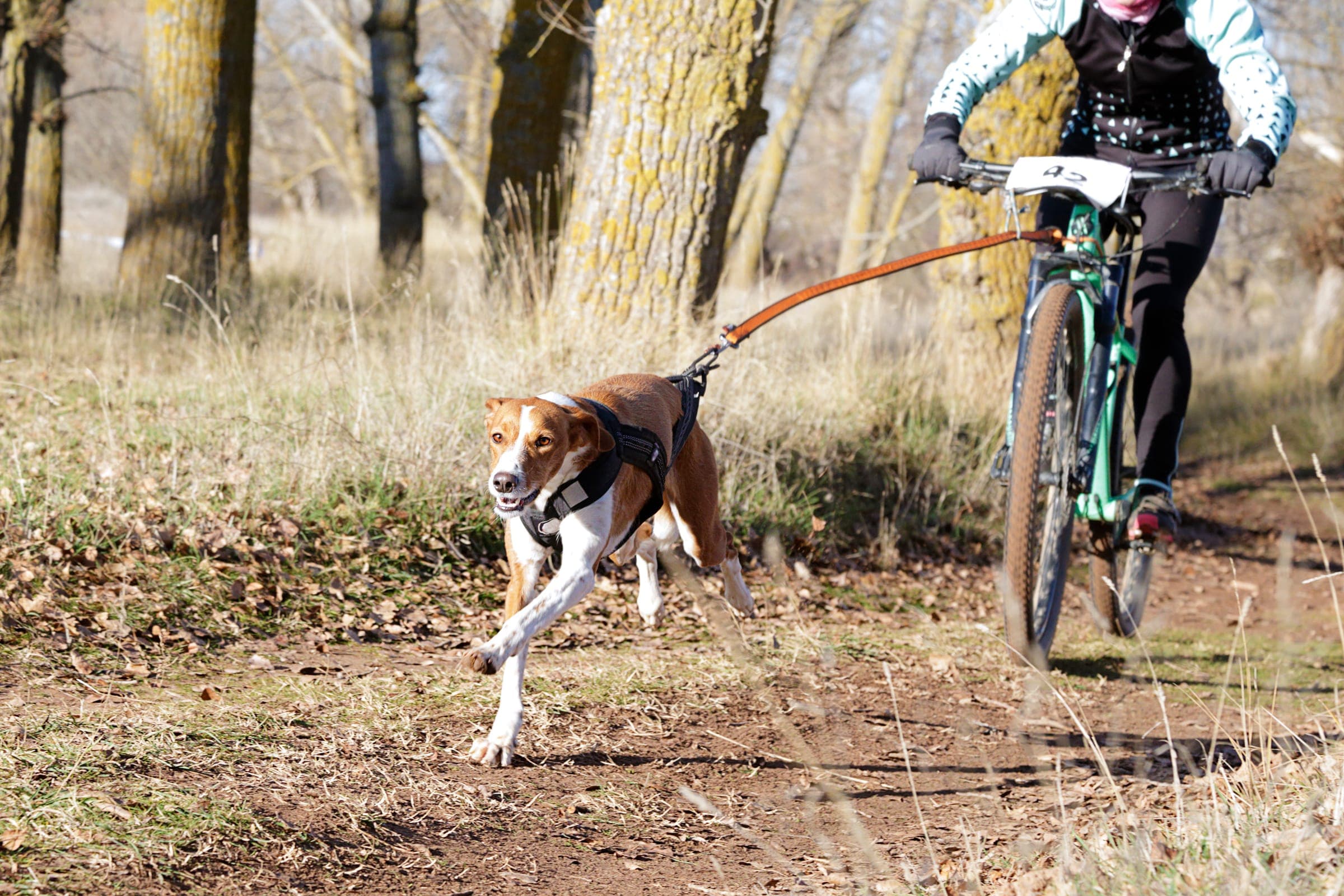
Bikejoring
When even a running human can't burn a GSP's engine, harness-pulling behind a bike scales the speed and distance. It's the community's go-to for the relentless dog — with the standard note to hold off on hard pulling until the growth plates close.
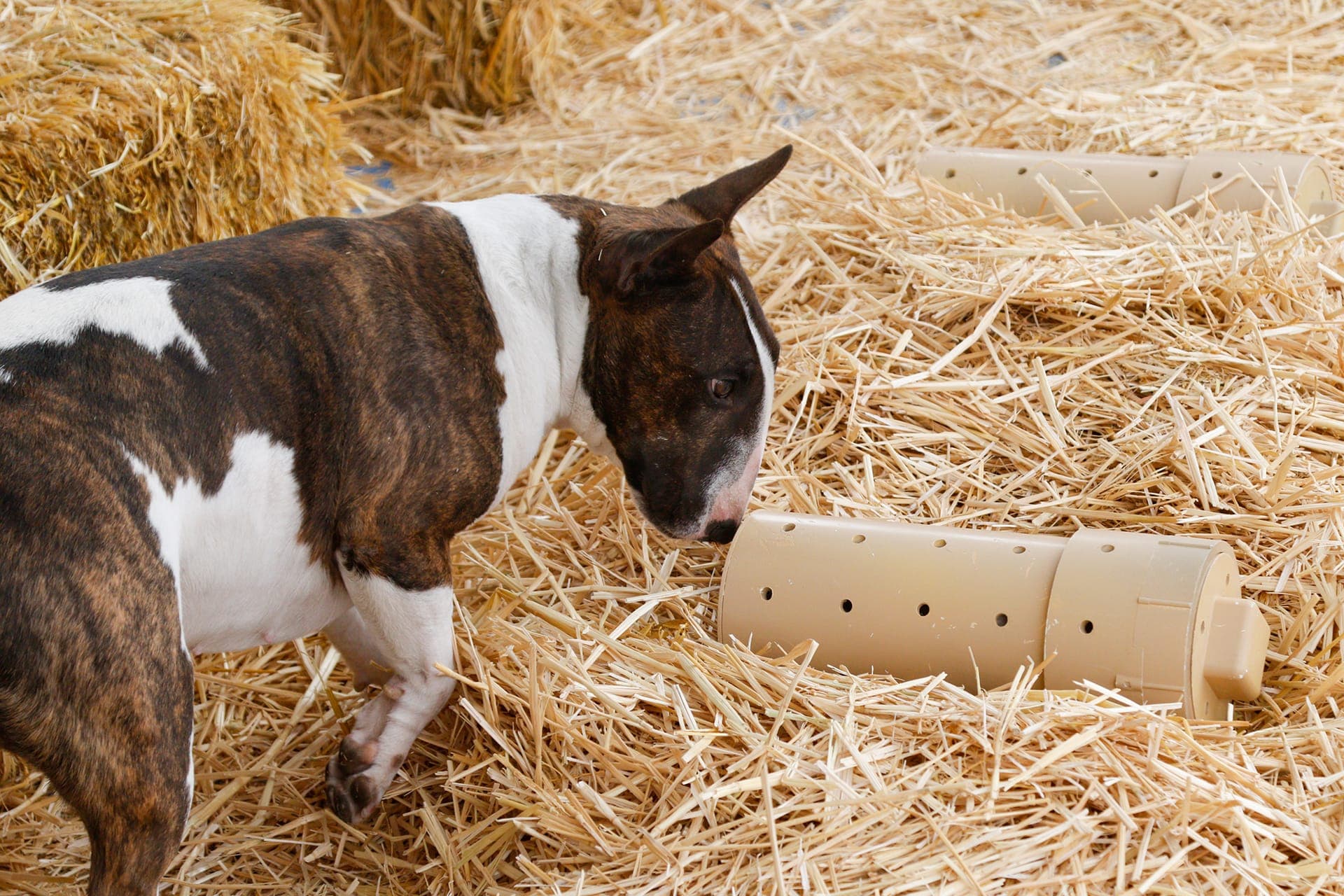
Barn Hunt
Channels prey drive and nose into a straw-bale rat maze — an accessible, confidence-building change-up from open-field scenting. Not a terrier-grade specialty, but a genuine outlet a GSP takes to fast.
Not sure which one fits your dog?
Take the Matchmaker quiz →Things most people don’t know.
- The GSP was engineered in mid-1800s Germany as a deliberate function-over-form project — one dog to find, point, retrieve on land and water, and blood-trail wounded game — which is why it does five sports instead of specializing in one.
- It runs fast enough to embarrass dogs bred for it: the breed's fastest recorded AKC Fast CAT run is 33.7 mph, quick for a bird dog.
- The versatility is testable, not marketing — NAVHDA built an entire tiered program, from Natural Ability up to Versatile Champion, around the GSP's ability to work fur and feather, land and water, in one dog.
Sam — one of only two German Shorthaired Pointers in history to hold both an AKC Dual Championship (show + field) and a NAVHDA Versatile Champion title.
Sources & verification
The sports we recommend for the German Shorthaired Pointer — and why — are Sporting Hound's own analysis, drawn from breed clubs, sport communities, and titled dogs' records. For the breed's history and standard, we cross-check the references below. One caveat that matters: this describes the breed's typical tendencies, not any individual dog — real suitability comes down to a dog's own health, temperament, and training.
Breed references
Spot something out of date? Tell us and we’ll fix it.