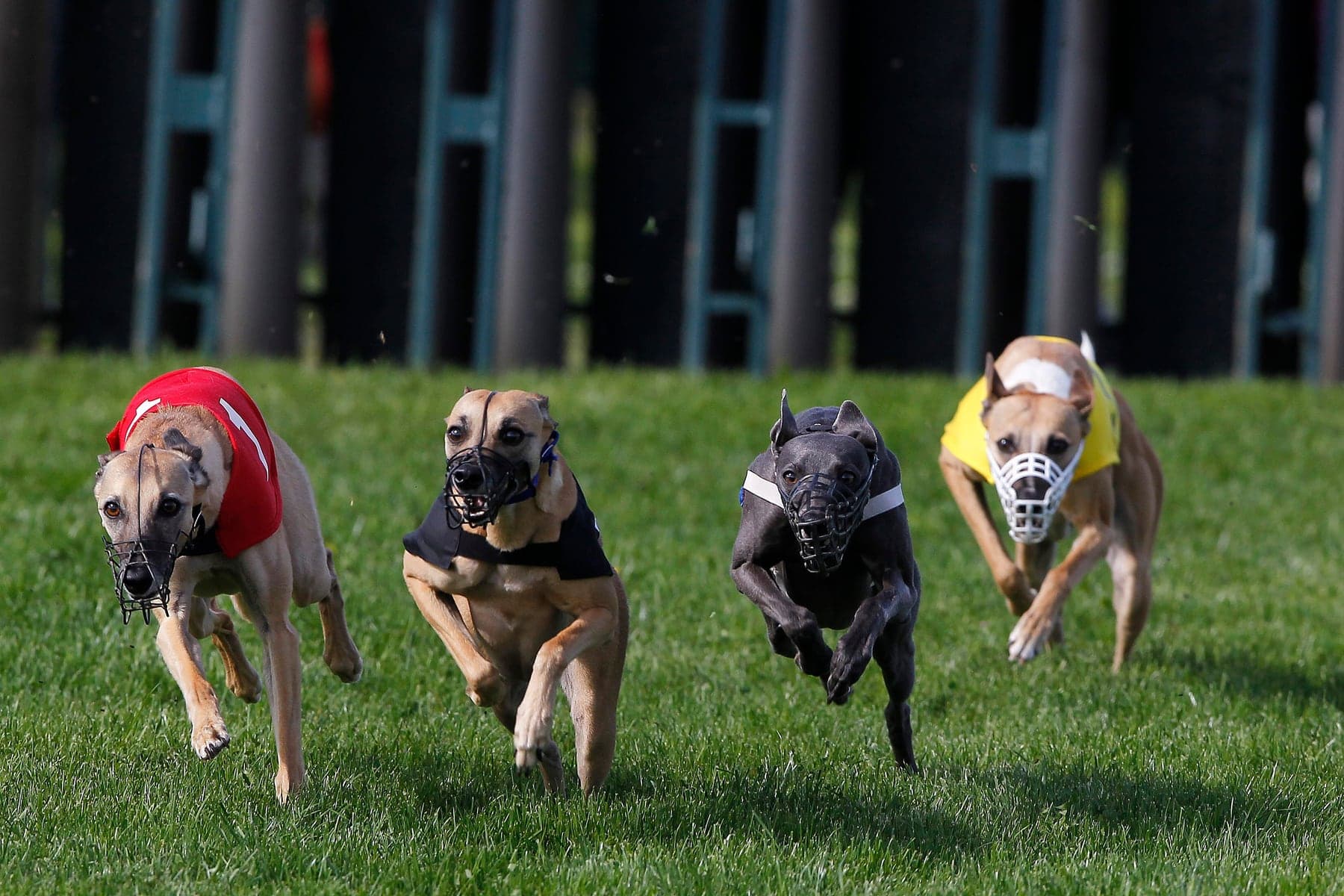
The best dog sports for a Whippet
A 35-mph sprinter that sleeps twenty hours a day, the Whippet is one of the fastest-accelerating dogs alive, wrapped around a couch potato. These are the sports that let it open up safely, and where to try each one near you.
Why a Whippet needs a job.
The Whippet was bred as the 'poor man's racehorse' — a sighthound built to spot game and run it down at astonishing speed. That's produced a dog of two halves: a calm, affectionate, genuinely low-energy housemate most of the day, and an explosive prey-driven sprinter the instant something bolts. The catch is the same one every sighthound owner knows — that prey drive fires faster than any recall, so a Whippet can't be trusted off-leash in an open, unfenced space no matter how well trained.
A Whippet doesn't need endless exercise — it needs the *right* exercise: a chance to truly open up and run, safely contained, a few times a week. Bottle that up and even a mellow Whippet gets anxious and restless. The sports below give that engine its outlet, and the smartest ones channel the chase inside a fence, off a dock, or into a scent box — where the drive gets satisfied without ever depending on a recall that may not come.
Sports that fit a Whippet.
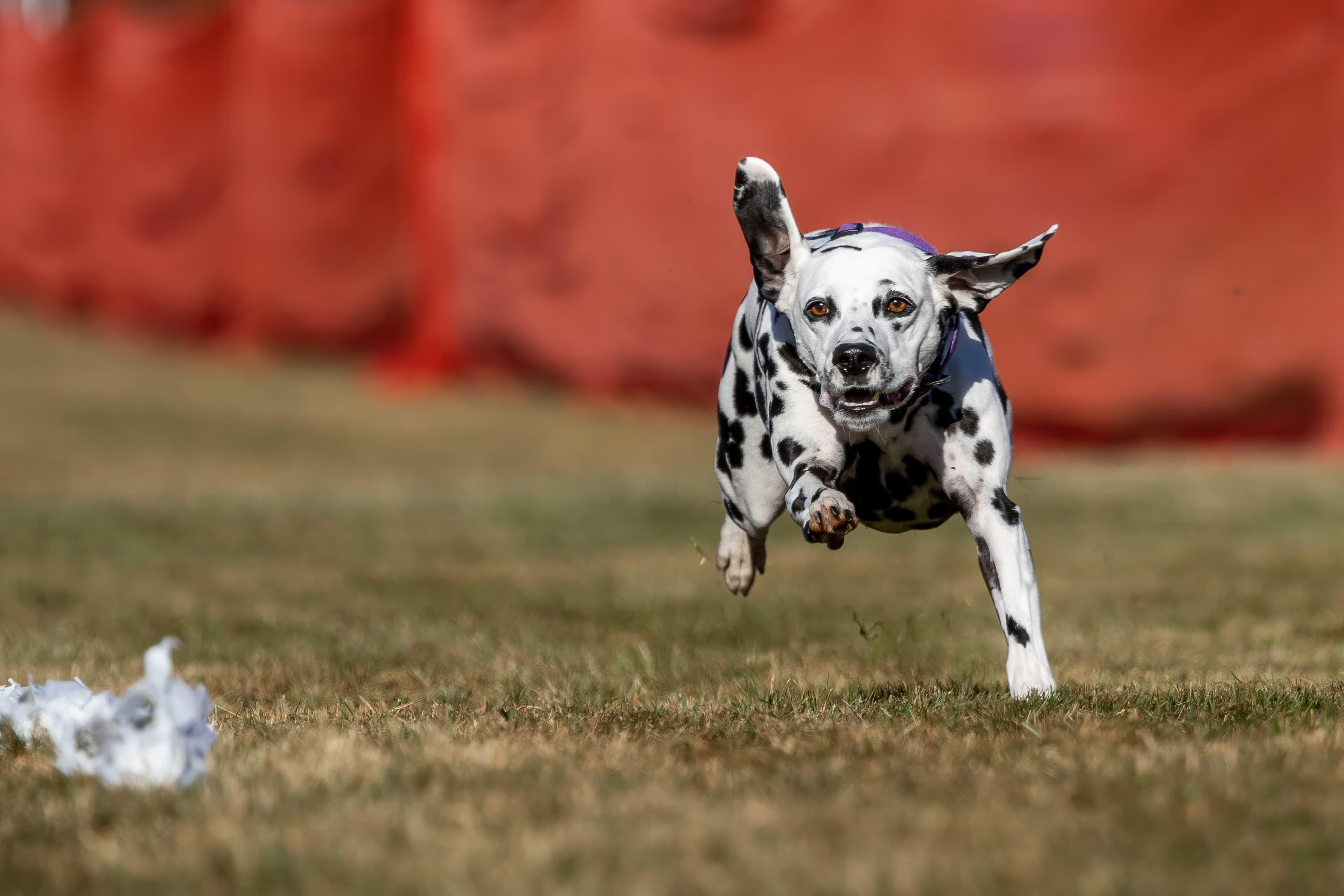
Fast CAT
Whippets have won AKC's 'Fastest Dog in America' three years running, with a breed record near 41 mph. A fenced 100-yard dash after a lure is the purest showcase of one of the fastest-accelerating dogs alive — and it's caught at the end, so the chase stays safe.
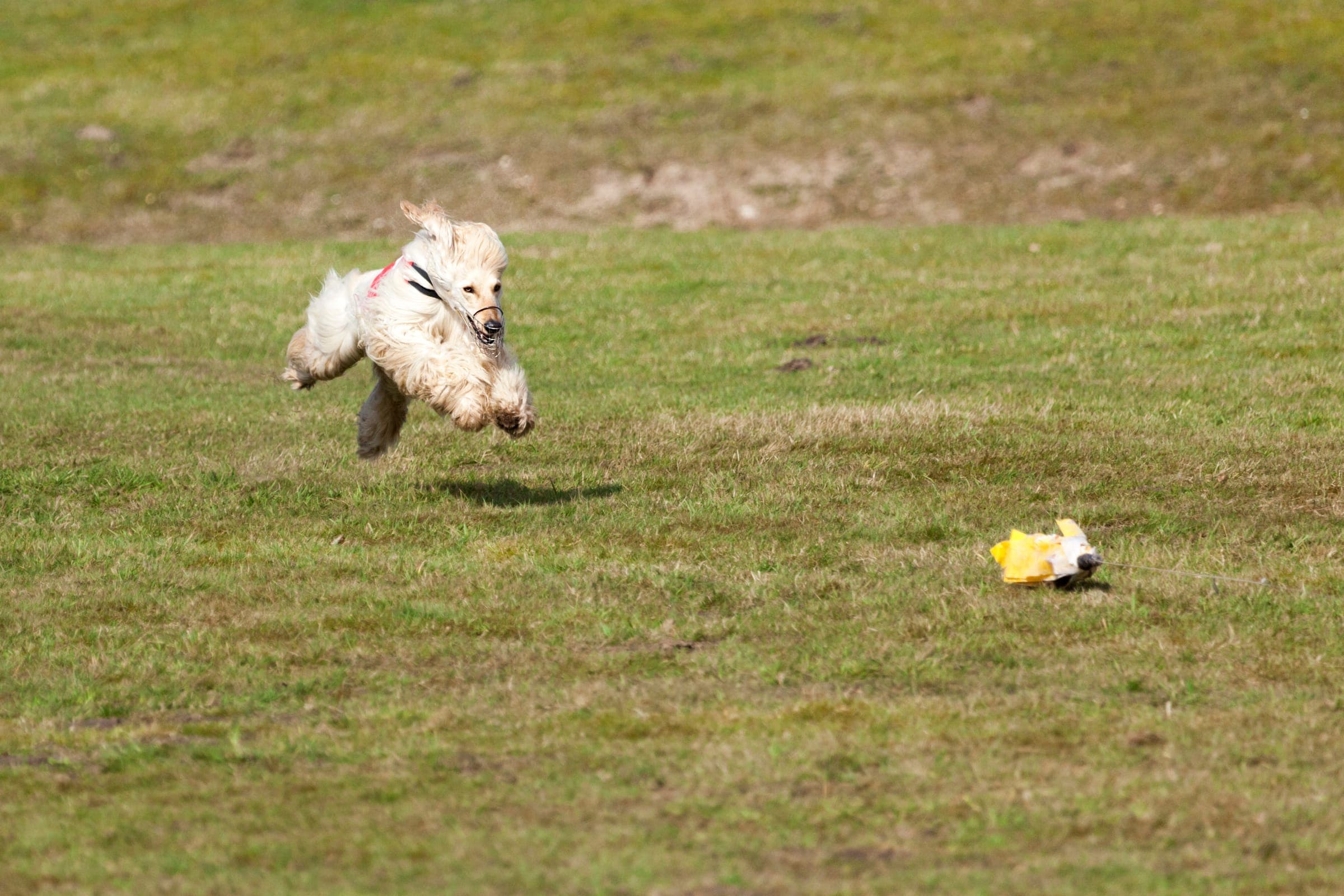
Lure Coursing
Called the Ferraris of lure coursing — Whippets pair explosive speed with the agility to follow the lure's every twist and total prey focus, making them a standout even among sighthounds.
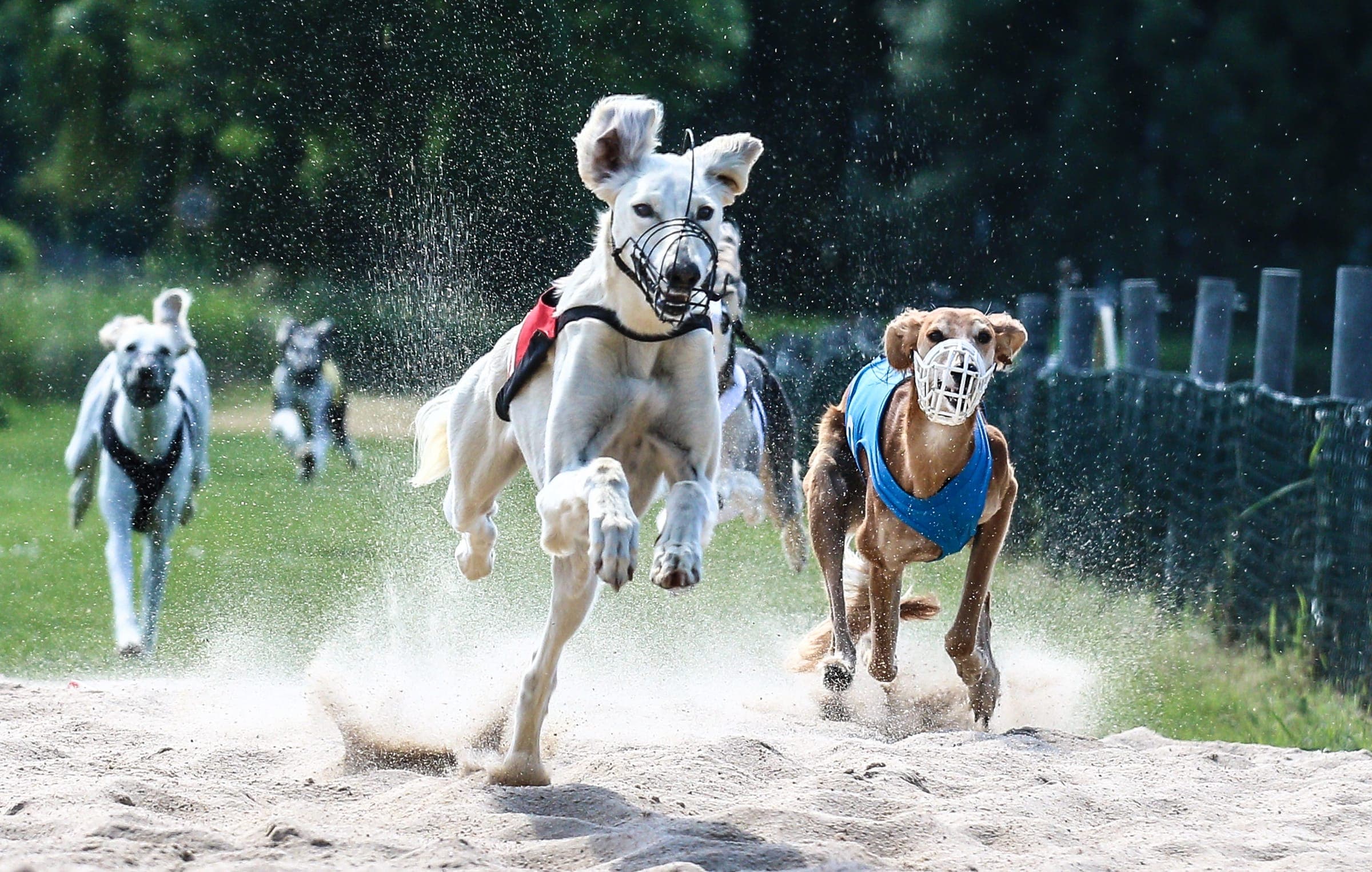
Straight Racing
The Whippet was bred for exactly this — the 'poor man's racehorse.' The breed has its own dedicated straight-track racing body, with dogs breaking from boxes over 150-to-200-yard sprints. Racing is in the blood.
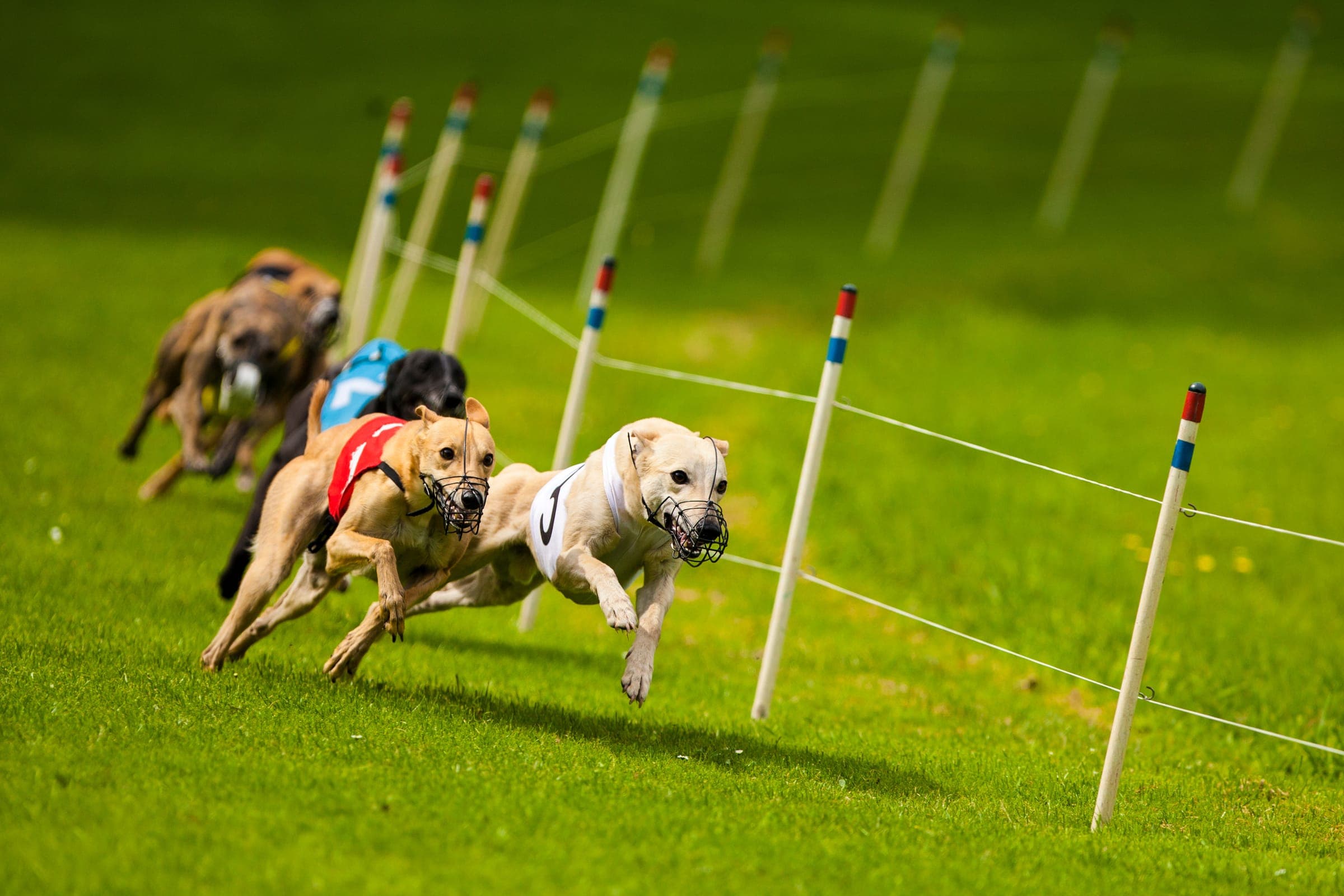
Oval Racing
Oval-track racing literally started as Whippet racing before it opened to other sighthounds — the turns reward the breed's cornering agility on top of raw straight-line speed.
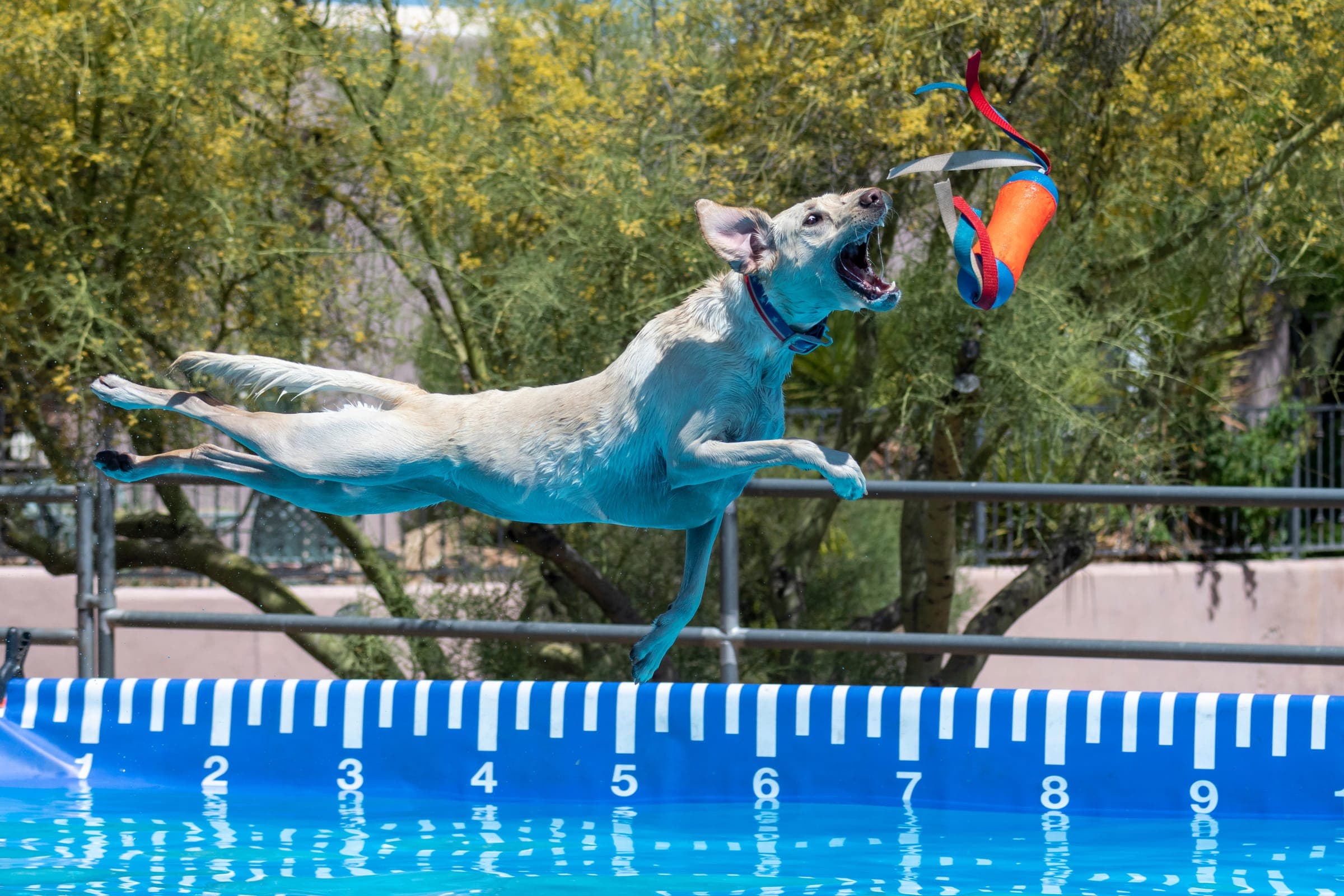
Dock Diving
Counterintuitive for a lean, low-buoyancy breed that's indifferent to water — yet Whippets are Big Air superstars, holding records and clearing 30-plus feet. The dock turns their sprint acceleration straight into airtime.
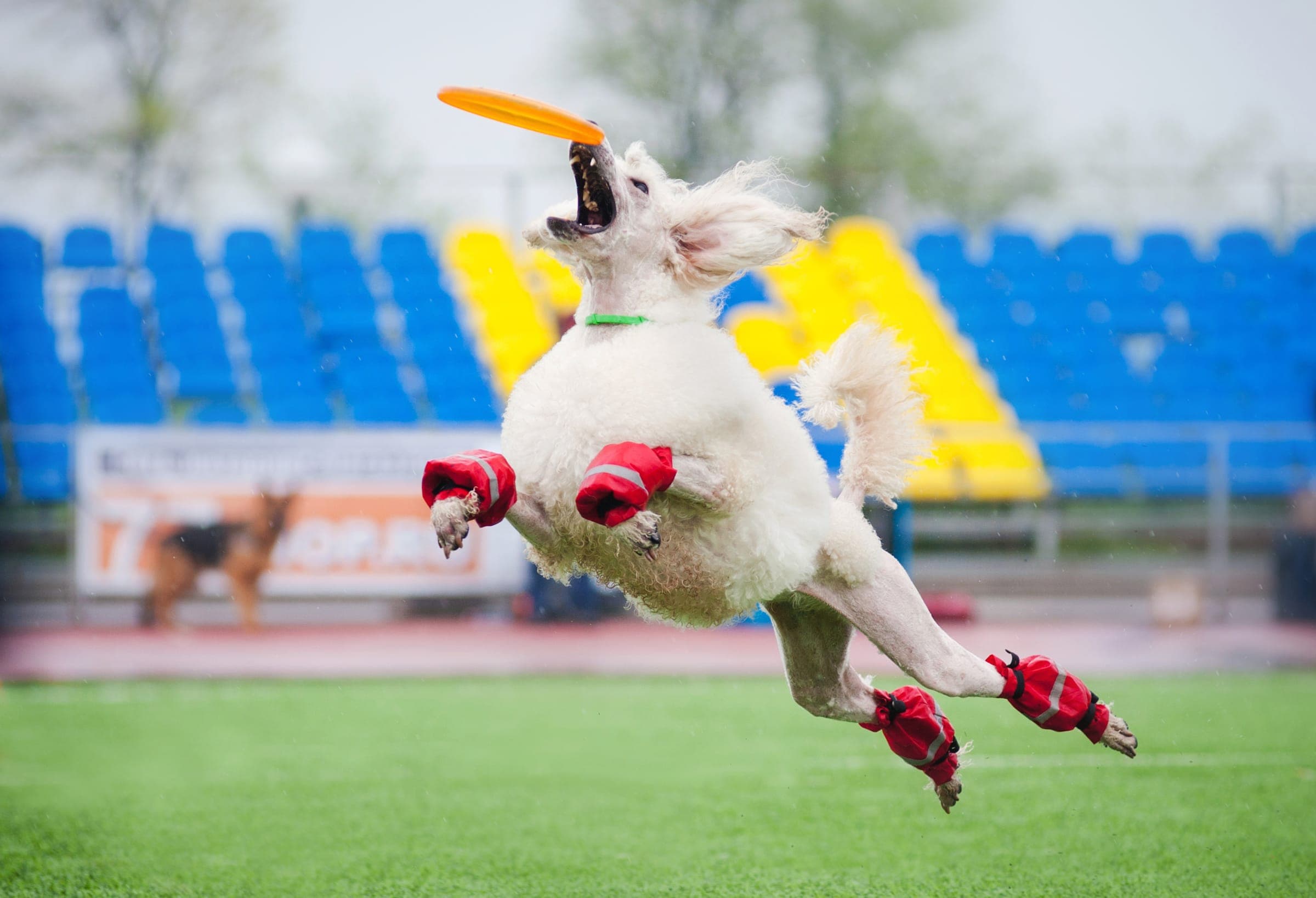
Disc Dog
The whole sport traces to one Whippet — Ashley Whippet, who wowed a 1974 Dodgers crowd leaping nine feet for a frisbee and won the first three world championships. The championship series still carries his name. Disc dog is, quite literally, the Whippet's sport.
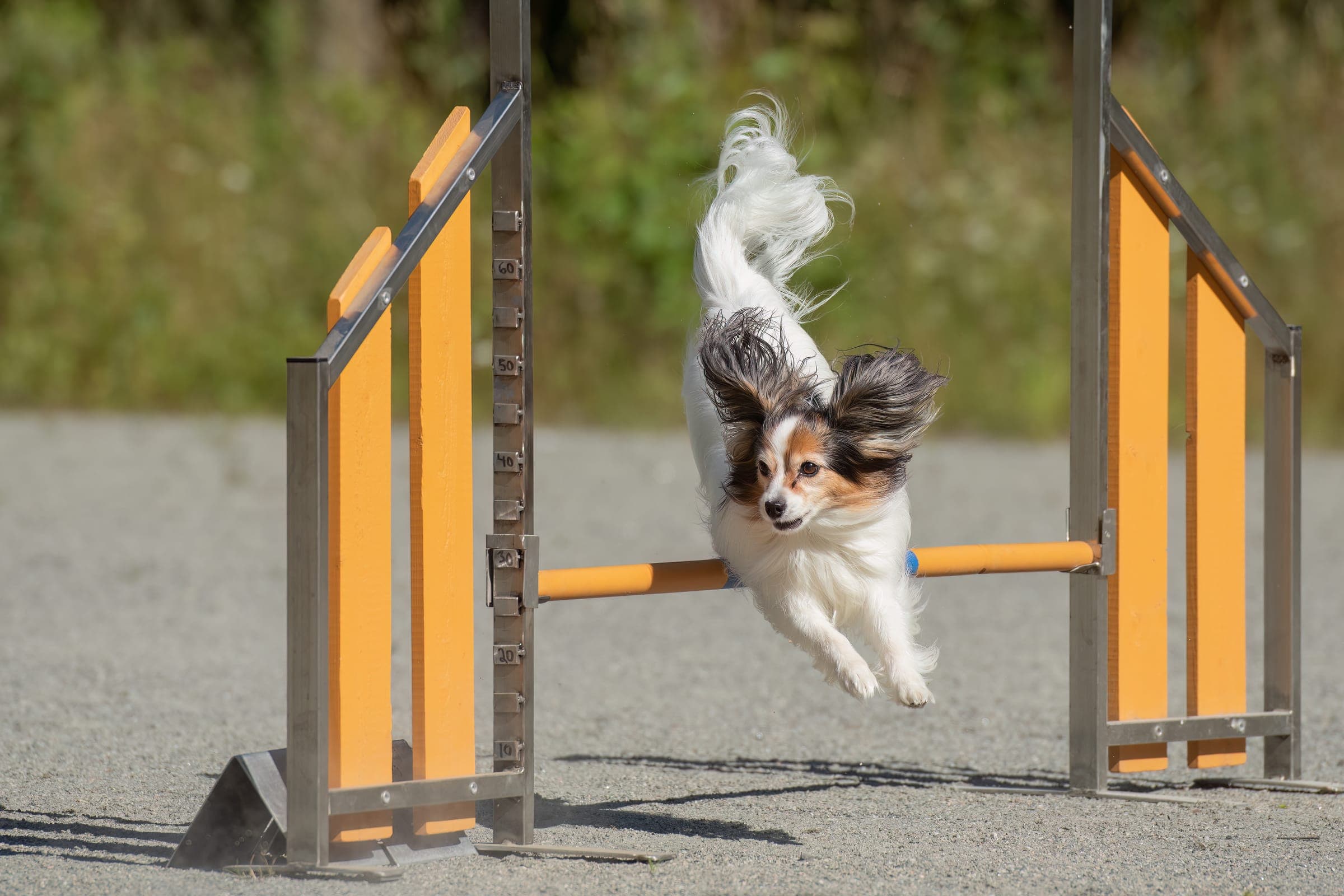
Agility
The '45-mph couch potato' duality on course — Whippets are more biddable than the aloof-sighthound stereotype suggests, and they bring blistering speed, making up for lower drive-to-please with sheer athleticism.

Nose Work
The real surprise for a sighthound: a Whippet has a perfectly good nose and earns scent titles — and the low-arousal indoor format is an ideal outlet precisely because it works the brain without triggering the off-leash prey-chase risk.
Not sure which one fits your dog?
Take the Matchmaker quiz →Things most people don’t know.
- The Whippet is one of the fastest-accelerating dogs alive — clocked near 41 mph — and holds AKC's 'Fastest Dog in America' crown across multiple years.
- It literally founded a sport: a Whippet named Ashley Whippet electrified a 1974 baseball-game halftime and became the father of competitive disc dog.
- Coursing origins run deep — before it raced tracks, the breed chased rabbits for working-class 'rag racing' in northern England, where a fast Whippet fed and funded a family.
Reas — a Whippet who won back-to-back AKC Fastest Dog USA national titles, the top prize in the sport the breed was built for.
Sources & verification
The sports we recommend for the Whippet — and why — are Sporting Hound's own analysis, drawn from breed clubs, sport communities, and titled dogs' records. For the breed's history and standard, we cross-check the references below. One caveat that matters: this describes the breed's typical tendencies, not any individual dog — real suitability comes down to a dog's own health, temperament, and training.
Breed references
Spot something out of date? Tell us and we’ll fix it.